The shunt conduction principle and core advantages of Multi Layers Copper Foil Flexible BusBar
May 16, 2026
In high-power electrical equipment in fields such as new energy, rail transportation, and energy storage, Multi Layers Copper Foil Flexible BusBar have become core components for high-current conduction and shunting due to their flexible adaptability and high-efficiency conductivity. Their unique multilayer structure design not only solves the problem of insufficient flexibility in traditional conductors but also achieves stable transmission of high currents through a scientific conductivity mechanism. A deep analysis of their shunting and conduction principles provides important guidance for industry technology applications and product optimization. Currently, the industry has clearly identified its core principles as revolving around three major mechanisms: increasing cross-sectional area, reducing the skin effect, and multilayer parallel shunting, providing solid technical support for stable equipment operation.
Core Principles
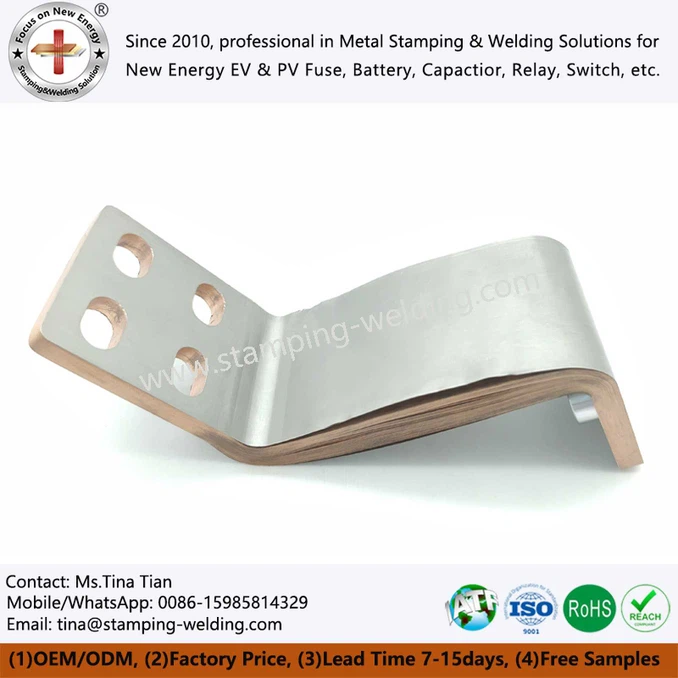
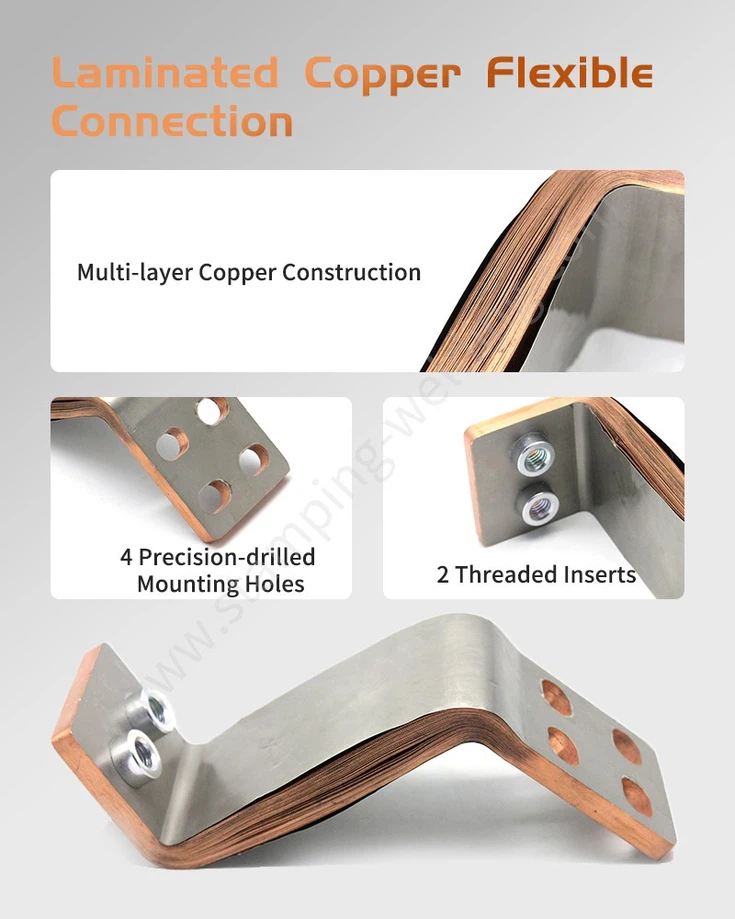
The multi-layer parallel current shunting principle is the core principle behind the efficient conductivity of multi-layer copper foil flexible busbars. These flexible bars are composed of dozens or even hundreds of extremely thin copper foil layers stacked together, with each layer typically ranging from 0.05mm to 0.3mm in thickness. From a physical structure perspective, these copper foil layers are equivalent to multiple conductors with identical resistance connected in parallel. According to the basic principles of parallel circuits, the total current is automatically distributed based on the resistance of each layer. Because the material and dimensions of each copper foil layer are highly uniform, the main current can be evenly shunted across the cross-section, effectively avoiding localized current overload. This is the key to the Flexible Copper Busbar's ability to stably carry large currents.
physical advantages
The physical advantages of the multi-layer ultra-thin copper foil structure further optimize the conduction of high currents, most notably by significantly reducing the skin effect. When alternating current passes through a conductor, the current concentrates on the conductor's surface, resulting in a reduced effective cross-sectional area and increased resistance, thus increasing transmission losses. The multi-layer ultra-thin copper foil structure effectively "breaks up" the overall thickness of the conductor, significantly increasing the ratio of surface area to cross-sectional area, effectively reducing the impact of the skin effect in high-frequency environments. Simultaneously, the parallel connection of numerous copper foils results in extremely low overall equivalent resistance of the busbar. As shown in the resistance calculation formula, the more layers and the larger the area of each layer, the lower the equivalent resistance, thereby minimizing heat loss during current transmission and highlighting the energy-saving advantages of the Copper Flexible Bar.
Process assistance
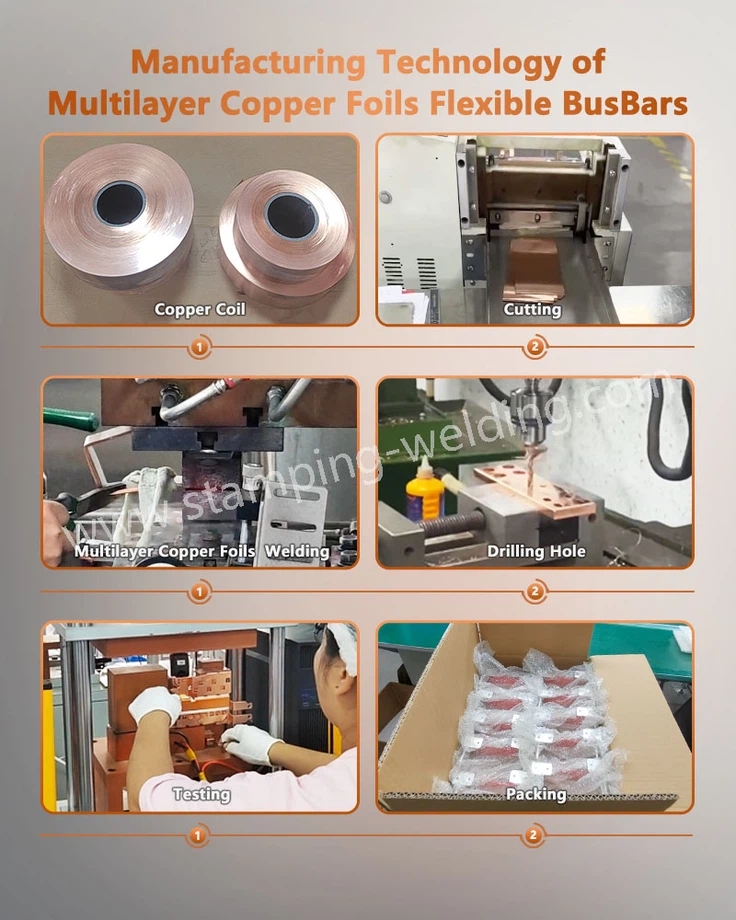
The unique structural characteristics and processing technology provide auxiliary support for the current shunting and conductivity effects. At the connection points, the hard connections at both ends of the multi-layer copper foil flexible busbar typically employ a high-temperature, high-pressure molecular diffusion welding (pressure welding) process. This allows copper molecules to permeate and fuse into a single unit, ensuring minimal contact resistance and preventing additional voltage drops and heat generation at the connection points due to the multi-layer structure. This process is also highly compatible with the core technology of Press-Welded Connectors. Furthermore, compared to traditional solid copper bars, the multi-layer discrete copper foil structure has a larger overall surface area, which facilitates heat dissipation to the surrounding environment or heat dissipation medium, further ensuring the stable operation of the busbar under high-current conditions.
Advantages Comparison
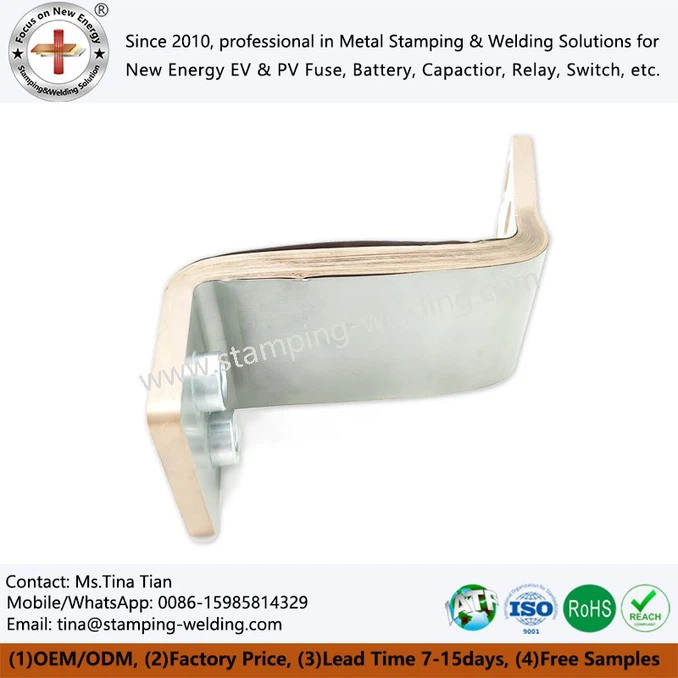
Compared to traditional solid copper busbars, multi-layer copper foil flexible bars offer significant structural advantages, which is the core reason for their widespread application. While solid copper bars have excellent conductivity, they lack elasticity. In scenarios involving vibration or thermal expansion and contraction, such as new energy vehicles and rail transportation, they are prone to mechanical stress, leading to loosening and breakage at connections. Multi-layer copper foil flexible bars, on the other hand, possess both high conductivity comparable to solid copper busbars and exceptional flexibility, effectively absorbing mechanical stress from equipment vibration and displacement, and preventing stress concentration. Currently, these flexible bars have become indispensable flexible conductors in modern high-power electrical equipment such as lithium battery packs, transformers, and SVG static var generators.
Industry Outlook
As high-power electrical equipment upgrades towards miniaturization and high power density, the application scenarios of Multi Layers Copper Foil Flexible BusBar will continue to expand. The in-depth application and technological optimization of its current-shunting conductivity principle will become a key direction for industry development. In the future, the industry will further optimize the material ratio and processing technology of multi-layer copper foil, promoting simultaneous improvements in conductivity, flexibility, and heat dissipation performance of flexible bars, injecting new momentum into the high-quality development of the new energy and industrial sectors.
Contact Us
If you have any questions or needs regarding the principle, application, selection, or adaptation of Multi Layers Copper Foil Flexible BusBar, please feel free to contact us for professional technical support and customized solutions.