Thermal Runaway: Can Your Lithium-ion Battery Cover Plate Withstand It
Sep 05, 2025
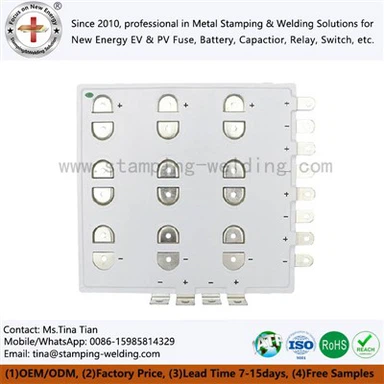
According to the Ministry of Emergency Management, China reported 42 lithium-ion battery thermal runaway accidents in H1 2025, 70% involving battery pack structural damage. A lithium-ion battery cover plate is the first line of defense against thermal runaway-its performance directly affects safety. This article explores its thermal resistance requirements, material selection, structural design, application scenarios, and Xiamen APOLLO's solutions.
Core Performance Requirements for Thermal Runaway Resistance
1. High-Temperature Tolerance
An aluminum battery cover uses 6061-T6 aluminum alloy, which maintains structural stability at 250-300℃. During thermal runaway, it won't melt immediately, buying 5-8 minutes for emergency cooling systems to activate.
2. Impact Resistance Under Thermal Stress
The cover plate must withstand 50-80kN impact force when battery internal pressure rises to 3MPa (a common thermal runaway scenario). It prevents fragments from exploding outward and damaging nearby components.
3. Sealing Integrity Maintenance
The cover plate's sealing gasket (made of silicone rubber with high-temperature resistance) must stay intact at 200℃. It stops electrolyte leakage during initial thermal runaway, avoiding secondary fire risks.
Material Selection Standards for Withstanding Thermal Runaway
1. 6061-T6 aluminum alloy: Ideal for power battery cover plate. It has a melting point of 605℃ and good formability, balancing cost and thermal resistance. It's widely used in passenger EV battery packs.
2. 304 stainless steel: Suitable for prismatic lithium battery annexe. It resists corrosion from leaked electrolytes during thermal runaway, but its higher density (7.93g/cm³) adds 10-15% to battery pack weight.
3. Aluminum-composite material: Combines aluminum alloy's light weight and ceramic's high-temperature resistance. It tolerates 400℃ but costs 30% more than pure aluminum, used in high-end energy storage batteries.
Structural Design Optimization for Thermal Runaway Protection
1. Pressure Relief Valve Layout
Add 2-3 pressure relief valves on the power battery cover plate. Each valve opens at 1.5-2MPa (lower than battery explosion pressure), releasing internal gas to reduce explosion risks during thermal runaway.
2. Reinforced Edge Structure
Thicken the cover plate's edge by 1.5-2mm (from 1mm to 2.5-3mm). This strengthens the connection with the battery shell, preventing the cover from detaching when internal pressure surges.
3. Heat Insulation Layer Addition
Bond a 0.5mm-thick ceramic fiber layer to the cover plate's inner surface. It reduces heat transfer to the external environment by 40%, protecting nearby electrical components from high-temperature damage.

Application Scenarios of Anti-Thermal Runaway Battery Cover Plates
Anti-thermal runaway battery cover plates are widely used in key lithium-ion battery fields. In passenger EVs (e.g., BYD Han), the lithium-ion battery cover plate works with battery management systems to trigger pressure relief within 3 seconds of thermal runaway. In household energy storage systems, the prismatic lithium battery annexe resists long-term high temperatures (60-80℃) during charging, reducing thermal runaway risks. In commercial electric buses, the aluminum battery cover withstands frequent vibration and temperature changes, ensuring long-term safety. These scenarios verify the cover plate's critical role in thermal runaway protection.
Xiamen APOLLO's Anti-Thermal Runaway Battery Cover Plate Solutions
Xiamen APOLLO's lithium-ion battery cover plate uses 99.8% high-purity 6061-T6 aluminum alloy (higher than industry's 99.5% purity), which improves high-temperature stability by 15%. Our battery cover plate undergoes 4-step quality checks (high-temperature resistance, impact resistance, sealing, pressure relief) - stricter than industry's 3-step checks - and meets IATF 16949 and UL standards.
We offer flexible custom services: adjust the thickness (1-3mm) and pressure relief valve quantity of prismatic lithium battery annexe according to customers' battery models (EV, energy storage). Our global sea-land-air logistics delivers to European ports in 18-25 days, North American ports in 15-22 days, and Southeast Asia in 5-10 days. Our after-sales team provides 24-hour technical support, helping customers solve thermal runaway protection matching issues for battery packs.

contact us