What Should be Paid Attention to When Designing a Lithium Battery Shell?
Aug 16, 2024
The lithium-ion battery shell is a protective shell that protects the battery cell and internal circuit. The lithium-ion battery shell is very important for the battery. In order to make the battery meet special requirements such as waterproof and shockproof, the design of the lithium-ion battery shell is also extremely important for the battery. We must master the method when designing. Let's talk about the classification of lithium-ion battery shells and the precautions when designing the shell.
Classification of lithium-ion battery shells
1. Steel shell lithium-ion battery
Most of the early angular lithium-ion batteries were steel shells, which were mostly used for mobile phone batteries. Later, due to the low weight-to-energy ratio of steel shells and poor safety, they were gradually replaced by aluminum shells and soft-package lithium-ion batteries. At present, some small factories still use steel shells to make B-grade mobile phone batteries and some low-value-added MP3 and MP4 batteries.
But in the columnar lithium-ion battery, there is another scene. Most manufacturers use steel as the material of the battery shell, because the physical stability of steel materials is much higher than that of aluminum shell materials. After the design structure optimization of each manufacturer, the safety device has been placed inside the battery core. The safety of steel shell columnar batteries has reached a new height. You can see that most of the current laptop battery cells use steel shells as carriers.
2. Aluminum shell lithium-ion battery
Aluminum shell lithium-ion batteries have become the main force of mobile phone batteries because of their lighter weight and slightly better safety than steel shell lithium-ion batteries. Due to the high cost of aluminum shell mold opening, there are relatively few models, and the minimum order quantity requirement is high. The important models are concentrated on some common mobile phone battery models
3. Soft package lithium-ion battery
Soft package lithium-ion batteries are gradually expanding their market share due to their light weight, low mold opening cost, and high safety. They are mainly used in digital products, and are gradually developing in the markets of mobile phones, laptops, power tools, etc. It can be predicted that the market share of soft-package lithium-ion batteries will continue to expand steadily in the next few years, and the scope of application will be wider. Because the outer packaging is aluminum-plastic film, the pressure resistance is very weak. Due to the technical and environmental limitations of the current domestic packaging factory, the proportion of bulging is still relatively high.
Types of lithium-ion battery shell production design
The design of lithium-ion battery shell can be divided into: PVC heat sealing, plastic, and metal.
- PVC heat sealing: What kind of shell packaging form is used on the outside of the lithium-ion battery pack depends on the specific needs of the customer's product. Regarding the use of PVC heat sealing packaging, it is generally suitable for the case where the number of battery cells in series and parallel is small and the overall weight is light (≤2kg). However, for battery packs with an overall weight of ≥1kg, a fixed bracket should be added between the battery cells, and a fiberglass board should be added to the periphery for protection before PVC heat sealing is used.
- Plastic: Plastic shell is used. The important thing is that after different lithium-ion battery packs are finalized, the shell involved may need to be molded. The mold cost is a considerable expense. For example, in the early stage of development, the product has not been finalized, and the prototype shell can be used for proofing. The material and process requirements of the shell are different, which will also affect the cost.
- Metal: The metal shell is the same as the plastic shell. Before the product is finalized or the quantity demand is small, it is recommended to use sheet metal to make samples. In this way, the delivery time of the sample is shorter. If the batch is large, it is also recommended to open the mold. Regarding the waterproof grade requirements of the metal shell, it will also greatly affect the cost. There are also special material metal shell requirements, and the cost will be higher.
What should be paid attention to when designing the lithium-ion battery shell?
1. Pole piece connection: It is recommended to use ultrasonic or spot welding methods. The design of the lithium-ion battery shell should prevent the pole piece from being subjected to external force.
2. The soldering time cannot exceed 3 seconds, and the number of times cannot exceed 5. The next soldering can be performed after the pole piece cools down.
3. It is strictly forbidden to directly heat the battery cell. It will damage the battery cell if it is higher than 100℃.
4. Fixing of lithium-ion batteries: The side with the largest area of the battery should be fixed to the shell, and the battery should not be loose after installation.
5. Shell toughness: The lithium-ion battery shell should have sufficient mechanical strength to protect the battery from mechanical impact.
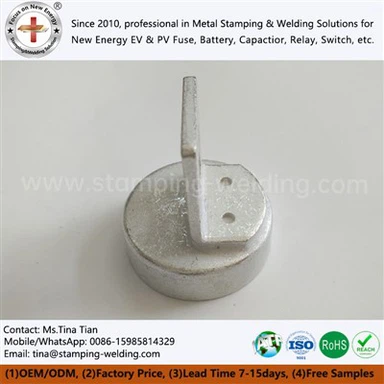
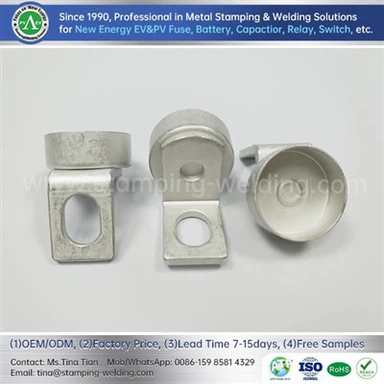
With the rapid development of hybrid vehicles and energy storage markets, the demand for aluminum battery shells is also rising. Our Lithium battery aluminum box can not only effectively protect the battery from external impact, vibration and environmental influences, but also improve the heat dissipation performance of the battery, thereby extending the battery life. You are welcome to click on the link below to learn more:
https://www.stamping-welding.com/aluminum-battery-cases/lithium-battery-aluminum-box.html

For more information about our aluminum battery shell products, or if you have any technical questions, please feel free to contact us. We will wholeheartedly provide you with professional consultation and support to help you find the most suitable product solution. We look forward to establishing a long-term cooperative relationship with you and jointly promoting the development of the hybrid vehicle industry.