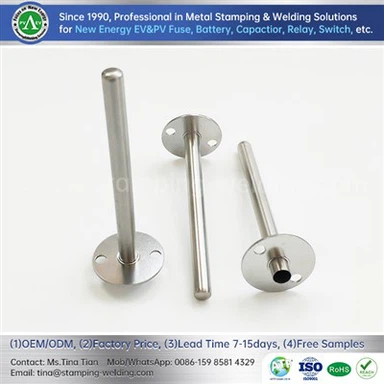


Carbon Steel Clevis Nut For Mechanical Components
The carbon steel clevis nut is a fundamental mechanical component designed to provide secure and adjustable connections in various applications. Crafted from durable carbon steel, this clevis nut features a threaded hole within a forked end, allowing it to be paired with a clevis pin or bolt for versatile and reliable linkages. Its threaded design enables precise adjustment and tightening, making it ideal for applications where variable tension or alignment is required. Widely used in industries such as automotive, machinery, and construction, the carbon steel clevis nut offers exceptional strength, corrosion resistance, and longevity. Its simple yet effective design serves as a pivotal link between components, enabling efficient articulation and movement while maintaining robust connections within mechanical systems.
- Fast Delievery
- Quality Assurance
- 24/7 Customer Service
Product Introduction
PRODUCT INTRODUCTION
The carbon steel clevis nut is a fundamental mechanical component designed to provide secure and adjustable connections in various applications. Crafted from durable carbon steel, this clevis nut features a threaded hole within a forked end, allowing it to be paired with a clevis pin or bolt for versatile and reliable linkages. Its threaded design enables precise adjustment and tightening, making it ideal for applications where variable tension or alignment is required. Widely used in industries such as automotive, machinery, and construction, the carbon steel clevis nut offers exceptional strength, corrosion resistance, and longevity. Its simple yet effective design serves as a pivotal link between components, enabling efficient articulation and movement while maintaining robust connections within mechanical systems.

material
——
Carbon steel is chosen as a preferred raw material in various industries due to its unique combination of mechanical properties, cost-effectiveness, and versatility. Comprising primarily iron and carbon, with trace amounts of other elements, carbon steel offers remarkable strength and durability. Its malleability and ease of fabrication make it ideal for manufacturing processes like forging, stamping, and welding, allowing for the creation of intricate and customized components. Additionally, carbon steel's ability to be heat-treated enhances its hardness and tensile strength, enabling it to withstand demanding conditions. Its corrosion resistance can be further improved through coatings or plating. The wide availability of different carbon steel grades tailors its suitability to specific applications, ranging from automotive parts to structural components. Overall, the utilization of carbon steel as a raw material is driven by its balance of mechanical properties, affordability, and adaptability across a spectrum of industries and applications.
PRODUCT ADVANTAGES
- Strength and Durability: Carbon steel's inherent strength and durability make clevis nuts crafted from this material capable of withstanding substantial loads and mechanical stresses. This ensures reliable performance in applications where secure connections are vital.
- Cost-Effectiveness: Carbon steel is readily available and cost-effective compared to other high-performance materials, making carbon steel clevis nuts a budget-friendly choice without compromising on quality or functionality.
- Ease of Machining and Fabrication: Carbon steel's malleability and machinability allow for easy fabrication into intricate shapes and designs, facilitating the creation of clevis nuts with precise dimensions and threads.
- Adjustability: The threaded design of carbon steel clevis nuts enables easy adjustment and fine-tuning of tension or alignment in mechanical linkages. This adjustability is particularly advantageous in systems where dynamic movements or changes in load occur.
- Versatility: Carbon steel clevis nuts can be used in a wide range of mechanical applications, from agricultural machinery to industrial equipment. Their versatility is attributed to the adaptability of carbon steel to various manufacturing processes and its compatibility with diverse environments.
- Corrosion Resistance: While not as corrosion-resistant as some other materials, carbon steel clevis nuts can still be protected from rust and corrosion through coatings, plating, or proper maintenance. This ensures their longevity and performance even in challenging environments.
- Heat-Treatable: Certain carbon steel grades are heat-treatable, allowing them to be hardened to increase their strength and wear resistance. This feature is particularly valuable in applications subjected to harsh conditions or high levels of wear.
- Wide Range of Grades: Carbon steel comes in a variety of grades, each offering specific properties suited to different applications. This enables the selection of the most appropriate grade for the intended use of the clevis nut, optimizing performance and longevity.
- Compatibility with Clevis Pins and Bolts: Carbon steel clevis nuts are designed to work seamlessly with clevis pins or bolts, creating secure and versatile linkages that can be easily assembled and disassembled as needed.
- Proven Track Record: Carbon steel has a long history of successful use in various industrial applications, and its reliability is well-established. This track record instills confidence in its performance as a fundamental component.
- Broad Industry Adoption: Due to its combination of strength, cost-effectiveness, and versatility, carbon steel clevis nuts are widely accepted and used across industries such as automotive, construction, agriculture, and manufacturing.

PRODUCT APPLICATIONS
——
- Industrial Machinery: Carbon steel clevis nuts are integral components in industrial machinery such as conveyors, presses, and manufacturing equipment. They enable adjustable connections in moving parts, allowing for precise alignment and tension adjustments to maintain operational efficiency.
- Agricultural Equipment: In the agricultural sector, carbon steel clevis nuts play a role in machinery like tractors, plows, and harvesters. They facilitate linkages in implements, enabling flexibility in positioning and adjustment for different tasks and field conditions.
- Construction Equipment: Carbon steel clevis nuts are used in construction machinery such as excavators, loaders, and cranes. They provide secure connections in moving components, ensuring stable operation during tasks like digging, lifting, and material handling.
- Automotive Industry: Within the automotive sector, carbon steel clevis nuts find applications in suspension systems, steering linkages, and transmission linkages. Their adjustability allows for fine-tuning of components to achieve desired handling characteristics and optimal performance.
- Railway Systems: Clevis nuts made from carbon steel are employed in railway systems for components like couplings and brake linkages. They contribute to secure connections between train cars and facilitate smooth braking and operation.
- Mechanical Actuators: Carbon steel clevis nuts are utilized in mechanical actuators, including linear actuators and pneumatic cylinders. They provide adjustable connections that convert rotary motion into linear movement, enabling precise control in various applications.
- Hydraulic Systems: In hydraulic systems, carbon steel clevis nuts are used in linkages that connect hydraulic cylinders to other components. Their adjustability ensures that the hydraulic system can be fine-tuned to achieve the desired force and motion characteristics.
- Material Handling Equipment: Carbon steel clevis nuts play a role in material handling equipment like forklifts, conveyors, and cranes. They enable adjustable connections in lifting mechanisms, contributing to the safe and efficient material movement.
- Marine and Offshore Equipment: Clevis nuts made from carbon steel are utilized in marine and offshore equipment for applications such as rigging and mooring systems. Their strength and adjustability ensure reliable connections in demanding maritime environments.
- HVAC Systems: In heating, ventilation, and air conditioning systems, carbon steel clevis nuts are used for linkages in dampers and louvers. Their adjustability allows for precise control of airflow and temperature regulation.
- Power Generation Equipment: Carbon steel clevis nuts are employed in power generation equipment such as generators and turbines. They enable adjustable connections in control mechanisms, contributing to efficient and reliable operation.
- Automation and Robotics: Clevis nuts made from carbon steel are utilized in automation and robotic systems for components like end effectors and grippers. Their adjustability allows for the customization of robotic movements and actions.

PRODUCT INSPECTION
——
Product inspection of carbon steel clevis nuts for mechanical components is a crucial quality control process that ensures these essential elements meet rigorous standards for performance, reliability, and safety. The inspection process involves comprehensive assessments at various stages of manufacturing to identify defects, deviations, or inconsistencies, ultimately ensuring that the clevis nuts are fit for their intended applications. Here's a detailed overview of the product inspection process:
- Raw Material Inspection: The process begins with inspecting the raw carbon steel material used to create the clevis nuts. This involves verifying the material's composition, mechanical properties, and quality to ensure it meets specified standards and is suitable for the intended use.
- Initial Visual Inspection: Each clevis nut is visually examined for surface defects, such as cracks, dents, or irregularities in the threading. This step ensures that the initial manufacturing process has not introduced any visible flaws.
- Dimensional Analysis: Precise measurements are taken using specialized tools such as calipers, micrometers, and gauges to ensure that the clevis nuts meet specified dimensions, tolerances, and thread specifications.
- Thread Inspection: The threading on the clevis nuts is thoroughly inspected to ensure proper pitch, depth, and uniformity. This is crucial for achieving secure and compatible connections with other components.
- Functional Testing: Clevis nuts are subjected to functional tests, including threading onto corresponding bolts or clevis pins, to ensure proper engagement and compatibility. This verifies that the clevis nuts perform their intended function effectively.
- Torque Testing: In applications where precise torque is critical, torque testing may be conducted. This involves applying controlled torque to the clevis nut to ensure that it functions as expected under specific load conditions.
- Surface Finish Examination: The surface finish of the clevis nuts is inspected for consistency and quality. A smooth and uniform finish is essential for proper engagement and corrosion resistance.
- Corrosion Resistance Testing: Depending on the intended application and environmental conditions, clevis nuts may undergo corrosion resistance testing to ensure they can withstand exposure to moisture, chemicals, or harsh environments.
- Strength and Load Testing: In applications with high load requirements, clevis nuts might undergo load testing to determine their load-bearing capacity and performance under stress.
- Heat Treatment Validation: If applicable, clevis nuts that have undergone heat treatment processes are inspected to verify that the desired hardness and mechanical properties have been achieved.
- Marking and Identification Check: Clevis nuts are inspected to ensure that markings, labels, and identification codes are accurate and legible, facilitating proper traceability and usage.
- Packaging Inspection: Before final packaging, clevis nuts are examined to ensure that they are free from contaminants, properly protected, and ready for shipment.
- Documentation and Records: Detailed records of the inspection process are maintained, documenting the results of each test, measurement, and assessment. These records serve as proof of quality and compliance with industry standards.
- Sample Testing: Random samples of clevis nuts may undergo more rigorous testing to assess their performance under extreme conditions and ensure consistency across production batches.
OUR CERTIFICATIONS

OUR CUSTOMERS

CONTACT US
——
For more information about our products, don't hesitate to get in touch with our team!

Hot Tags: carbon steel clevis nut for mechanical components, China, manufacturers, suppliers, factory