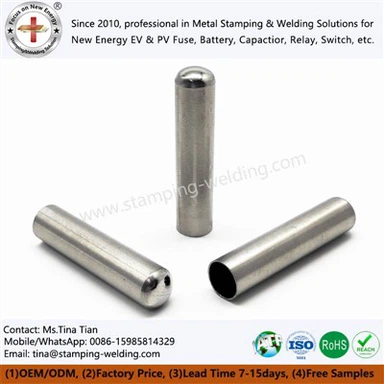


Outer Shell For Battery State Sensor
The outer shell of a Battery State Sensor serves as a protective enclosure for this critical component in electric vehicles. Typically crafted from durable materials such as high-impact plastics or corrosion-resistant metals, the shell shields the sensor from environmental factors like moisture, dust, and mechanical damage. This protective casing is essential for ensuring the longevity and accurate performance of the sensor, as it plays a pivotal role in monitoring and maintaining the health of the vehicle's battery, including parameters such as charge level, voltage, and temperature.
- Fast Delievery
- Quality Assurance
- 24/7 Customer Service
Product Introduction
PRODUCT INTRODUCTION
The outer shell of a Battery State Sensor serves as a protective enclosure for this critical component in electric vehicles. Typically crafted from durable materials such as high-impact plastics or corrosion-resistant metals, the shell shields the sensor from environmental factors like moisture, dust, and mechanical damage. This protective casing is essential for ensuring the longevity and accurate performance of the sensor, as it plays a pivotal role in monitoring and maintaining the health of the vehicle's battery, including parameters such as charge level, voltage, and temperature.

PRODUCT FUNCTIONS
——
- Protection: It acts as a protective barrier, shielding the sensitive sensor components from external factors such as moisture, dust, and physical damage. This protection ensures the sensor's reliability and longevity in harsh operating environments.
- Isolation: The shell isolates the sensor from electromagnetic interference (EMI) and radiofrequency interference (RFI) that can affect sensor accuracy. This isolation helps maintain precise battery state measurements.
- Sealing: It provides a tight seal around the sensor, preventing the ingress of liquids or contaminants that could compromise sensor performance or safety.
- Mounting: The outer shell often includes mounting features that secure the sensor in place within the battery or electrical system, ensuring stable and consistent sensor readings.
- Heat Dissipation: Some shells incorporate heat-dissipating properties to manage temperature within the sensor, optimizing its operation in a range of thermal conditions.

SURFACE TREATMENT
——
- Coating: The Outer Shell for Battery State Sensor can be coated with protective materials like paints, powder coatings, or specialized coatings such as anti-corrosion or anti-scratch coatings. These coatings enhance resistance to environmental factors like moisture and abrasion.
- Anodizing: For metal shells, anodizing is often used. This electrochemical process forms a protective oxide layer on the surface, improving corrosion resistance and providing a smooth finish.
- Plating: Metal shells may undergo plating processes like nickel or chrome plating for added corrosion resistance and a polished appearance.
- Painting: Paints or epoxy-based coatings can be applied to the shell's surface to provide color coding, branding, and improved aesthetics.
- Laser Marking: Laser marking is utilized for precision labeling and branding. It offers a permanent, high-contrast marking on the shell's surface.
- Silkscreen Printing: This method is used to print logos, labels, or other information directly onto the shell's surface, offering clear and customizable graphics.
- Texture and Finish: The surface can be textured or given specific finishes, such as matte, gloss, or textured finishes, to meet both functional and aesthetic requirements.
- Anti-reflective Coatings: In applications where optical clarity is essential, anti-reflective coatings can be applied to minimize glare and improve visibility.
PRODUCT INSPECTION
——
- Visual Inspection: The outer shells are visually examined for any cosmetic defects such as scratches, dents, discoloration, or irregularities in the surface finish. This step ensures that the shells meet aesthetic requirements and that any branding or labeling is correct.
- Dimensional Measurement: Precise measurements are taken to confirm that the outer shells meet the specified dimensions and tolerances. This includes checking critical dimensions such as length, width, thickness, and any mounting features.
- Coating and Surface Finish Inspection: If the shells have undergone surface treatments like coating, anodizing, or plating, inspectors check the quality of these treatments. This includes assessing coating thickness, adhesion, uniformity, and the absence of defects like bubbles or discoloration.
- Material and Material Composition: Inspectors may perform material composition tests to verify that the outer shells are made from the specified materials and alloys. This ensures that they have the required properties, such as corrosion resistance or electrical conductivity.
- Environmental Testing: Depending on the application, environmental tests may be conducted to assess how the shells withstand conditions like temperature variations, humidity, or exposure to chemicals.
- Salt Spray Testing: This test evaluates the resistance of the shell's surface treatment to corrosion by subjecting it to a saltwater mist, simulating harsh environmental conditions.
- Adhesion Testing: If the shells have coatings or labels, adhesion tests ensure that these components adhere securely to the surface and won't easily peel or flake.
- Functional Testing: In some cases, functional testing may be necessary. For example, if the outer shell contains electronic components, functionality tests may be performed to ensure they work correctly.
- Packaging Inspection: Inspectors check the packaging of the outer shells to ensure that they are adequately protected during transportation and storage. Labels, barcodes, and packaging materials are also inspected.
- Documentation and Record-Keeping: Detailed records are maintained throughout the inspection process, including photographs, measurements, and test results. These records are essential for quality control and traceability.
- Rejection and Rework: If any outer shells fail to meet the specified quality standards during the inspection, they are marked for rejection and sent for rework or disposal, ensuring that only conforming products are shipped to customers.
- Continuous Improvement: Feedback from the inspection process is used to identify areas for improvement in manufacturing processes and quality control measures, enhancing the overall quality of the outer shells.
OUR CUSTOMERS
——

CONTACT US

Hot Tags: outer shell for battery state sensor, China, manufacturers, suppliers, factory