

Steel Stamping Parts
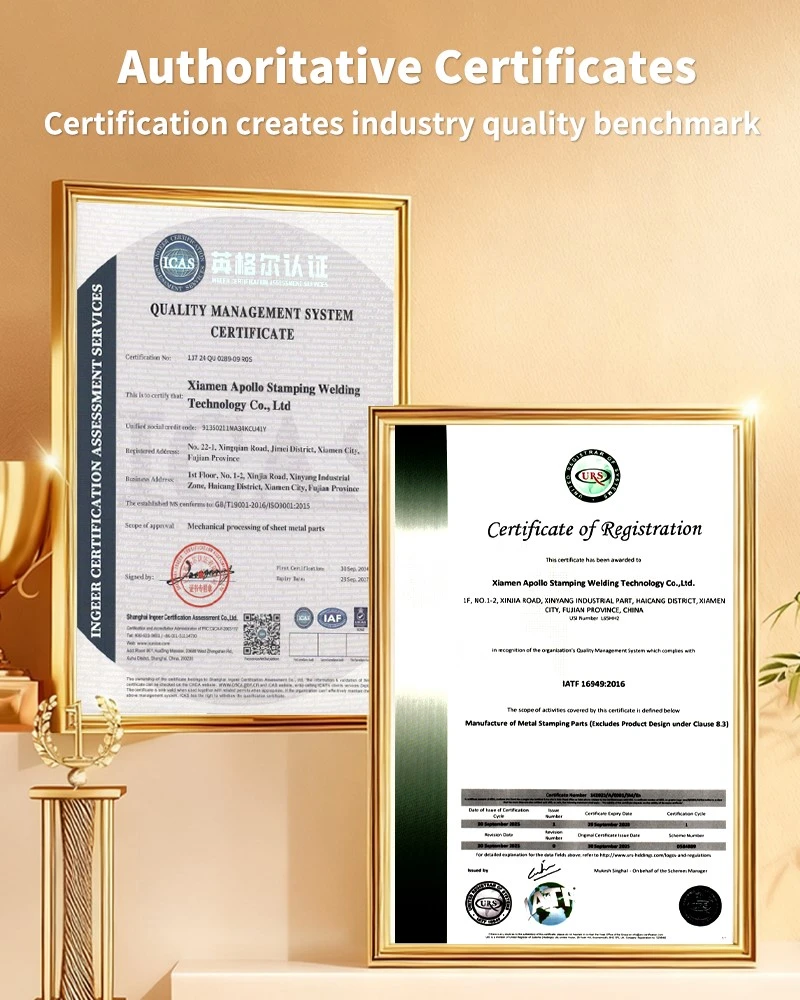
Engineered for automotive, ESS, and industrial power applications, our Steel Stamping Parts combine deep-draw ductility with high yield strength. Utilizing multi-station progressive dies and automated in-die forming, we deliver tight tolerances, burr-free edges, and ASTM B117-compliant anti-rust coatings (up to 1,000h+ salt spray). Fully backed by IATF 16949 certification, CMM verification, and PPAP Level 3 documentation.
- Fast Delievery
- Quality Assurance
- 24/7 Customer Service
Product Introduction

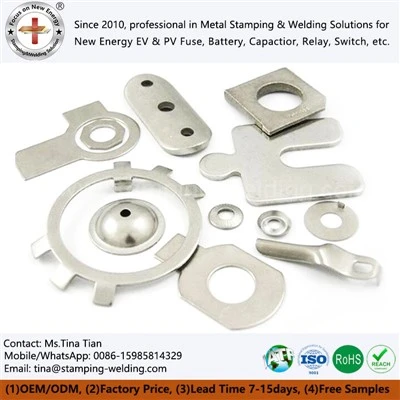
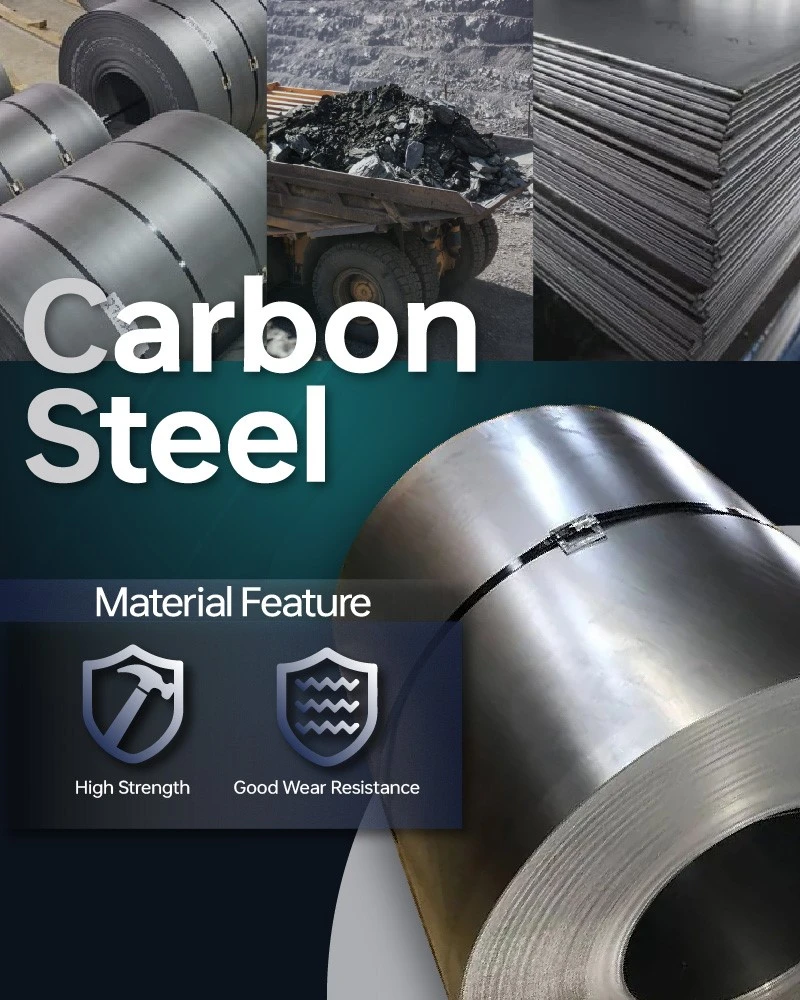
Steel Stamping Parts are precision-formed sheet metal components manufactured by cutting, punching, bending, forming and trimming metal sheets into defined geometries. Depending on the application, materials can include carbon steel, 304/316 stainless steel, galvanized steel and other engineering metals. These parts are commonly used as brackets, mounting plates, clips, terminals, covers, structural supports and electrical hardware.
Manufacturing Process of Steel Stamping Parts
Progressive Die Stamping
Multi-station dies automate notching, deep drawing, and forming, delivering run rates of 80 to 250 strokes per minute with continuous strip pilot tracking for Customized sheet metal stamping and bending parts.
Precision Punching & Trimming
Punch-to-die clearances are strictly calibrated based on material grade and thickness, yielding consistent, burr-free burnish zones while suppressing micro-cracks on sheared edges for Sheet Metal Stamping.
Controlled Bending & Forming
High-precision CNC press brakes and dedicated cam-bending stations compensate for springback in 1/4H, 1/2H, and Full Hard temper alloys for carbon steel galvanized deep draw metal stamping.
Secondary Deburring & Finishing
Automated vibratory barrel finishing and centrifugal disc deburring remove Precision Metal Stamping micro-burrs, producing edge radii compliant with high-voltage dielectric boundary requirements.

Technical Specifications of Steel Stamping Parts
| Technical Parameter | Commercial / Deep Drawing Grades (SPCC, DC01, ST12) | High-Strength Structural Grades (Q235B, SPHC, Q345B) | Pre-Galvanized / Coated Steels (SGCC, SECC, DX51D+Z) |
| Material Thickness Range | 0.30mm – 4.00mm | 1.00mm – 6.00mm | 0.40mm – 3.50mm |
| Punching / Piercing Tolerance | ±0.015mm to ±0.03mm | ±0.02mm to ±0.05mm | ±0.015mm to ±0.035mm |
| Bending Angular Tolerance | ±0.25° to ±0.5° | ±0.3° to ±0.8° | ±0.3° to ±0.5° |
| Surface Roughness (Shear Edge) | Ra ≤ 0.8μm | Ra ≤ 1.6μm | Ra ≤ 0.8μm |
| Corrosion Protection Methods | E-Coating, Powder Coating, Zn/Ni Plating | Hot-Dip Galvanizing, Zinc Nickel Plating | Passivated Zinc Layer, Anti-Fingerprint Coating |
| Salt Spray Resistance (ASTM B117) | 480h to 1000h (Based on finish specification) | 720h to 1200h (Hot-dip / Zn-Ni finish) | 72h to 240h (Standard pre-galvanized layer) |
Precision Engineering & Quality Control
Precision Tooling Maintenance
High-wear punch and die inserts are fabricated from hardened tool steels (DC53, SKD11) and ground using precision wire EDM, ensuring consistent burr control and uniform clearance across millions of stamping strokes for Steel Stamping Parts.
Mechanical & Structural Integrity Testing
In-house universal tensile testing machines, Vickers/Rockwell hardness testers, and torque-out gages verify raw material yield strength, bend integrity, and hardware retention performance for Progressive Die Heavy Metal Stamping.
Corrosion Resistance Validation
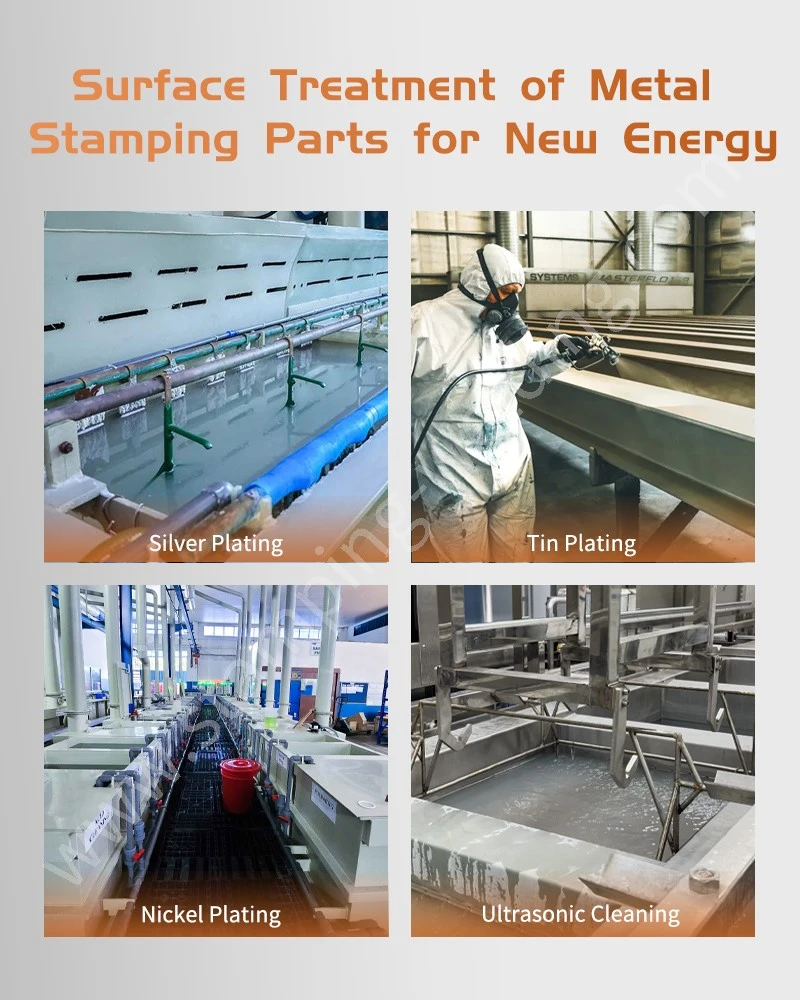
In-house salt spray testing chambers perform continuous ASTM B117 neutral salt spray tests to validate the adhesion and barrier protection of electro-galvanized, zinc-nickel, and e-coated surfaces.
PPAP & Automotive Quality Compliance
Complete Precision Metal Stamping Production Part Approval Process (PPAP Level 3) packages are standard, including PFMEA, Control Plans, Gage R&R, full dimensional layout inspection reports, and ongoing CPK process capability tracking.
Frequently Asked Questions about Steel Stamping Parts
Q: What carbon steel grades are most suitable for deep drawing vs. heavy structural stamping?
A: Deep-drawn components, enclosures, and complex drawn covers utilize cold-rolled low-carbon steels such as SPCC, DC01, and ST12 due to their high ductility and elongation. For load-bearing structural brackets, chassis mounting plates, and heavy-duty industrial framing, hot-rolled structural grades like SPHC, Q235B, and Q345B provide the required tensile strength and yield performance.
Q: How does material thickness affect the bend radius and hole-to-edge distance in Steel Stamping Parts?
A: To prevent outer-radius cracking and edge deformation during punching, standard design guidelines require an internal bend radius equal to or greater than the sheet thickness. Pierced hole-to-edge distances should maintain a minimum spacing of at least twice the material thickness to avoid localized wall bulging and preserve mounting hole concentricity.
Q: What surface treatment provides the longest salt spray resistance for outdoor carbon steel parts?
A: For harsh outdoor and high-humidity environments, zinc-nickel alloy plating and cathodic electro-coating (E-coating) provide over 720 to 1,000 hours of neutral salt spray resistance under ASTM B117 standards. Standard electro-galvanizing with trivalent passivation is typically selected for indoor electrical enclosures and dry-environment structural brackets.
Q: How do cold-rolled and hot-rolled carbon steel sheets differ in stamping performance?
A: Cold-rolled carbon steel (such as SPCC) provides superior surface smoothness, tighter thickness tolerances, and excellent formability, making it ideal for precision drawing, exposed brackets, and tight-tolerance components. Hot-rolled steel (such as SPHC) is more cost-effective for heavier structural stampings but requires pickling and oiling to remove surface mill scale before forming or plating.
Q: What are the main engineering advantages of choosing progressive die stamping for carbon steel components?
A: Progressive die tooling consolidates multi-stage piercing, notching, coining, and restriking into a single continuous press cycle. This approach eliminates intermediate work-in-progress handling, maintains dimensional repeatability across high-volume production runs, and lowers total component manufacturing costs.
Contact Us
Submit your 2D/3D CAD drawings (STEP, IGES, DWG) along with annual volume estimates and material specifications to our engineering team. We provide a complete DFM manufacturability evaluation, tool layout concept, and direct factory pricing within 24 hours.
Hot Tags: Steel Stamping Parts,Custom Steel Stamping,Steel Stamping Parts Manufacturer,OEM Metal Stamping Supplier,Precision Steel Stamping Parts,Progressive Die Stamping,Cold Rolled Steel Stamping,Galvanized Sheet Metal Stamping,Stamped Metal Enclosure Components,Automotive Steel Stamping Parts,Bending and Punching Metal Parts,Custom Sheet Metal Stamping Factory