

Lithium -ion Electric Bike Battery Pack
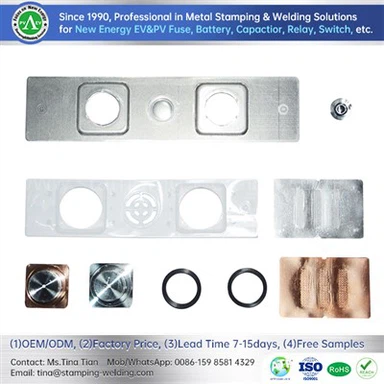
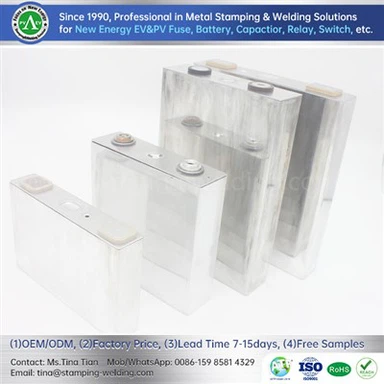
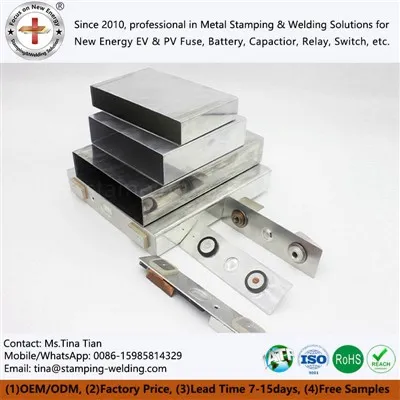
The Lithium -ion Electric Bike Battery Pack is a prismatic lithium battery product designed for e-bikes and light electric mobility devices. It features an aluminum alloy housing that provides reliable mechanical protection and structural support for the internal cells, interconnects, and battery management system. Compared to standard plastic housings, the aluminum alloy casing strikes a superior balance between weight reduction, structural strength, heat dissipation, and environmental adaptability, making it ideal for OEM projects with specific requirements regarding vehicle weight, installation space, and structural reliability. The aluminum housing is not merely an aesthetic component but an integral part of the battery system's structural design; its dimensional precision, assembly interfaces, sealing configuration, and manufacturing consistency directly impact subsequent cell assembly and vehicle-level integration.
- Fast Delievery
- Quality Assurance
- 24/7 Customer Service
Product Introduction
This product is a system-level battery assembly deeply optimized for the complex operating conditions of electric two-wheelers, seamlessly integrating highly stable prismatic cells with high-strength metal components:
Structural metal explosion-proof and shock-resistant housing: Constructed from precision-extruded aluminum alloy profiles with wall thickness optimized via topology analysis, the housing withstands intense crushing, drops, and torsional forces, completely eliminating the risks of aging and cracking associated with plastic casings.
Highly compact modular layout: Leveraging the superior space efficiency of prismatic cells and an internal slot-style bracket system, the design significantly reduces the battery pack's volume, allowing for seamless integration into an e-bike's down tube, rear rack, or seat tube.
Comprehensive heat conduction and self-dissipation pathways: Aluminum alloy offers excellent thermal conductivity-far superior to plastic-which, combined with internal thermally conductive silicone pads, rapidly transfers heat generated during high-current discharge to the outer casing for dissipation, thereby significantly mitigating thermal degradation.
All-weather IP67 sealing protection: Utilizing precision end-cap seals and advanced injection molding techniques that prevent structural defects, the design ensures zero moisture ingress even under high-pressure water jet cleaning or prolonged riding in heavy rain.

Manufacturing Advantages: Systematic Delivery Capabilities for Small Battery Packs
Traceable Management of Cell Sourcing
We utilize designated sources for prismatic cells, retain batch samples, and create profiles based on incoming capacity grading. This eliminates industry malpractices-such as the use of mismatched or "cobbled-together" cells-and ensures a clear, controllable chain of responsibility for after-sales support.
Automated Assembly Lines
Automated processes for cell matching, welding, and testing minimize human error and ensure batch-to-batch consistency.
Individual Aging Tests and Data Logging
Every battery pack undergoes aging tests before leaving the factory; test data is archived and linked to the unit's serial number, allowing customers to trace the full parameter history for after-sales service.
Mixed-Model Production Capability
The two-wheeler market is characterized by a highly fragmented SKU landscape. Our production lines support flexible switching between models, enabling us to meet the supply demands of brands managing multiple concurrent vehicle models.

Application Advantages: Commuting, Mountain Biking, Cargo Transport, and Shared Mobility
Battery packs featuring aluminum alloy casings and prismatic lithium cells are suitable for a wide range of e-bike market segments.
| Urban Commuting and Leisure Riding | These models prioritize lightweight design, portability (removable batteries), and aesthetics. Battery packs are typically mounted on the down tube or rear rack; their moderate capacity allows users to easily remove them for indoor charging. The premium feel and heat dissipation capabilities of the aluminum alloy casing enhance the overall quality of the vehicle. |
| Electric Mountain Bikes (e-MTBs) | Mountain biking involves significant vibration and impact, demanding superior structural integrity, secure cell retention, and waterproofing. Integrated or semi-integrated down-tube designs require compact casings and reliable locking mechanisms. |
| Cargo and Utility E-bikes | These vehicles handle heavy loads and require long operating times, necessitating high-capacity battery packs capable of sustained high-current discharge. Solutions involving parallel dual-battery setups or large-capacity single packs place higher demands on thermal management and the Battery Management System (BMS). |
| Shared E-bikes | Shared mobility applications demand exceptional anti-theft features, ruggedness against rough handling, remote communication capabilities, and convenient battery swapping. Battery packs must integrate seamlessly with swap stations, operational platforms, and GPS modules, while the casing requires scratch resistance and easy cleaning. |
| Retrofitting and Aftermarket | Prismatic cell solutions offer superior space utilization, enabling higher capacities within compact casing dimensions. We provide customized battery assembly solutions tailored to specific frame interfaces and electrical specifications. |

Frequently Asked Questions
Q1: Does the aluminum alloy casing accommodate non-standard dimensions and mounting specifications for various e-bike models?
-
A: Yes. We conduct structural design and manufacturability assessments based on cell specifications, battery pack spatial constraints, frame mounting methods, and assembly processes, while also providing prototypes for validation.
Q2: How do you ensure dimensional and surface consistency across multiple specifications and small-to-medium batch production?
-
A: Consistency is ensured through material batch management, monitoring of critical process parameters, and final inspection strategies. Key dimensions and surface conditions are incorporated into process controls, with inspection and traceability support available upon request.
Q3: How do surface treatments withstand outdoor environments involving humidity and vibration?
-
A: We offer anodizing or other functional coating solutions tailored to the operating environment. These solutions are evaluated for compatibility with sealing materials and weather resistance requirements to minimize the risk of long-term corrosion and seal failure.
Q4: How is the timeline managed from prototype confirmation to stable mass production?
-
A: The prototyping phase focuses on validating material, forming, and surface compatibility, after which the process parameters are locked in. Subsequent production maintains monitoring of critical parameters to accommodate project ramp-ups and transitions between different specifications.
Q5: Can the aluminum casing be easily integrated with battery pack frames or semi-automated assembly lines?
-
A: Yes. Positioning features, gripping reference points, and aperture precision requirements can be incorporated during the design and final inspection stages; dimensional consistency helps reduce the complexity of customer assembly and debugging.

contact us
If your project requires balancing structural compatibility for prismatic lithium batteries, precision manufacturing of aluminum alloy housings, and consistency in mass-production assembly, please provide drawings or samples. We will assist in evaluating OEM solutions by considering engineering factors such as materials, forming processes, machining, and vehicle-level mounting interfaces.

Hot Tags: Lithium-ion Electric Bike Battery Pack, Square Lithium Battery, Aluminum Battery Case, E-bike Battery Pack, Lithium Battery Housing, Aluminum Alloy Battery Enclosure