
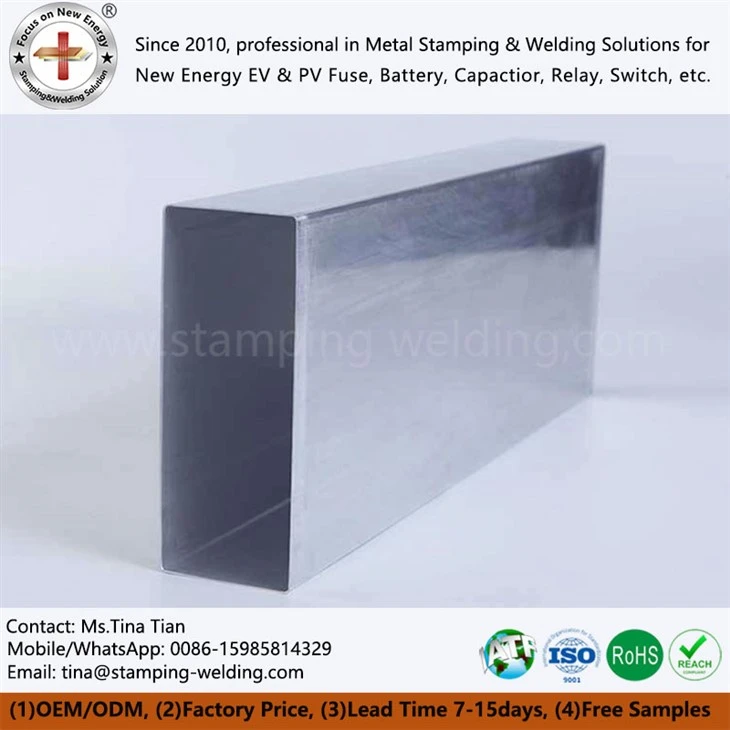
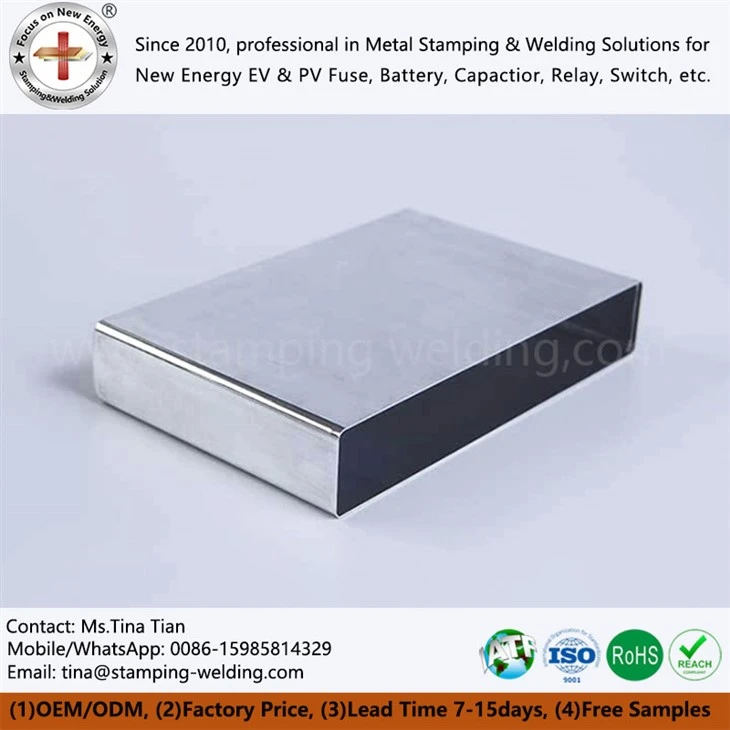

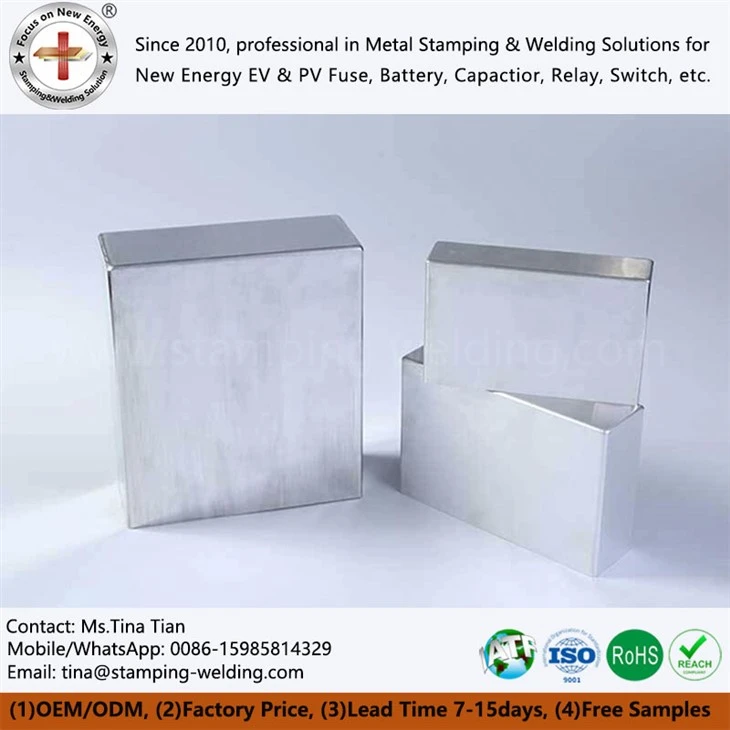
Polymer Lithium Battery Case
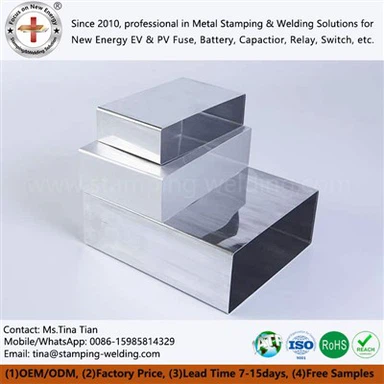
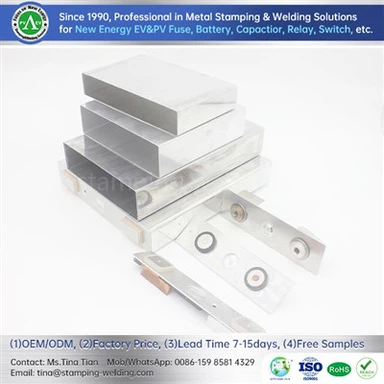
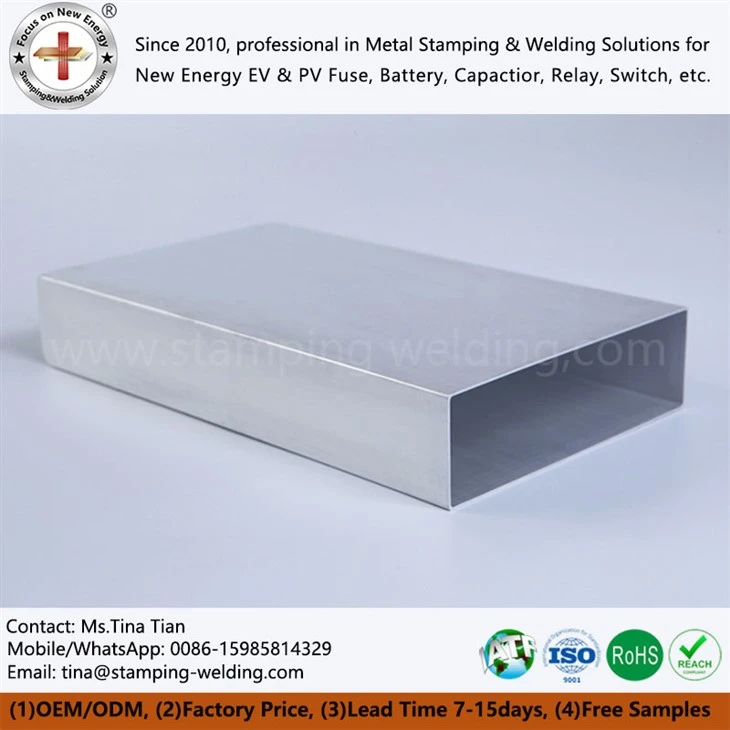
These precision-engineered metal components serve critical functions, including providing mechanical protection for internal cell Polymer Lithium Battery Case, isolating the cell from the external environment, offering structural support, and facilitating subsequent encapsulation and welding processes. Designed for applications such as power batteries for new energy vehicles, energy storage systems, industrial power supplies, and other high-reliability lithium-ion batteries, we offer prismatic battery casings primarily made of aluminum alloy. We customize the dimensions and structural design based on specific requirements regarding cell size, capacity, internal architecture, encapsulation methods, and automated production line specifications. Unlike standard metal enclosures, these battery casings are functional structural components that play a direct role in the cell encapsulation process. Factors such as forming precision, wall thickness uniformity, opening flatness, edge quality, and the fit with the top cover for welding all significantly impact subsequent cell assembly, sealing integrity, and mass production consistency.
- Fast Delievery
- Quality Assurance
- 24/7 Customer Service
Product Introduction
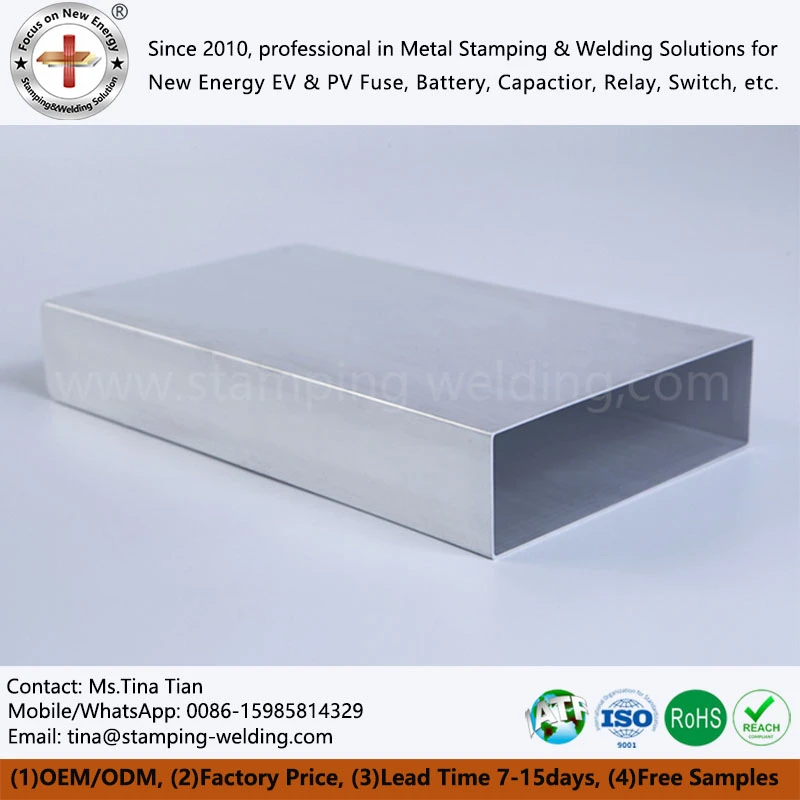
What is a Polymer Lithium Battery Case?
Containment Vessel: Provides uniform, stable external constraint for the gel-state or semi-solid electrode assembly, suppressing unrestrained thickness expansion during charge/discharge and cycling, while preventing localized swelling and the degradation of interfacial contact.
Water and Oxygen Barrier: The fully sealed structure formed by welding the aluminum casing to the top cover offers moisture and oxygen barrier capabilities far superior to organic film encapsulation-a critical prerequisite for extending the cycle and calendar life of polymer-based systems.
Chemical Interface Substrate: As the inner surface remains in prolonged contact with the electrolyte and its trace decomposition products, the surface must be "inert and clean," neither catalyzing side reactions nor introducing impurity ions.
Dimensional and Assembly Reference: The regular shape provides a precise reference for automated processes-including casing insertion, welding, stacking, inspection, and pack integration-where dimensional consistency directly translates to production line yield.
Detail Showcase: Tangible Quality Reflected in Micro-level Features
Inner Wall Texture and Cleanliness
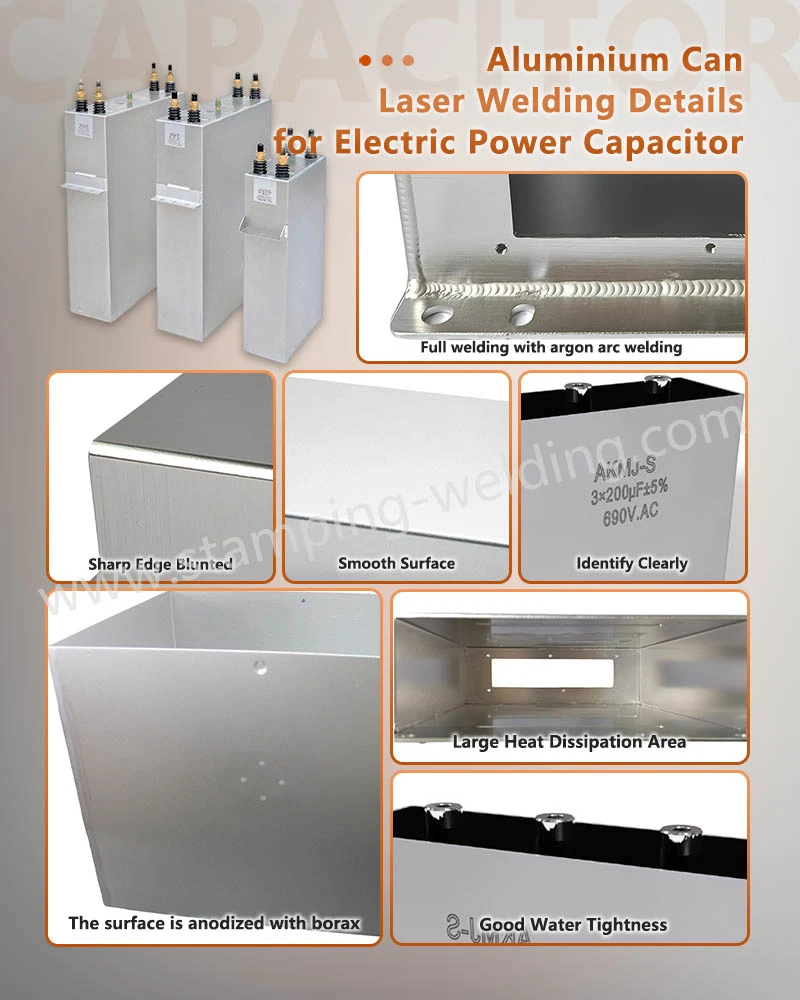
Following precision cleaning, the inner wall of the casing feels smooth to the touch and free of particulates; there are no visible metal shavings or residual oil films, and the surface sheen is uniform.
01
Wall Thickness Uniformity
Measurements taken at multiple points along the sidewall show minimal fluctuation. The thickness in the bottom, sidewall, and rim areas adheres to specific design tolerances-with no abnormal thinning or thickening-reflecting uniform and controlled material flow during the deep-drawing process.
02
Rim Mating Surface
The flatness of the casing's top opening is ensured through leveling or precision machining; the surface is smooth and free of warping, and the mating gap with the top cover is consistent, providing a prerequisite for high-quality laser welding.
03
Surface Coating Quality
On casings treated with anodizing or passivation, the coating exhibits uniform color without chromatic aberration, whitening, or peeling. Complete coverage at edges and corners demonstrates the uniformity and stability of the surface treatment process.
04
Services & Support for Aluminum Battery Box
Custom Dimensions, Shape & Structural Design
We provide full support from customized cell casing mold creation to final housing manufacturing, enabling clients to define shell geometry, internal layout, mounting points, interfaces, and mechanical reinforcement based on their product requirements.
Integrated Cell + Housing Battery Pack Solutions
For customers requiring ready-to-use battery modules, we offer integrated assembly services: pairing lithium-polymer cells with the Battery Pack, including internal supports, insulation, and sealing, ensuring safe and reliable battery packs.
Flexible Production Volumes
From Prototype to Mass Production: Whether you need a few prototype units for evaluation or mid-volume production for small or niche Aluminum Case product lines, our process allows efficient manufacturing with quick turnaround times.

Frequently Asked Questions for LiFePO4 Aluminum Case Battery Cell
1. What material is commonly used for a prismatic lithium battery case?
+
-
Common materials include 3003, 1060, 5052, and certain 6061 aluminum alloys. The actual choice depends on factors such as deep-drawing performance, structural strength, welding methods, and the specific design of the customer's battery cell.
2. Can the aluminum battery case be customized according to our cell dimensions?
-
Yes. Aluminum casings for prismatic lithium batteries generally require customization based on the cell's length, width, height, wall thickness, top-cover interface, and internal structure, rather than simply using standard, off-the-shelf sizes.
3. What manufacturing processes are used for the battery aluminum case?
-
Key processes include aluminum sheet blanking, stamping, deep drawing, trimming, punching, precision machining, cleaning, and necessary surface treatments. If the casing and top cover are supplied as an assembly, additional processes such as laser welding may also be involved.
4. Why is deep drawing important for a prismatic battery case?
-
Deep drawing allows for the gradual transformation of a flat aluminum sheet into a prismatic casing of a specific depth while minimizing the need for complex, multi-piece joined structures. For deeper casings, a well-designed multi-stage forming process improves material flow and reduces the risk of forming defects.
5. Can you develop a battery case from our existing drawing or prototype?
-
Yes. For OEM/ODM projects, we can evaluate structural and manufacturing requirements based on customer drawings, 3D models, or samples, and proceed with development covering materials, tooling, deep drawing, dimensional control, and welding interfaces.

contact us
If you are developing a new prismatic cell project for EVs or ESS, we can provide engineering assessments covering everything from materials and deep-drawing dies to welding interfaces; please submit your drawings or 3D models to receive a customized solution.

Hot Tags: Polymer Lithium Battery Case, Prismatic Lithium Battery Case, Lithium Battery Aluminum Case, Prismatic Battery Aluminum Shell, Lithium Ion Battery Case, EV Battery Case, Aluminum Battery Housing