Analysis Of The Production Process Of High Purity Alumina Precision Advanced Ceramic Metallization Parts
May 17, 2026
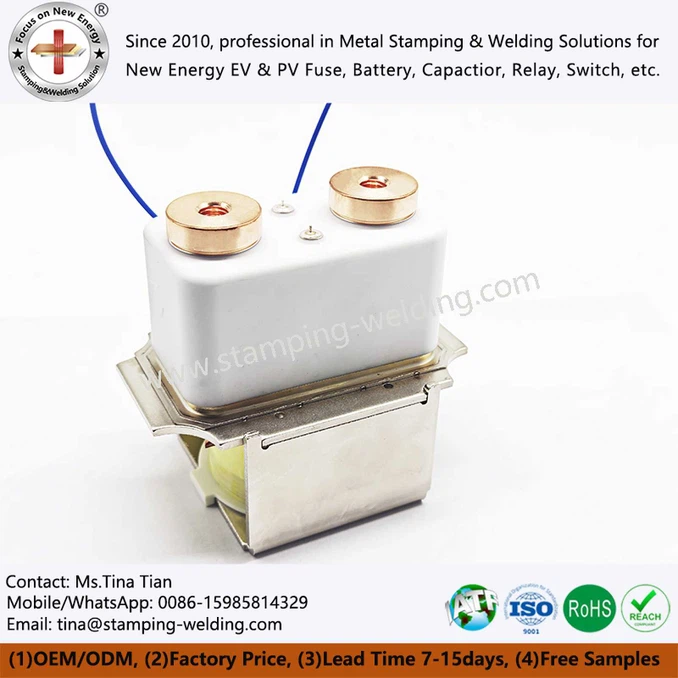
High Purity Alumina Precision Advanced Ceramic Metallization Parts are precision products made by molding and sintering high-purity powder into a high-density ceramic matrix, then coating the surface with metal paste and sintering it a second time to achieve a strong bond between ceramic and metal. These parts are widely used in semiconductor equipment, vacuum electronics, medical devices, and new energy fields. The following are the six stages of the core production process.
Raw material and slurry preparation
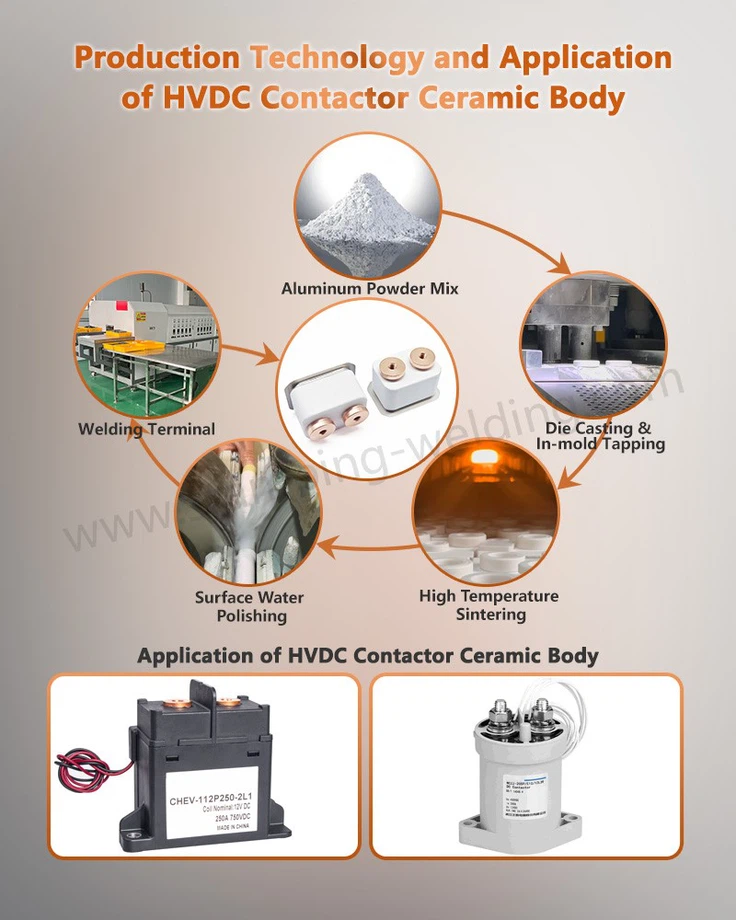
Ultrafine α-Al₂O₃ powder with a purity of 99.5%~99.99% is selected, and inorganic and organic impurities are removed to avoid microcracks and pores. Trace amounts of sintering aids (such as magnesium oxide and silicon dioxide) are added, and the mixture is nano-milled in an organic solvent. Subsequently, binders and dispersants are added, and the mixture is spray-granulated to obtain a powder with good flowability and uniform particle size. This stage provides a high-quality matrix material for subsequent ceramic metallization.
Ceramic precision molding
The molding process should be selected based on the complexity and precision requirements of the component: dry pressing or cold isostatic pressing (CIP) is suitable for simple blocks or tubular parts; injection molding or casting is suitable for irregularly shaped parts, thin sheets, or complex microchannel components. The green body after molding must maintain uniform density to reduce sintering deformation. For tubular products such as metallized cerebral insulating tubes, isostatic pressing is often used to ensure consistent wall thickness.
Degreasing and high-temperature sintering
The green body is placed in a debinding furnace and slowly heated to 400°C–600°C to completely remove the organic binder (binder removal). It is then heated to 1500°C–1700°C in a protective atmosphere furnace or vacuum sintering furnace, where atomic diffusion fuses the powder particles into a high-density, high-strength, and non-porous ceramic matrix. The sintered ceramic provides a dense interface for subsequent metallized ceramics.
Precision machining and surface metallization
The sintered high-purity alumina has extremely high hardness, requiring diamond tools for planar grinding, internal and external cylindrical grinding, and polishing to meet micron- or even nanometer-level dimensional tolerances and surface roughness requirements. For special structures (such as perforations and chamfers), ultrasonic or laser drilling is used. This step is typical of precision machining for alumina ceramic parts, directly determining the final assembly accuracy.
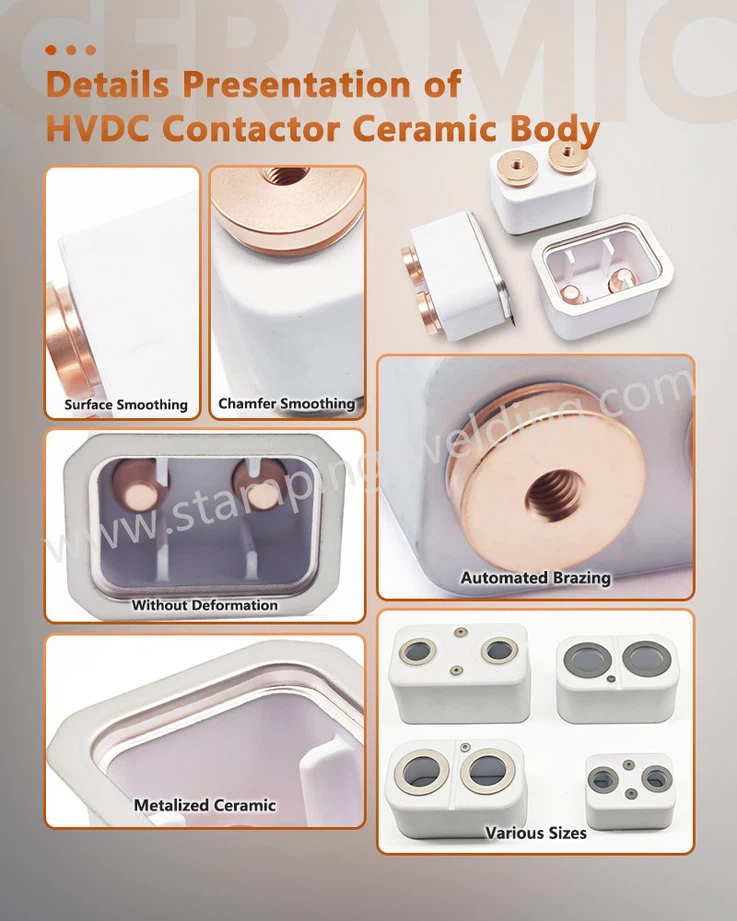
Surface metallization is the core process for achieving ceramic-to-metal bonding. First, a conductive paste such as molybdenum-manganese (Mo-Mn) is prepared, and refractory metal powders are ball-milled with additives until homogeneous. Then, the paste is applied to the ceramic surfaces to be bonded using screen printing or precision dispensing. Finally, sintering is performed in a hydrogen or protective atmosphere furnace at 1300°C–1500°C, allowing the metal layer to penetrate the ceramic grain boundaries, forming a strong mechanical and chemical bond layer, resulting in a metallized ceramic component.
Electroplating and post-treatment
Nickel is electroplated onto the metallized layer (or subsequently gold/silver plating) to improve corrosion resistance and brazing performance. Ultra-high vacuum helium mass spectrometry leak detection, dimensional inspection, and adhesion and tensile testing are then performed to ensure compliance with service standards under extremely demanding operating conditions. Final products, such as Metallized Ceramic Housing for Power Semiconductors and HVDC contactor ceramic enclosures, must pass all of the above tests.
In summary
The production process of High Purity Alumina Precision Advanced Ceramic Metallization Parts covers six major stages: powder processing, forming, sintering, precision machining, metallization, and electroplating testing. Among them, the stability of ceramic metallization technology directly determines the sealing strength and airtightness of the product, making it an irreplaceable key process in fields such as semiconductors and high-voltage DC contactors.
Contact Us
If you have any needs for High Purity Alumina Precision Advanced Ceramic Metallization Parts products, or if you wish to inquire about process adaptation details, please feel free to contact us for professional solutions.