


How To Effectively Prevent Oxidation Of Braided Wire Flexible Copper?
May 17, 2026
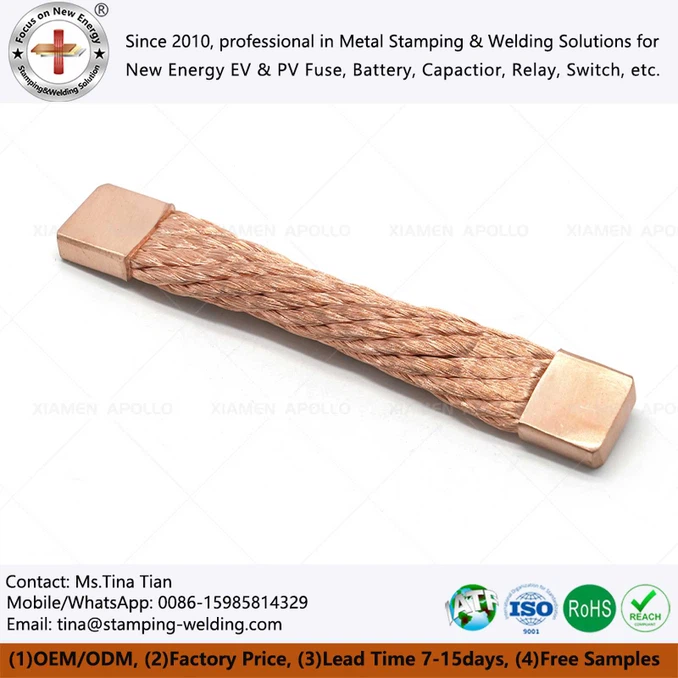
In electrical connections and power transmission, Braided Wire Flexible Copper, with its excellent flexibility and conductivity, has become an indispensable core connection component in various devices, widely used in Flex Connectors, electrical equipment terminal connections, and other scenarios. However, the oxidation of copper wire strands has long plagued industry practitioners. Oxidized copper wires exhibit blackening and verdigris formation, which not only reduces conductivity but also shortens lifespan and can even cause equipment failure. Therefore, mastering scientific oxidation protection methods is crucial for ensuring the stable operation of braided flexible wire connectors and various copper braided connection components.
Oxidation protection core
Industry technical experts point out that the key to preventing oxidation of the flexible copper strands in braided wires lies in blocking the contact between copper and air, moisture, and corrosive gases at the source. In combination with actual application scenarios, a comprehensive protection system can be formed by focusing on three dimensions: material selection, surface treatment, and daily protection, to meet the various usage needs of Copper Stranded Flexible Connection.
Material selection
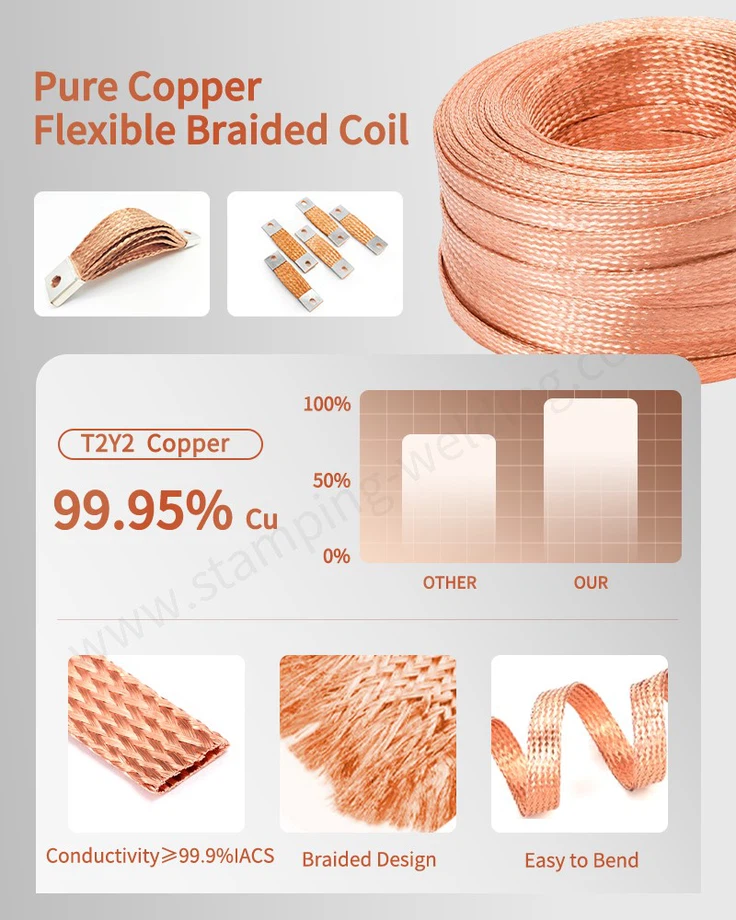
Material selection is fundamental to oxidation protection, and using tin-plated copper braided wire is the most direct and effective preventative measure. Currently, Braided Tin Coated Copper Flexible Wire Connectors are increasingly widely used in the industry. Tin is extremely stable at room temperature, naturally forming a dense oxide film on its surface, which fundamentally isolates oxygen and moisture, completely preventing copper wire from blackening and developing verdigris, while not affecting the conductivity of the copper wire. It is suitable for various complex working conditions such as high voltage and humidity, offering significantly improved protection compared to traditional bare copper wire. Furthermore, the selection of copper power braid materials must also consider the requirements of the application scenario. In highly corrosive environments, tin-plated or other corrosion-resistant copper wires should be prioritized to reduce the risk of oxidation from the source.
Surface treatment
Surface treatment is key to enhancing protection, further improving the oxidation resistance of copper wire strands through a dual physical and chemical isolation method. On one hand, a special passivation process can be applied to the bare copper wire, generating a dense passivation protective film on the surface. This treatment does not affect the conductivity of the copper wire and significantly improves its oxidation and salt spray resistance, making it suitable for use in outdoor or humid environments with Round Braided Stranded Flexible Cords. On the other hand, protection can be strengthened through outer insulation and rust inhibitor coating: an insulating sheath or heat-shrink tubing is applied to the braided copper wire to effectively isolate it from air, moisture, and corrosive substances. For exposed connection points, a special metal rust-preventive oil or paint is evenly applied to the wire surface, physically isolating it to prevent contact between oxidizing media and the copper wire, extending the lifespan of Flexible Copper Braided Electrical Connectors.
Daily protection
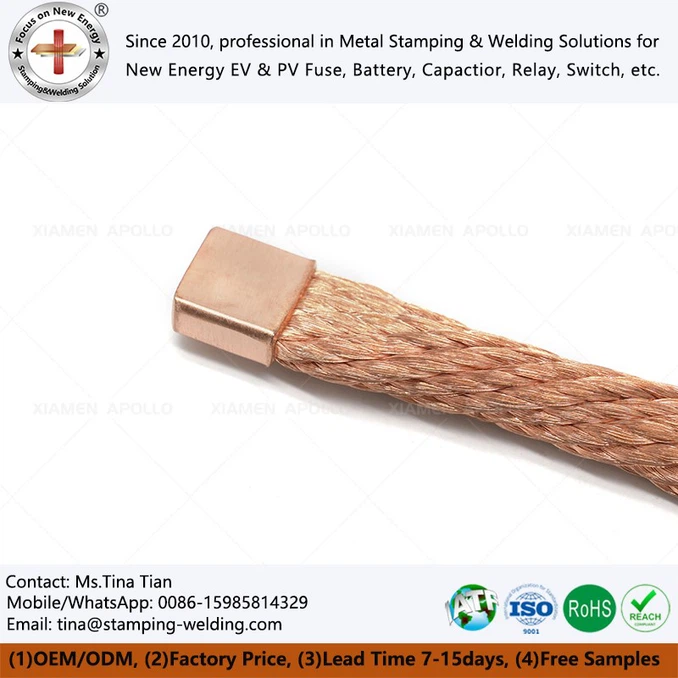
Environmental and installation controls are crucial for daily protection. Standardized storage and installation procedures can effectively slow down the oxidation rate of copper wire strands. During storage, products such as Braided Copper Flexible Connectors and Round Braided Flexible Cords should be stored in a dry, well-ventilated warehouse, avoiding direct sunlight. The ambient humidity should be controlled below the specified standard to prevent condensation, which can accelerate copper wire corrosion. During installation and connection, when performing terminal soldering or crimping, the original oxide layer on the copper wire surface must be removed first. This can be done using mechanical polishing or a copper-specific cleaning agent. After crimping, it is recommended to fully encapsulate the terminals with heat shrink tubing or insulating sealant to prevent moisture and harmful gases from entering, especially suitable for components such as Flat Copper Braided Flexible Connectors that require long-term stable operation.
Industry Trends
Oxidation protection of Braided Wire Flexible Copper is crucial for ensuring electrical connection stability and reducing equipment maintenance costs. With continuous technological advancements in the industry, specially treated products such as Flexible Copper Braid Connectors and Braided Tin Coated Copper Flexible Connectors will gradually replace traditional bare copper wires and become the industry mainstream. In the future, companies will need to optimize protection processes based on different application scenarios to further enhance the oxidation resistance of copper braided wires, providing more reliable protection for the safe and stable operation of electrical equipment.
Contact Us
If you have any questions about Braided Wire Flexible Copper oxidation protection, product selection, or customization needs, please feel free to contact us. We will provide you with professional technical support and adaptation solutions.


