Analysis Of The Performance Characteristics And Industry Applications Of Stamping Aluminum Parts
May 17, 2026
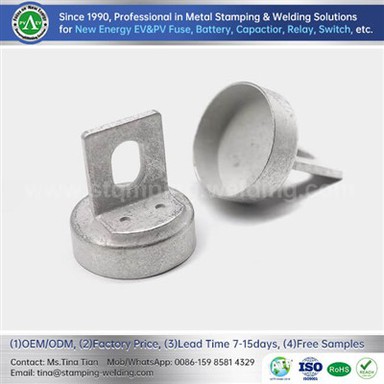
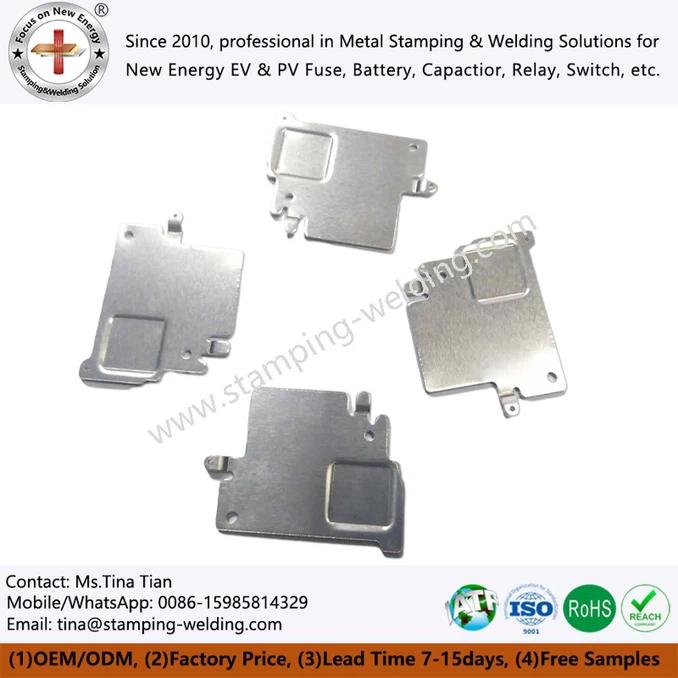
With the rapid iteration of the new energy, aerospace, and electronics manufacturing industries, lightweight and high-performance components have become core requirements for industrial upgrading. Stamping Aluminum Parts products, with their diverse advantages, are gradually becoming the preferred solution in various fields. Among them, stamped aluminum parts, as core products in the aluminum stamped field, combine lightweight and high specific strength, along with excellent processing performance and physicochemical properties, enabling their widespread application in multiple scenarios. They also provide crucial support for the technological research and development and market expansion of aluminum stamping companies.
Core advantages: Combining lightweight and high strength
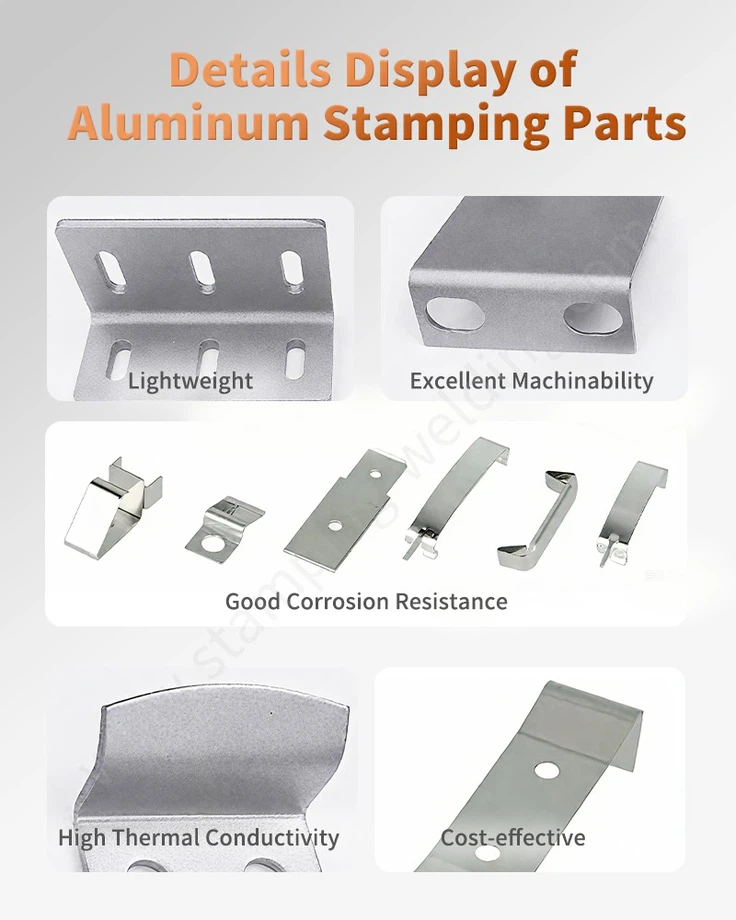
At the core performance level, the most outstanding advantage of Stamping Parts lies in the perfect balance between lightweight and high strength. Aluminum's density is about one-third that of steel, significantly reducing overall weight compared to traditional metal stamped. This characteristic is particularly crucial in the automotive and aerospace industries, effectively improving fuel efficiency or driving range, aligning with the industry's low-carbon development trend. Through stamped process hardening and appropriate alloy heat treatment, the specific strength of Stamped Parts can rival or even surpass that of some steels, fully meeting the usage requirements of various load-bearing scenarios and breaking the industry's perception that "lightweight and high strength are mutually exclusive."
Excellent physicochemical properties and broadened application scope
The superior physicochemical properties further broaden the application boundaries of Aluminum Stamping Parts. The naturally formed dense alumina protective film on the aluminum surface gives it excellent corrosion resistance, effectively preventing rust. After anodizing, its corrosion resistance and wear resistance are further enhanced, making it suitable for outdoor and complex environments. This also gives it broad application prospects in photovoltaic supporting fields such as Aluminum Photovoltaic Bracket Accessories and Aluminum Accessories for Solar Mounting. At the same time, its excellent thermal and electrical conductivity makes it an ideal material for heat sink housings in electronic appliances and battery trays in new energy vehicles. Its non-magnetic and anti-static properties effectively prevent electromagnetic interference and absorb shock in electrical components, ensuring stable equipment operation.
Easy to process and shape, with outstanding production efficiency
In terms of processing and forming, the mature application of aluminum sheet metal stamped technology gives stamped aluminum parts a significant production advantage. Commonly used 5-series, 6-series, and 7-series aluminum alloy sheets exhibit excellent ductility under specific conditions, making them easy to stamp into complex three-dimensional shapes using the aluminum sheet metal stamping process. This meets the customized needs of various fields, providing a technological foundation for the development of custom aluminum stamped business. The stamped process itself is characterized by high automation and high production efficiency, with fast single-pass forming speed, high dimensional accuracy, and high material utilization, making it suitable for mass production needs and helping companies reduce production costs and increase capacity. Furthermore, after stamped, stamped aluminum parts can undergo various surface treatment processes such as spraying, electroplating, and anodizing to achieve rich colors and a high-end texture, further enhancing the added value of the product.
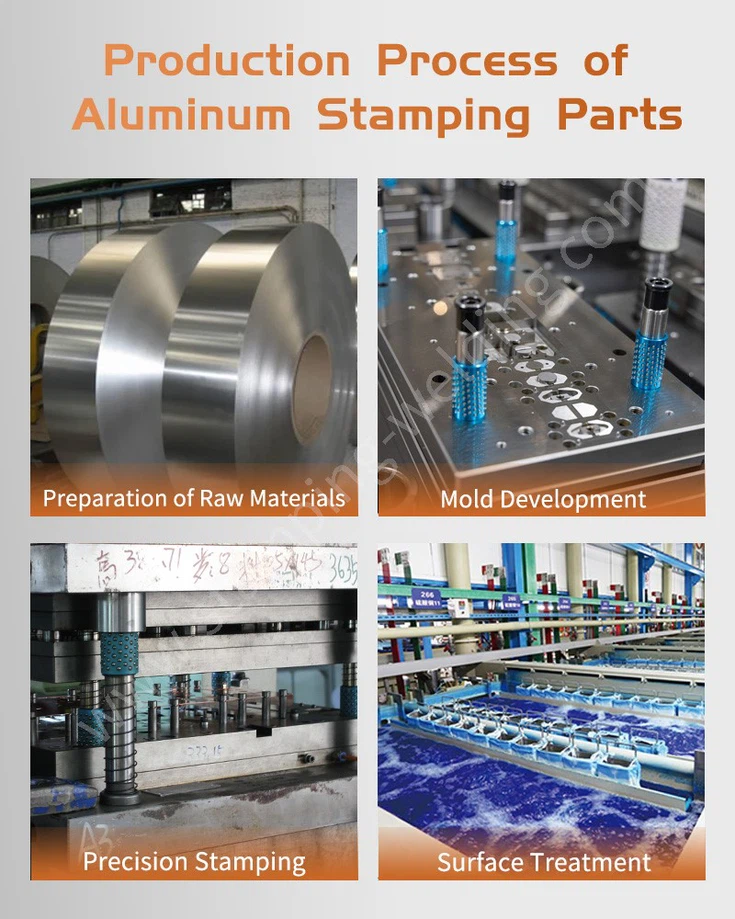
Key points of production process
It is worth noting that there are still key process considerations in the actual production of aluminum stamping. Because aluminum's elastic modulus is only one-third that of steel, Aluminum Metal Stamped are less rigid and have poorer dent resistance. Therefore, the design typically requires increasing wall thickness or adding reinforcing ribs to ensure they have the same strength as steel parts. Furthermore, the springback phenomenon during aluminum alloy stamped is more pronounced than that of steel plates, requiring pre-compromise in mold design and forming processes to ensure the final dimensional accuracy of the product. This places higher demands on the technical capabilities of aluminum stamped companies.
Future prospects
Currently, as various industries continuously raise their requirements for component performance, the application scenarios of Stamping Aluminum Parts are constantly expanding, from automotive, aerospace, and electronics to photovoltaic components, where their advantages of lightweight design and high performance are becoming increasingly prominent. In the future, with the continuous optimization of aluminum stamped technology and the growth of personalized demand for custom aluminum stamped, Aluminum Sheet Metal Stamped are expected to further overcome process bottlenecks, injecting new momentum into the high-quality development of related industries.
Contact Us
If you have any needs for customizing, procuring, or consulting on Stamping Aluminum Parts, please feel free to contact us. We will provide you with professional aluminum stamping solutions tailored to your industry needs.