The Value Of Residential Energy Storage Systems Continues To Grow, With Electricity Cost Management, Solar Energy Utilization, And Emergency Power Supply Emerging As Key Areas Of Focus.
Nov 11, 2026
Driven by growing residential electricity demand, evolving electricity pricing mechanisms, and the increasing adoption of distributed solar photovoltaic (PV) systems, residential energy storage is transitioning from a simple backup power source into a vital component of home energy management. By integrating solar PV generation, battery storage, inverters, and household loads, users can gain greater flexibility in managing their electricity consumption, increase the utilization of renewable energy, and secure backup power for critical appliances during grid disruptions.
Currently, the value of residential energy storage systems primarily lies in three areas: optimizing electricity costs, maximizing the self-consumption of solar-generated power, and providing emergency backup supply. Because household consumption habits, local electricity pricing policies, rooftop solar potential, and backup power requirements vary, the decision to install a residential storage system should be evaluated based on specific load profiles and system configurations.
Residential energy storage enhances solar utilization and reduces electricity costs
For households with rooftop solar PV systems, there is often a temporal mismatch between power generation and consumption. During the day, when sunlight is abundant, solar systems may generate a surplus of electricity, while household demand remains relatively low. Conversely, in the evening and at night, solar generation drops, while the demand for electricity-driven by lighting, air conditioning, kitchen appliances, and other devices-often increases.
In a conventional grid-tied solar setup, excess power is typically fed back into the grid, and households purchase electricity from the grid when their own solar generation is insufficient. If the local feed-in tariff (the price paid for electricity sent to the grid) is lower than the retail price paid for electricity from the grid, relying solely on a grid-tied solar system may fail to fully capture the potential economic benefits of the generated power.
By incorporating a home solar battery storage system, excess energy generated during the day can be stored in batteries and discharged later to meet household demand in the evening or at night. Through well-planned charge and discharge strategies, the system can increase the proportion of solar energy consumed on-site, thereby reducing the amount of electricity purchased from the grid during peak-demand periods.
In regions with time-of-use (TOU) electricity pricing, storage systems can also be used to optimize energy dispatch by leveraging price differentials across different times of the day-for instance, charging the batteries when electricity prices are low and supplying power to the home when prices are high. However, the actual cost savings depend on a combination of factors-including the price spread between peak and off-peak periods, battery round-trip efficiency, cycle life, initial equipment investment, and local electricity pricing policies.
Therefore, the investment payback period cannot be determined solely based on theoretical price differentials.
For households opting for "plug-and-play" home energy storage, system integration and installation methods are key considerations. Even if the equipment is relatively easy to install, it is essential to verify its compatibility with the existing electrical distribution system, photovoltaic (PV) equipment, and household loads. Furthermore, installation and protective configurations must strictly adhere to local electrical codes.
Emergency backup power has emerged as a critical application for home energy storage
Beyond electricity cost management, ensuring a continuous power supply is another major reason households consider energy storage systems. Events such as typhoons, heavy storms, grid maintenance, or localized power outages can lead to interruptions lasting anywhere from a short while to an extended period. For households that rely on appliances like refrigerators, networking equipment, lighting, water pumps, or certain medical support devices, a backup power source can significantly mitigate the impact of an outage.
Residential energy storage inverters equipped with backup power functionality can-depending on the system design-switch to "backup mode" during grid anomalies, providing power to designated household loads. The actual switching time varies based on the inverter architecture, the switching mechanism, and the system control strategy; it should not be assumed that all products offer seamless, millisecond-level switching.
When evaluating backup capabilities, homeowners should focus on key specifications: rated output power, peak output power, switching time, the types of loads that can be supported, and the usable battery capacity. For instance, appliances such as refrigerator compressors, water pumps, and air conditioners can draw high instantaneous power during startup; therefore, the system must be sized not only for routine operational power but also to accommodate the surge currents generated when these loads start up.
For households requiring longer-duration backup power, battery capacity can be determined based on the power requirements of critical loads and the desired duration of backup supply. When utilizing a "Powerwall"-style energy storage battery or similar home battery configurations, it is also necessary to ensure that the battery and inverter are compatible in terms of communication protocols, voltage ranges, and charge/discharge parameters.
Battery Technology and System Integration Influence the Performance of Residential Energy Storage
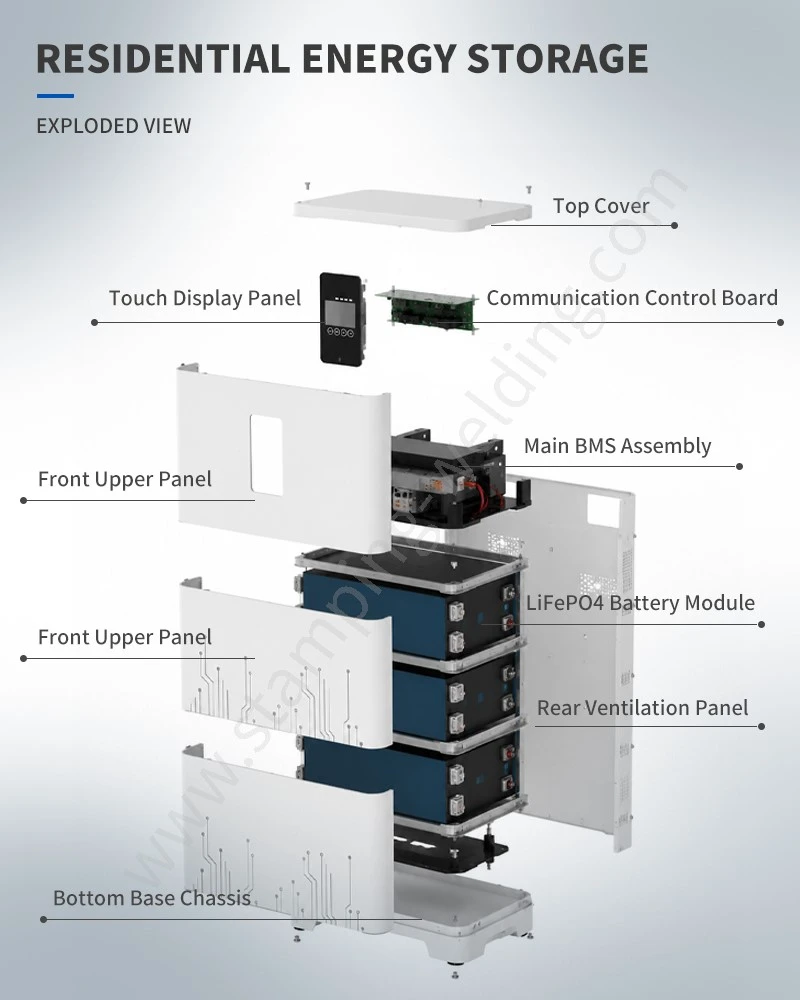
The battery is the core component of a residential energy storage system; its chemical composition, capacity configuration, thermal management, and battery management system (BMS) directly dictate the system's safety and operational performance. Currently, lithium iron phosphate (LiFePO4) batteries are widely used in residential energy storage applications due to their superior thermal stability and cycle life.
Residential energy storage systems based on LiFePO4 technology typically consist of battery modules, a BMS, protective devices, and associated control units. The BMS must continuously monitor the voltage, current, and temperature of individual cells, providing protection against overvoltage, undervoltage, overcurrent, and abnormal temperatures. Furthermore, the battery pack requires an effective cell-balancing strategy to mitigate performance disparities that may arise among individual cells during long-term operation.
When selecting a lithium-ion battery system for residential energy storage, capacity is not the only criterion. Users should also consider factors such as nominal voltage, maximum continuous charge/discharge current, test conditions for cycle life, operating temperature range, communication protocols, and the installation environment. Since battery parameters can vary between brands and models-and may not be mutually compatible-it is essential to verify system-level compatibility requirements before purchase.
In terms of system architecture, a hybrid residential energy storage system integrates photovoltaic (PV) power generation, battery storage, and grid supply, distributing energy from these various sources according to specific operational strategies. Compared to standalone storage units, hybrid systems impose more rigorous integration requirements regarding inverter control, battery management, grid-connection protection, and load switching.
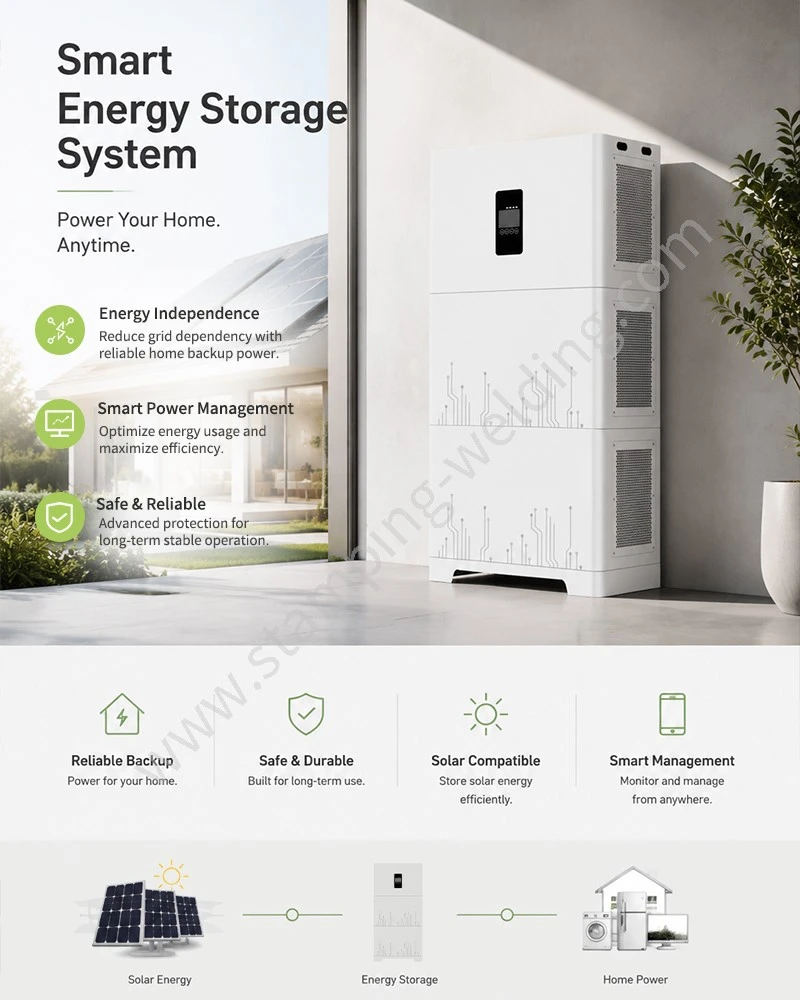
Some households opt for an "all-in-one" energy storage system (ESS), which houses the battery, inverter, and control modules within a single unit or cabinet. While this approach simplifies system layout, it is still necessary to verify the technical specifications of each module, as well as the thermal management design, space requirements for maintenance, and potential for future capacity expansion.
The Diversity of Residential Energy Storage Products Requires Comprehensive Site Assessment
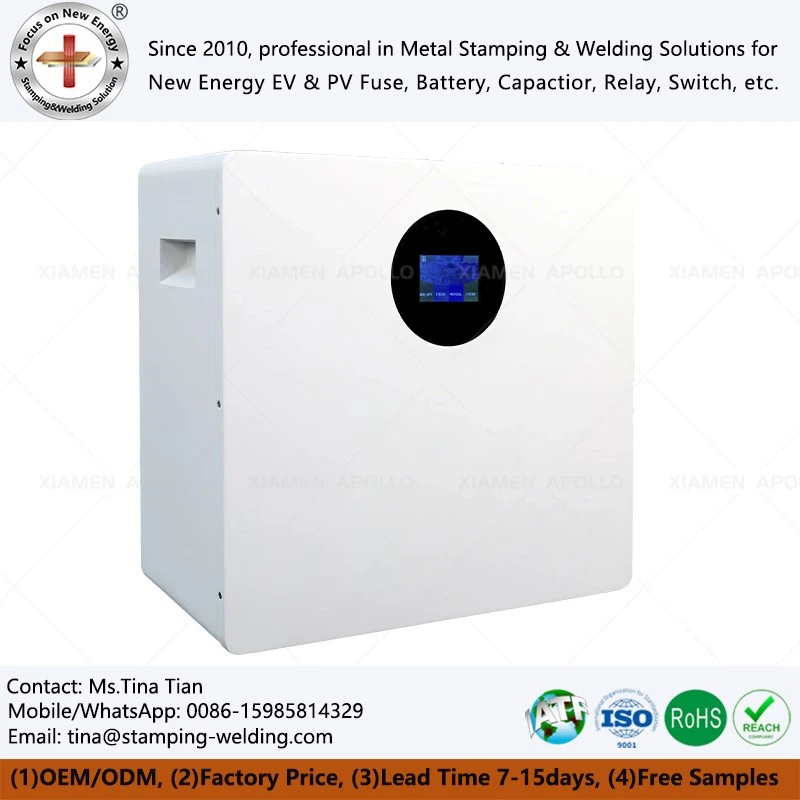
As residential energy storage applications become increasingly specialized, products are evolving to offer a wider variety of structural designs, installation methods, and capacity configurations. Given that residential properties differ in terms of available space, electrical distribution infrastructure, and energy requirements, the chosen equipment configuration must be carefully matched to the specific installation environment. Wall-mounted residential energy storage systems are designed for homes with suitable load-bearing walls and adequate installation space. When considering such systems, it is essential to evaluate factors including equipment weight, wall load-bearing capacity, installation height, ventilation/heat dissipation, and access space for maintenance to ensure long-term, reliable operation.
For households with ample space and a need for higher energy storage capacity, low-voltage floor-standing battery systems offer an alternative. This configuration typically facilitates modular setup and future maintenance; however, considerations such as floor load-bearing capacity, spacing between units, electrical connections, and safety/protection requirements must still be addressed.
Additionally, 220V portable energy storage systems are primarily intended for mobile power needs or temporary, short-term applications.
Their output capacity, total energy storage, and operational scope differ significantly from those of fixed, permanent residential energy storage systems. Users should select equipment based on their specific load requirements and must not equate portable units with fixed systems capable of providing whole-home backup power.
For users looking to integrate solar photovoltaic (PV) generation with battery storage, key factors to evaluate include the PV input range, inverter conversion efficiency, battery capacity, on-grid/off-grid operational capabilities, and system protection features. The overall configuration of such residential power systems should be tailored to the home's electrical distribution capacity, the distribution of power loads, and local grid-connection requirements.
Which households are best suited for residential energy storage systems?
In practice, residential energy storage is not suitable for every household. First, it is most beneficial for homes with high daily electricity consumption and significant utility costs-especially where there is a substantial price difference between peak and off-peak electricity-as these users can optimize their energy costs through strategic charging and discharging.
Second, for households that have installed-or plan to install-rooftop solar PV systems, energy storage allows for the capture of excess daytime power, thereby increasing the rate of self-consumption. This is particularly valuable in regions where the feed-in tariff (the price paid for electricity sold back to the grid) is low, while household electricity demand remains high during the evening.
Third, for households that require a high degree of power continuity-such as those needing to keep critical equipment like network hardware, refrigerators, water pumps, or other essential appliances running-energy storage can be configured to provide a reliable backup power supply for these specific loads. However, if the goal is to provide backup power for an entire residence, it is essential to calculate the maximum load and the required duration of continuous power supply in advance to avoid issues such as insufficient battery capacity or inadequate inverter power.
For self-built homes and villas, factors like roof area, conditions for photovoltaic (PV) installation, and space for equipment placement are generally easier to incorporate into the overall planning. Nevertheless, the building structure, power distribution system, and fire safety requirements still necessitate professional assessment.
When procuring residential energy storage systems, one should consider both system configuration and long-term operational requirements.
The true value of a residential energy storage system is not determined solely by battery capacity; it is influenced by a range of factors, including inverter efficiency, system control strategies, the installation environment, household electricity consumption patterns, and local electricity pricing mechanisms. Before making a purchase, users should evaluate their average daily electricity consumption, peak load, installed PV capacity, desired backup duration, and potential future expansion needs to determine the appropriate battery capacity and inverter power.
For manufacturers of energy storage equipment and procurement teams, product development and bulk purchasing must also account for battery module architecture, enclosure materials, connection terminals, busbars, insulation components, thermal management structures, and electrical protection designs. The reliability of internal connections, contact resistance, insulation performance, and mechanical fastening methods all directly impact the operational stability of the equipment during long-term charge-discharge cycles.
During the project selection and supply chain evaluation phases, it is advisable to define requirements-such as voltage ratings, nominal currents, temperature rise limits, insulation clearances, ingress protection (IP) ratings, and relevant certifications-based on the specific application environment. Product suitability should be verified through sample testing, assembly validation, and rigorous quality control during mass production. For projects requiring custom battery enclosures, copper connectors, precision-stamped parts, or welded structural components, it is best to provide product drawings, material specifications, and technical requirements as early as possible. This facilitates structural reviews, process feasibility analysis, and sample validation.
If you are developing residential energy storage batteries, inverters, or integrated energy storage systems, we invite you to share your product drawings, material specifications, dimensional tolerances, and operational conditions. We can discuss customized manufacturing solutions for precision metal stampings, conductive connectors, and welded assemblies, helping to establish a stable supply foundation for your subsequent engineering validation and mass production.
contact us