The Technological Upgrades in The High-Voltage DC Contactor Industry By 2026: Ceramic Arc-Extinguishing Structures And Precision Metallization Processes Drive Enhanced Product Reliability
Nov 09, 2026
With the continued development of new energy vehicles (NEVs), energy storage systems, photovoltaic (PV) inverters, and high-power DC charging infrastructure, the application of high-voltage DC contactors within new energy electrical systems is expanding. In particular, as 800V (and higher) voltage platforms become more prevalent in NEVs and the power ratings of energy storage systems continue to rise, these contactors are increasingly required to handle circuit switching and fault interruption under conditions of higher voltage and greater current. Consequently, product design has evolved from basic on/off functionality toward miniaturization, lower power consumption, higher short-circuit withstand capability, integrated state monitoring, and extended service life.
Compared to AC contactors, high-voltage DC contactors face more complex arc-extinguishing challenges. Since DC lacks a natural zero-crossing point, the electric arc generated during contact separation does not extinguish spontaneously. This places stringent demands on the design of the arc-extinguishing chamber, the choice of contact materials, the efficiency of the magnetic blowout system, and the integrity of insulation and sealing. Furthermore, given the limited internal space, the main circuit, coil drive mechanism, auxiliary contacts, and insulation structures must be designed to function in synergy within a compact footprint.
Against this technical backdrop, the development of ceramic arc-extinguishing chambers, precision metallized ceramics, low-power electromagnetic actuators, and short-circuit-resistant structures has become a primary focus for high-voltage DC contactor R&D. Advancing these key technologies-through material optimization, structural simulation, refined manufacturing processes, and comprehensive reliability testing-has become essential for enhancing the overall performance of these components.
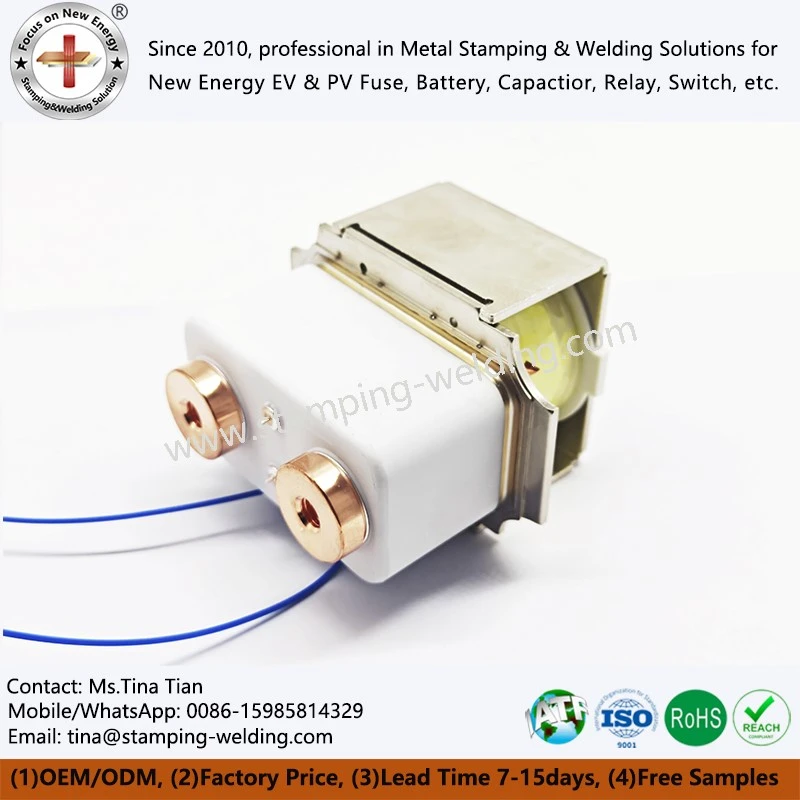
Market Demand and Technical Development Trends for High-Voltage DC Contactors
High-voltage DC contactors are widely used in NEV battery packs, high-voltage power distribution units (PDUs), energy storage power conversion systems, PV inverters, and DC charging infrastructure. In these applications, contactors must execute the connection and disconnection of the main circuit based on control system commands, while also working in tandem with protection systems to safely interrupt the circuit during overcurrent, short-circuit, or other abnormal operating conditions.
As system voltages and operating currents increase, the limitations of conventional contactors-regarding physical size, coil power consumption, contact erosion, electromagnetic repulsion forces during short circuits, and state feedback capabilities-are becoming increasingly apparent. Particularly under high-voltage, high-current conditions, the electric arc generated during contact separation can lead to material erosion, localized temperature spikes, and damage to insulation structures. If the arc-extinguishing system is inadequately designed, it may also compromise the product's electrical lifespan and operational safety.
Consequently, current technological upgrades for high-voltage DC contactors focus on several key areas: reducing the overall footprint through compact structural design; optimizing electromagnetic actuation and coil control to lower power consumption during continuous operation; enhancing ceramic arc-extinguishing chambers and magnetic blowout systems to improve DC arc control; strengthening contact pressure under short-circuit conditions; and incorporating auxiliary contacts and status feedback mechanisms to bolster safety interlocks and fault diagnostic capabilities within high-voltage systems.
For manufacturers of new energy vehicles and energy storage equipment, the selection of a contactor requires more than just considering rated voltage, rated current, and breaking capacity; it necessitates a comprehensive evaluation of mechanical and electrical lifespan, insulation performance, environmental adaptability, and compatibility with the overall control system.
Ceramic Arc-Extinguishing Chambers: A Critical Component in High-Voltage DC Contactors
The arc-extinguishing system of a high-voltage DC contactor directly dictates its breaking capacity and service life. Because DC arcs lack the natural zero-crossing points that facilitate extinction, the arc-extinguishing structure must employ electromagnetic forces, gaseous media, specific contact geometries, and chamber designs to manipulate arc movement and accelerate energy dissipation.
Ceramic materials-characterized by high dielectric strength, heat resistance, and dimensional stability-are well-suited for use in the arc-extinguishing chambers and insulating seal structures of high-voltage contactors. High-purity alumina ceramics, in particular, are widely utilized in high-voltage electrical components due to their excellent electrical insulation and thermal stability. Utilizing A95-grade alumina ceramic for the arc-extinguishing chamber provides reliable electrical isolation for the internal contacts and the arcing zone.
In terms of structural design, the ceramic arc-extinguishing chamber requires careful consideration of factors such as chamber dimensions, contact spacing, terminal positioning, metallized connection zones, and brazed sealing structures. For the ceramic enclosures of HVDC contactors, the material must not only withstand the thermal shock generated by internal arcing but also meet stringent requirements for electrical insulation and hermetic sealing in high-voltage environments. The precision of the ceramic forming process, the quality of sintering, and the accuracy of subsequent machining all directly influence the consistency of the arc-extinguishing chamber assembly.
Furthermore, the arc-extinguishing chamber typically requires an integrated magnetic blowout structure. By strategically positioning permanent magnets to generate a magnetic field with a specific orientation, the interaction between the arc current and the magnetic field forces the arc to deflect and elongate away from the main contact area. This reduces the arc's dwell time and minimizes the risk of contact erosion. Optimizing the magnetic field strength, magnet positioning, contact geometry, and the configuration of the arc-extinguishing cavity requires a combination of electromagnetic simulation and empirical interruption testing.
Precision metallization of ceramics enhances the reliability of ceramic-to-metal joints. In high-voltage contactors, power semiconductor packages, and high-voltage electrical components, the quality of the bond between ceramic and metal is a critical determinant of overall product reliability. While ceramics offer excellent insulating properties, they are inherently difficult to join directly to conventional metal structures. Metallizing the ceramic surface creates an intermediate metallic layer that facilitates bonding with brazing alloys, thereby enabling subsequent hermetic sealing and structural assembly.
Alumina-based metallized ceramics typically consist of an alumina substrate with a metallic layer-applied via a specialized metallization process-that possesses specific adhesion strength and electrical conductivity. This process improves the interface between the ceramic and metal, making it ideal for high-voltage electrical insulators, ceramic packaging, and precision electrical components.
From a manufacturing perspective, the quality of precision metallized ceramics depends not only on the metallization materials and process formulations but also on the purity of the ceramic substrate, surface roughness, cleanliness, the thickness of the metallized layer, and the sintering temperature profile. If the bond between the metallized layer and the ceramic substrate is inadequate, it can lead to localized delamination, cracking, or a loss of hermetic integrity during subsequent brazing.
Consequently, rigorous, systematic control is required across raw material selection, surface pre-treatment, metallization deposition, and the sintering process. For components requiring complex geometries and precise dimensions, the precision machining of alumina ceramic parts serves as a critical manufacturing stage. Due to the high hardness and inherent brittleness of ceramic materials, mechanical processing can easily lead to the formation of micro-cracks, edge chipping, and dimensional deviations. By optimizing grinding parameters, machining sequences, and positioning methods, manufacturers can enhance the dimensional consistency of ceramic components, thereby establishing a stable foundation for subsequent metallization and assembly processes.
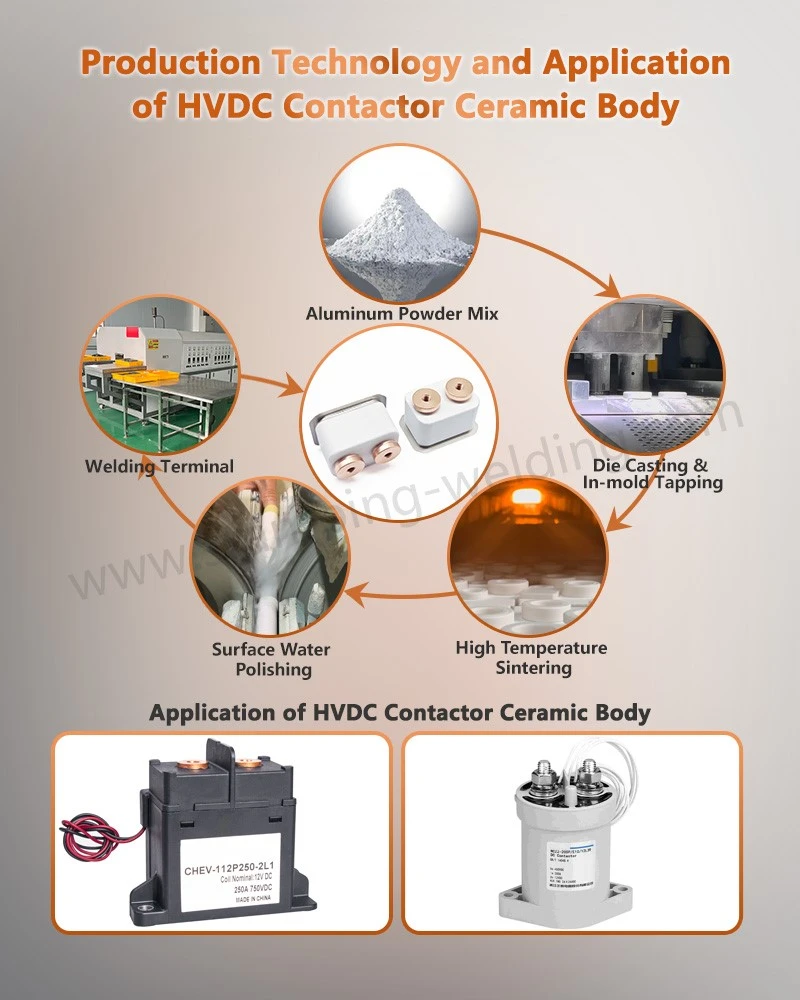
Expanding Applications of Metallized Ceramics in High-Voltage Electrical Components
As high-voltage electrical equipment trends toward higher power density and miniaturization, the application of ceramic metallization technology has expanded beyond traditional vacuum electronic devices to include high-voltage switchgear, power semiconductor packaging, and electrical components for new energy systems.
Metallized alumina ceramics are primarily utilized in electrical components that require a combination of electrical insulation, structural support, and metallic connectivity. By forming a stable metallized layer on the surface of the alumina ceramic, it becomes possible to achieve brazed joints between the ceramic and metal terminals, flanges, or other structural elements-meeting the stringent requirements for hermetic sealing and mechanical bond strength in electrical equipment.
In high-voltage insulating structures, metallized ceramic insulating tubes and related components are employed where metallic end-connections are required. For such parts, the position and dimensions of the metallized regions must be strictly controlled to ensure that the metal layer does not extend beyond the design specifications, which could otherwise compromise insulation distances or interfere with subsequent assembly.
In high-voltage power electronics, metallized ceramics are used for power device packaging, insulating bases, and structures involving metal terminal connections. The ceramic substrate must be selected based on the specific operating voltage, thermal management requirements, and mechanical load, while the metallized layer must be engineered to accommodate subsequent welding, brazing, or assembly processes.
In power semiconductor applications, metallized ceramic housings typically serve functions such as electrical isolation, structural protection, and metallic interconnection. Their design must account for factors including device operating voltage, differences in thermal expansion, package dimensions, and the operational environment, ensuring that material interfaces do not fail under the influence of thermal cycling or mechanical stress.
Continuous Optimization of Ceramic Metallization Materials and Manufacturing Processes
The performance of metallized ceramic products is collectively determined by the ceramic substrate, the metallized layer, and the subsequent joining processes. For high-voltage electrical applications, material selection must balance insulation properties, thermal stability, mechanical strength, and compatibility with metallization processes.
High-purity alumina ceramics offer excellent insulating capabilities and mechanical properties, making them suitable for high-voltage insulating structures and precision ceramic components. Ceramic materials with varying alumina content differ in terms of sintering temperature, density, mechanical strength, and machinability; therefore, the choice of material should be based on the specific component design and operating environment.
In the case of high-strength metallized ceramic components, particular emphasis is placed on the mechanical load-bearing capacity of the ceramic substrate, the quality of the bond between the ceramic and the metallization layer, and the structural stability of the component under long-term operating conditions.
The manufacturing process for metallized ceramics typically encompasses several interconnected stages: ceramic forming, sintering, surface treatment, application of the metallization layer, firing of the metallization, plating, and final assembly. These steps are highly interdependent; for instance, any residual oil or dust on the ceramic surface can impair the adhesion of the metallization layer. Similarly, an uneven thickness in the metallization layer can lead to inconsistent wetting during subsequent brazing, while improper control of the sintering temperature can negatively affect the density of the metallization layer and the quality of the interface bond.
Consequently, the manufacturing process requires rigorous control over the ceramic surface condition, the precision of the metallized areas, the adhesion strength of the metal layer, the brazing temperature profile, and the hermeticity of the finished product. For components with complex geometries, it is also essential to verify the integrity of the bond between the metallization layer and the ceramic substrate through dimensional inspection, cross-sectional analysis, and joint strength testing.
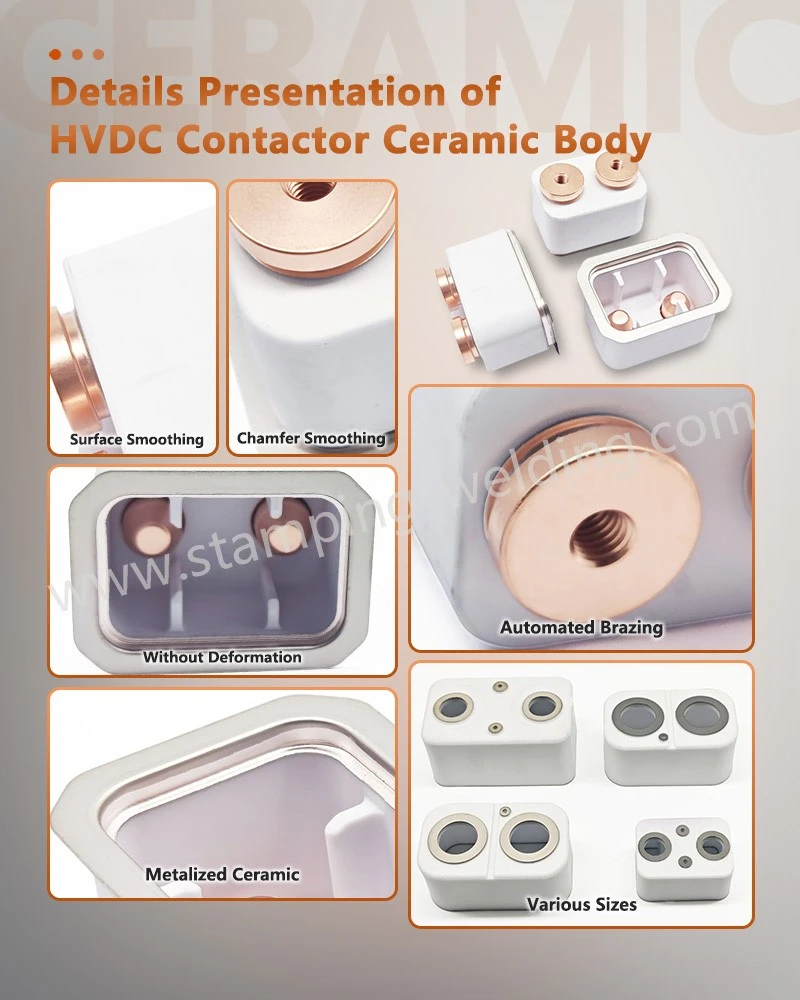
Vacuum Brazing and Filler Sintering Processes Affect Hermetic Sealing
Vacuum brazing is a critical joining process for high-voltage ceramic arc-extinguishing chambers and metallized ceramic components. Due to differences in the coefficients of thermal expansion (CTE) between the ceramic and the metal, residual stress can develop at the interface during heating and cooling cycles. Inadequate fixture positioning, improper material matching, or poorly controlled temperature profiles can lead to issues such as ceramic cracking, discontinuities in the brazed joint, or misalignment of terminals.
To address these challenges, the manufacturing process must incorporate the selection of appropriate brazing materials and joint designs-based on the thermal expansion characteristics of both the ceramic and the metal components-along with the use of specialized fixtures to ensure precise positioning of the parts. A vacuum environment helps reduce the risk of oxidation in the joint area and improves the wetting conditions for the brazing filler metal. For the arc-extinguishing chambers of high-voltage contactors, it is necessary to verify the hermeticity, the height differential of the terminals, and the joint strength following the brazing process.
Filler sintering is frequently employed to secure and seal terminals to insulating structures. This process requires precise control over the filler composition, sintering temperature, thermal expansion matching, and the positioning accuracy of the terminals to ensure the formation of a stable, sealed interface. For electrical components subject to vibration and thermal cycling (high and low-temperature fluctuations), tests for terminal pull-out force, dielectric withstand voltage, and hermeticity serve as critical benchmarks for evaluating process quality.
From a product development perspective, ceramic metallization and vacuum brazing are not independent processes. The surface condition and material composition of the metallized layer influence the wetting of the brazing filler and the quality of the interfacial bond, while the brazing process itself can affect the structural integrity of the ceramic components. Consequently, material selection, metallization, and joining processes must be integrated into a unified manufacturing validation workflow.
Structural Optimization and Reliability Verification of High-Voltage DC Contactors
Beyond the ceramic arc-extinguishing structure, components such as the coil, magnetic circuit, push rod, auxiliary contacts, and short-circuit protection structures also significantly influence the overall performance of a high-voltage DC contactor.
In the coil system, the use of an integrated bobbin and an optimized circuit board layout helps minimize internal space consumption.
Implementing a PWM (pulse-width modulation) drive scheme to regulate the inrush (start-up) current and the holding current helps reduce continuous power consumption and temperature rise within the coil. For the magnetic circuit, electromagnetic simulation is used to optimize the structural parameters of the moving core, stationary core, magnetic sleeve, and yoke plate, ensuring that the electromagnetic force meets the requirements for both the pull-in (engagement) and release (disengagement) phases.
The push-rod assembly facilitates mechanical transmission between the moving core and the main contacts; its material strength, insulating properties, and dimensional precision directly impact the consistency of contact operation. Auxiliary contacts provide status feedback signals to the control system, enabling the vehicle or energy storage system to determine the actual state of the main contacts, thereby enhancing high-voltage interlock functionality and fault diagnostic capabilities. Regarding short-circuit protection, high fault currents generate electromagnetic repulsive forces between the main contacts.
If the contact pressure is insufficient, it may lead to issues such as momentary contact separation, sustained arcing, or contact welding. Optimizing the armature structure, contact support mechanisms, and electromagnetic force balance can enhance a contactor's stability under short-circuit stress. However, a contactor's short-circuit withstand capability must be evaluated in conjunction with system fuses, protection strategies, and line impedance; the safety level of the entire system cannot be determined solely based on the contactor's structural parameters.
Comprehensive device validation typically includes electrical endurance testing (under rated voltage and current), short-circuit withstand testing, mechanical endurance testing, temperature cycling, damp-heat testing, and hermeticity (leak-tightness) verification. For ceramic-to-metal assemblies, additional focus should be placed on the adhesion quality of the metallization layer, the integrity of the brazed interfaces, dielectric withstand voltage, and structural changes following thermal cycling. Combining simulation analysis with physical testing helps improve the repeatability of product designs and the stability of mass manufacturing.
The Evolution of Ceramic Components for High-Voltage Contactors: Toward Precision and Integration
Looking ahead, high-voltage DC contactors will continue to evolve toward higher voltage ratings, greater current-carrying capacities, and more compact structures. As applications such as new energy vehicles, energy storage converters, and high-voltage DC power distribution systems demand greater space efficiency and operational reliability, the design of ceramic arc chambers, insulating tubes, metallized ceramic terminals, and hermetic sealing structures will become increasingly refined.
Optimization efforts for metallized ceramic processes will focus on the uniformity of the metallization layer, interfacial bond strength, dimensional consistency, and stability in mass production. Furthermore, metallized ceramic products will increasingly emphasize the alignment between materials, manufacturing processes, and specific application environments, rather than focusing exclusively on the thickness of the metallization layer or any single laboratory performance metric.
For precision metallized alumina ceramic components, manufacturing capability encompasses not only the precision of the ceramic machining itself, but also the control of metallized regions, brazing/joining techniques, hermeticity testing, and overall component assembly. High-purity alumina precision advanced ceramic metallization components will continue to serve sectors such as high-voltage electrical systems, power electronics, and other fields that demand high standards for insulation and connection reliability.
Overall, the technological upgrading of high-voltage DC contactors is a systematic endeavor encompassing materials science, electromagnetic design, precision machining, ceramic metallization, and reliability engineering. Ongoing improvements in the processes for joining ceramic materials to metals will provide essential support for the stable operation of contactors under conditions involving high voltage, high current, and complex environments.
For requirements concerning ceramic housings for high-voltage DC contactors, metallized alumina ceramics, insulating tubular components, and precision ceramic interconnects, for engineering teams with requirements for component procurement, it is recommended to define key specifications-such as operating voltage, insulation requirements, ceramic material grade, metallized areas, connection methods, hermeticity standards, and the intended operating environment-during the early stages of a project.
Providing product drawings, 3D models, or existing samples allows for a more thorough assessment of the suitability of the chosen ceramic materials, precision machining, metallization processes, and vacuum brazing techniques. Through early-stage engineering reviews, sample validation, and quality control during mass production, the risks associated with component assembly can be minimized, thereby enhancing the long-term operational reliability of high-voltage electrical equipment.
contact us