The Global Server Cabinet Industry Is Accelerating Its Transition Toward Higher Density And Greater Intelligence, With Structural Design, Thermal Management, And Scenario-specific Customization Emerging As Key Development Priorities.
Nov 08, 2026
As the global digital economy continues to evolve, technologies such as artificial intelligence, big data, cloud computing, and the industrial internet are driving a sustained surge in demand for computing power, ushering in a new upgrade cycle for data center infrastructure. Server cabinets-essential infrastructure components that house servers, network equipment, power distribution units, and cooling systems-are shifting from their traditional roles of simple equipment mounting and physical protection toward more advanced functions, including high-density equipment integration, coordinated thermal management, intelligent monitoring, and energy efficiency optimization.
In this transition, server cabinets have evolved from mere metal enclosures into critical, integral components of data center infrastructure.
Factors such as equipment deployment density, thermal efficiency, load-bearing capacity, cabling space, and ease of operation and maintenance have become pivotal considerations in the design and procurement of these units. To accommodate the diverse requirements of data centers of varying scales, edge computing nodes, and enterprise network environments, the market for server cabinets is increasingly characterized by a dual trend toward both standardization and customization.
Rising Demand for Computing Power Drives the Evolution of Server Cabinet Design
The continuous expansion of artificial intelligence (AI) training and inference, cloud computing services, and enterprise data processing operations has placed greater demands on the equipment deployment capabilities of data centers. In high-density computing environments, in particular, the number of servers and the power load per cabinet are steadily increasing-posing new challenges for traditional cabinets in terms of space utilization, structural integrity, and thermal management.
Historically, cabinet design focused primarily on standard mounting dimensions, equipment securing, and basic physical protection. Today, as server hardware configurations and data center deployment models evolve, cabinets must account for a complex array of factors, including equipment compatibility, load-bearing capacity, internal airflow paths, power distribution, and cable management. Requirements vary significantly by application environment: enterprise network rooms prioritize ease of installation and maintenance; large-scale data centers emphasize high-density deployment and thermal efficiency; and outdoor computing nodes require robust environmental protection alongside temperature regulation capabilities.
This diversification of needs has led to a more specialized range of product types. Outdoor server cabinets, for instance, must be engineered to withstand specific environmental conditions-incorporating features for dust and water resistance, corrosion protection, and temperature control. Meanwhile, floor-standing data cabinets designed for indoor network environments place a greater premium on space optimization, structural stability, and operational efficiency during equipment maintenance. For projects with specific aesthetic requirements, white server cabinets can be configured to align with the overall layout of the server room and the specific needs of equipment management.
Evolution of Cabinet Structural Design: High Load-Bearing Capacity, Modularity, and Ease of Maintenance
As server equipment continues to evolve, greater attention is being paid to internal mounting space, load-bearing structures, and mechanical stability. This is especially critical when multiple servers, switches, storage devices, and power modules are installed together; the cabinet must ensure an even distribution of weight to prevent excessive localized stress that could compromise structural integrity.
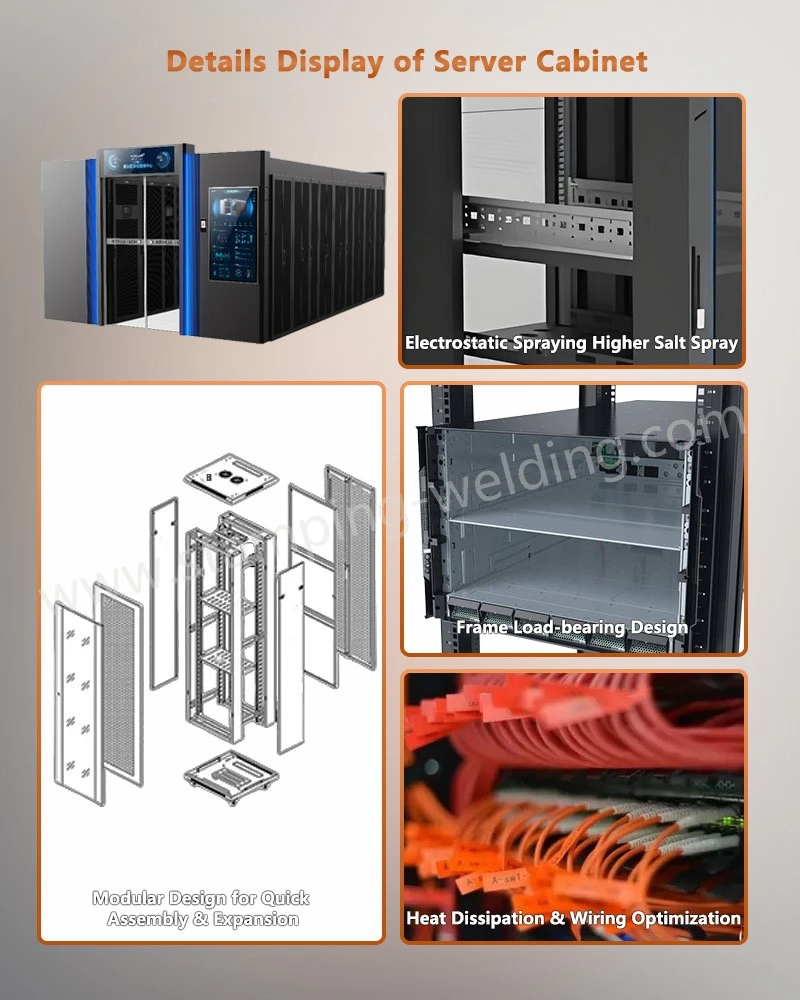
In terms of structural design, components such as vertical posts, crossbeams, mounting rails, side panels, top panels, and base plates must form a robust, interconnected system. Mounting holes and rail dimensions must align with industry standards for equipment, while also providing adequate space for cable routing, heat dissipation, and maintenance access. For data centers that require frequent adjustments to equipment layouts, a modular design simplifies future expansion and the replacement of individual components.
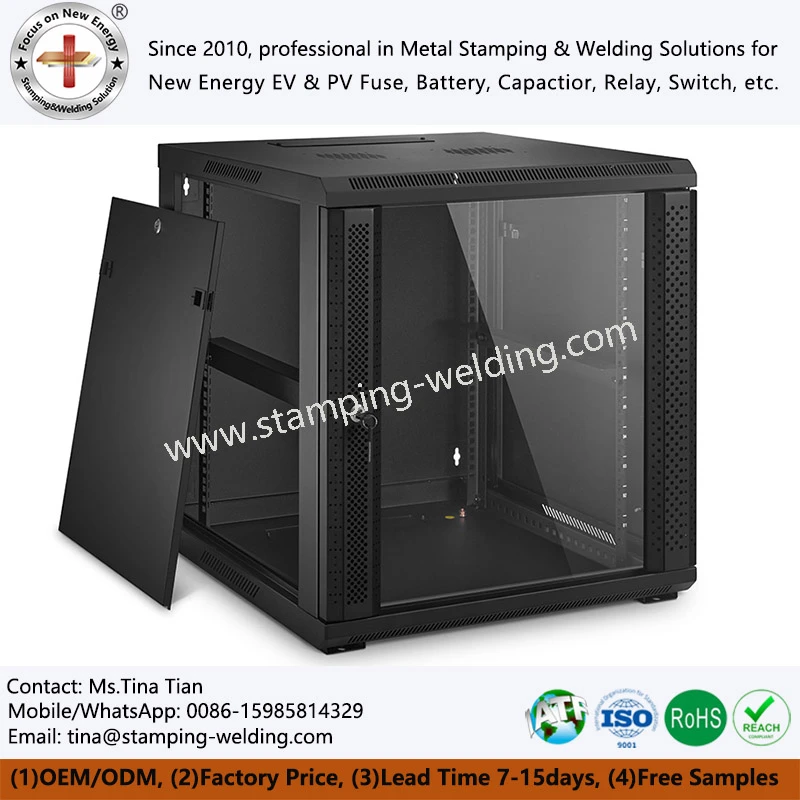
Cabinet mounting methods have also become increasingly diverse. Network server racks are typically used for the centralized deployment of servers and networking equipment, balancing the requirements for installation, cabling, and maintenance. In-wall network cabinets are better suited for low-voltage utility rooms, office environments, or small network nodes where space is limited; these can be wall-mounted to save floor space. To accommodate varying quantities of equipment and available space, cabinets of different heights-such as 12U network racks, 18U data cabinets, and 18U server racks-can meet the specific deployment needs of small-scale network systems, communication equipment, and medium-sized server rooms.
For large-scale data centers, the 42U server cabinet remains a standard specification. Its design focuses not only on mounting space but also on overall load-bearing capacity, the construction of front and rear doors, ventilation surface area, cable management, and stability when multiple cabinets are ganged together. As equipment density increases, cabinet structures must go beyond simply meeting dimensional requirements; they must also optimize internal space and facilitate easier maintenance.
Heat Dissipation and Airflow Management: A Critical Aspect of Cabinet Design
Servers generate continuous heat during operation, and the temperature of the equipment directly impacts both system stability and service life. As the deployment density of servers increases, localized "hot spots" can easily develop within the cabinet. If the design of air intake and exhaust paths is suboptimal, it can lead to reduced cold-air utilization efficiency and an increased load on the cooling system.
Consequently, modern server rack designs place increasing emphasis on airflow management. By strategically configuring ventilation openings on the front and rear doors, exhaust space at the top, cable routing channels, and the spacing between installed equipment, it is possible to improve internal airflow and minimize the mixing of cold and hot air. For racks utilizing air-cooling, the orientation of equipment air intake and exhaust must also be coordinated with the server fan layout and the "hot/cold aisle" design of the server room.
Auxiliary cooling components-such as rack-mounted fans-can be selected based on equipment power consumption, installation density, and the actual operating environment. Factors such as the number of fans, airflow volume, placement, and noise levels must be evaluated in relation to the thermal load; simply increasing the number of fans is not a sufficient solution for heat dissipation challenges.
For high-power-density applications, one must also consider the cooling capacity of the server room, the sealing methods of the rack, and the requirements for integrating liquid-cooling systems.
As liquid-cooling technology is increasingly adopted for high-density computing, rack structures must also accommodate cooling pipes, connection interfaces, maintenance access, and safeguards against potential leaks. Since different liquid-cooling architectures impose varying requirements on internal layout and structural design, rack manufacturers should engage in technical coordination with equipment and cooling system vendors during the early stages of a project to minimize integration issues during subsequent installation and maintenance.
Deployment Scenarios for Network Equipment Drive Further Diversification of Rack Specifications
The application scope of server racks is expanding beyond traditional data centers to include enterprise networks, telecommunications rooms, industrial sites, security systems, and edge computing nodes. Because these environments differ significantly in terms of equipment volume, installation conditions, and operational/maintenance requirements, the market is shifting toward a broader range of rack specifications and structural configurations.
In small-to-medium-sized network environments, where the number of devices is relatively limited, racks must balance installation space, cable management, and ease of routine maintenance. Compact units-such as 6U or 9U wall-mount racks-are well-suited for deploying specific telecommunications equipment, network switches, and low-voltage systems. For applications requiring mobility or the ability to reposition cabinets, server racks equipped with casters offer enhanced flexibility. However, such designs must account for load-bearing capacity, stability during movement, and the reliability of the caster-locking mechanisms.
Compact cabinets are also in demand for home offices, laboratories, and small business environments. A server rack cabinet intended for home use typically requires a careful balance between equipment compatibility, footprint, ventilation, and aesthetics. In scenarios where computing equipment requires centralized management, the internal configuration of the server rack should be tailored to the dimensions, weight, and power requirements of the servers to ensure that installation and operating conditions are met.
Furthermore, network cabinets and server cabinets serve distinct purposes in practice. Network cabinets prioritize cable density, switch installation, and cable management, whereas server cabinets have more stringent requirements regarding load capacity, heat dissipation, and equipment depth. Consequently, the structural design of a network rack cabinet should be determined based on the specific inventory of equipment, rather than relying solely on external dimensions.
Specialized Environments Demand Higher Levels of Cabinet Protection
With the ongoing expansion of edge computing and distributed network infrastructure, an increasing number of devices are being deployed in non-standard environments-such as industrial facilities, transportation hubs, telecommunications base stations, and outdoor surveillance nodes. These settings may involve exposure to dust, moisture, temperature fluctuations, vibrations, or corrosive agents, necessitating specific structural protections and material selections for the cabinets.
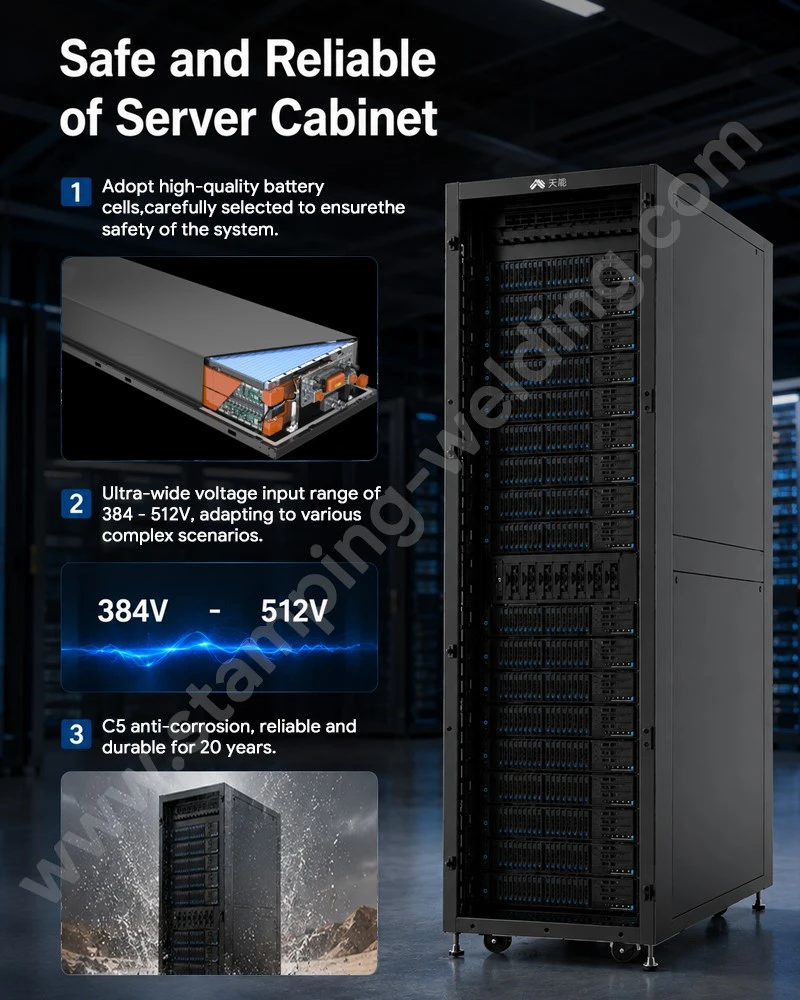
The design of an outdoor network cabinet-including its enclosure structure, sealing methods, surface treatments, and cooling solutions-must be tailored to the specific site environment. For equipment exposed to the outdoors for extended periods, considerations must also include protection against rainwater ingress, UV radiation, temperature swings, and the corrosion of metal components. A cabinet's protection rating must be verified against actual installation conditions and relevant standards; one cannot gauge its protective capabilities based on appearance alone.
In environments where operational noise must be minimized-such as office spaces, laboratories, or specialized technical areas-soundproof server racks can be employed. These units utilize structural sound insulation, specialized sealing, and optimized ventilation systems to reduce the noise generated by equipment during operation. However, soundproofing structures often impede airflow; therefore, heat dissipation capacity must be evaluated concurrently to prevent internal temperature spikes caused by excessive sealing.
For applications requiring the prevention of unauthorized physical access, server rack enclosures-utilizing doors, locks, side panels, and internal mounting frameworks-create a secure, self-contained space for equipment. Their design must balance physical security with the practical requirements for equipment maintenance, cable routing, and operational heat dissipation.
Manufacturing Processes and Quality Control Influence Long-Term Performance
The reliability of a server rack depends not only on its design but also on material properties, the precision of sheet metal fabrication, welding quality, surface treatment, and assembly control. Racks are typically manufactured from cold-rolled steel, galvanized steel, or other suitable metals. Since these materials vary in terms of strength, corrosion resistance, workability, and cost, the choice must be based on the specific operating environment and structural requirements.
During production, processes such as laser cutting, CNC punching, bending, welding, riveting, and surface coating determine the product's dimensional accuracy and structural consistency. For critical components-such as doors, mounting posts, and load-bearing frames-strict control over hole-position accuracy, bend dimensions, joint strength, and assembly tolerances is essential to ensure that all parts fit together precisely.
Surface treatment is another key factor affecting a product's service life. For indoor racks, the focus is typically on coating adhesion, wear resistance, and visual consistency; for outdoor racks, the selection of protective coatings and material systems must account for the specific environmental corrosivity. For mass-production projects, a comprehensive quality control process should be implemented, covering everything from raw material inspection and in-process dimensional checks to final assembly verification.
Furthermore, prior to delivery, it is necessary to verify equipment mounting dimensions, door-opening clearance, cable entry/exit points, grounding configurations, and accessory layouts. For customized projects, it is advisable to confirm structural compatibility through design reviews and sample validation before proceeding to mass production, thereby reducing the risk of rework during subsequent installation.
Future Trends in the Server Cabinet Industry: System Integration and Green Manufacturing
In the long term, the demand for artificial intelligence (AI) computing power, the expansion of data centers, and the deployment of edge computing will continue to drive the upgrading of server cabinet products. Future development will focus not only on increasing equipment installation density but also on enhancing thermal management efficiency, optimizing power distribution layouts, strengthening operational monitoring capabilities, and improving ease of maintenance.
First, the synergistic development of liquid-cooling and air-cooling solutions will necessitate ongoing adjustments to cabinet structures. Manufacturers must optimize internal space, load-bearing structures, and piping installation conditions to ensure that the cabinet design aligns effectively with the chosen cooling architecture.
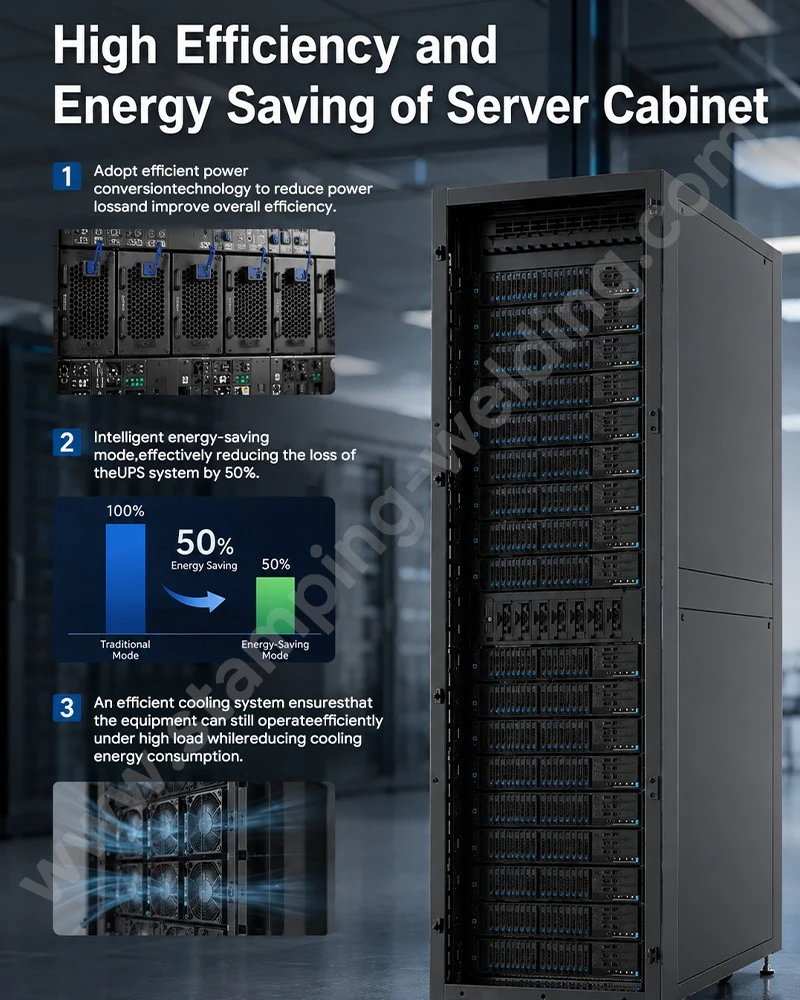
Second, intelligent management will be increasingly integrated into cabinets and their supporting infrastructure. Sensors can collect data on temperature, humidity, access control, and power status, feeding this information into data center monitoring platforms. This enables operations and maintenance (O&M) personnel to track equipment status and promptly identify any anomalies.
Third, modular design will emerge as a key strategy for improving maintenance efficiency. Features such as removable side panels, adjustable mounting rails, standardized accessories, and flexible cabling structures will allow cabinets to better accommodate equipment replacements, capacity expansions, and facility retrofits.
Finally, green manufacturing and material recycling will receive greater attention. Resource efficiency throughout the manufacturing process-ranging from sheet metal utilization and energy consumption during fabrication to surface treatment techniques and product disassemblability-will increasingly become a critical criterion for evaluating the cabinet supply chain.
Manufacturing Capabilities and System Compatibility as Key Competitive Factors
Overall, the global server cabinet industry is shifting from traditional metal-structure fabrication toward high-density equipment housing, advanced thermal management, and seamless system integration. Evolving data center construction models are placing higher demands on cabinet structural design, manufacturing precision, material selection, and comprehensive support capabilities. Moving forward, manufacturers capable of providing stable structures, efficient thermal layouts, and flexible, customized solutions tailored to diverse application scenarios will be best positioned to participate in high-specification data center and network infrastructure projects.
For engineering teams looking to procure server cabinets, network cabinets, outdoor enclosures, or custom sheet metal structural components, the selection phase should clearly define equipment dimensions, mounting height, static and dynamic load-bearing requirements, heat dissipation methods, ingress protection (IP) ratings, material thickness, surface treatment, and the intended operating environment. Furthermore, it is essential to evaluate the assembly precision, structural stability, grounding design, and future scalability of the enclosures to ensure they are fully compatible with the actual equipment systems.
If a project involves non-standard enclosures-such as custom frames, door panels, side panels, mounting brackets, or other precision sheet metal components-it is advisable to provide detailed product drawings, dimensional specifications, material requirements, equipment configurations, and information regarding the application environment during the early stages.
Through the review of engineering drawings, analysis of structural manufacturability, and validation via prototypes, the manufacturing processes, assembly interfaces, and mass production requirements can be precisely determined, establishing a reliable foundation for the consistent delivery of server cabinets and their associated metal structural components.
contact us