Analysis Of Manufacturing Processes For Prismatic Power Battery Structural Components: Design And Precision Machining Challenges For Aluminum Casings And Cover Plates
Nov 07, 2026
With the ongoing development of new energy vehicles and energy storage systems, power batteries now demand higher standards for mechanical strength, sealing performance, safety protection, and space utilization within their packaging structures. Prismatic aluminum-cased batteries-characterized by their orderly structure, high space utilization, efficient pack assembly, and ease of system integration-have emerged as a key technical pathway in the power battery market. As fundamental components of cell packaging, the structural parts of prismatic batteries not only protect and secure the internal materials but also directly influence the battery's sealing reliability, thermal management, and long-term operational safety.
Among various battery chemistries, lithium iron phosphate (LFP) batteries are widely used in new energy vehicles and energy storage systems due to their excellent thermal stability and long cycle life. Regardless of the specific cathode and anode material systems employed, the external battery structure must be designed based on factors such as cell capacity, operating voltage, the intended usage environment, and the method of system integration. For prismatic cells housed in aluminum casings, the manufacturing precision of the casing and cover plate, the quality of their connections, and their consistency across mass production are critical factors that determine overall product performance.
Composition and Function of Prismatic Battery Structural Components
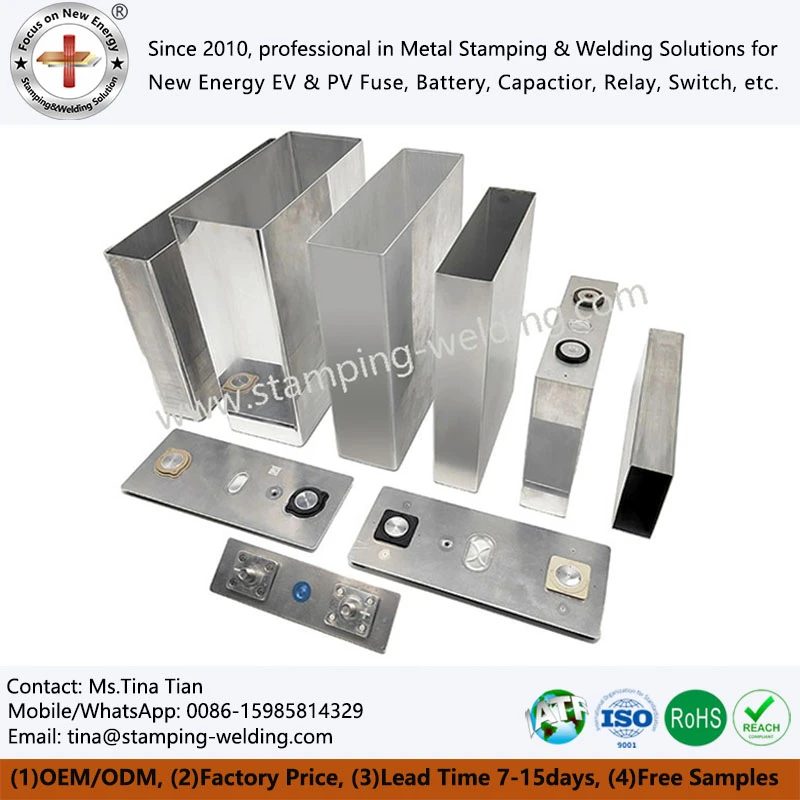
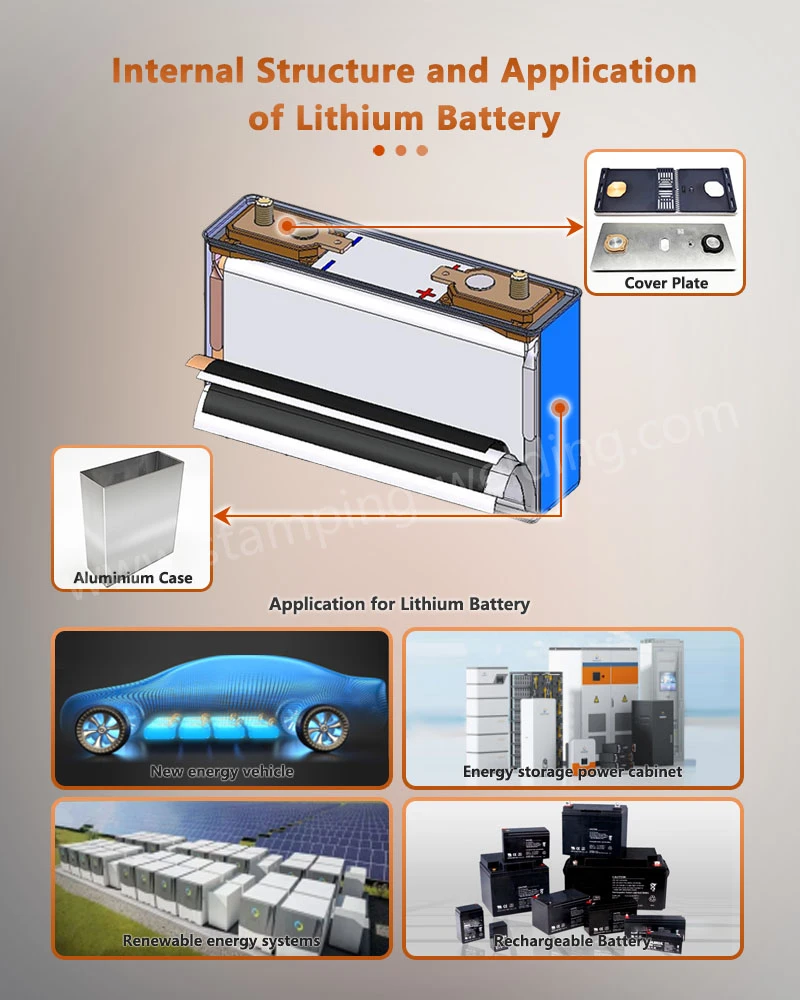
Prismatic battery structural components primarily consist of an aluminum casing and a top cover assembly. The aluminum casing houses the internal components-including the cathode and anode materials, separator, and electrolyte-while providing external mechanical protection. The top cover assembly facilitates functions such as electrode terminal access, electrolyte filling, sealing, and the release of pressure during abnormal conditions. Through precise assembly and welding, these components form a largely enclosed cell structure, ensuring the safety and reliability of the battery throughout its charge and discharge cycles.
Aluminum casings are typically fabricated from aluminum alloys that offer an optimal balance of ductility, strength, and corrosion resistance. Material selection must account for factors such as the required forming depth, wall thickness, weldability, and the cell's operating environment. For lithium iron phosphate (LFP) cells, the dimensions, tolerances, and material temper of the aluminum casing must align with the specific cell design to prevent issues such as forming-induced stress or localized deformation, which could compromise internal space or hinder subsequent assembly processes.
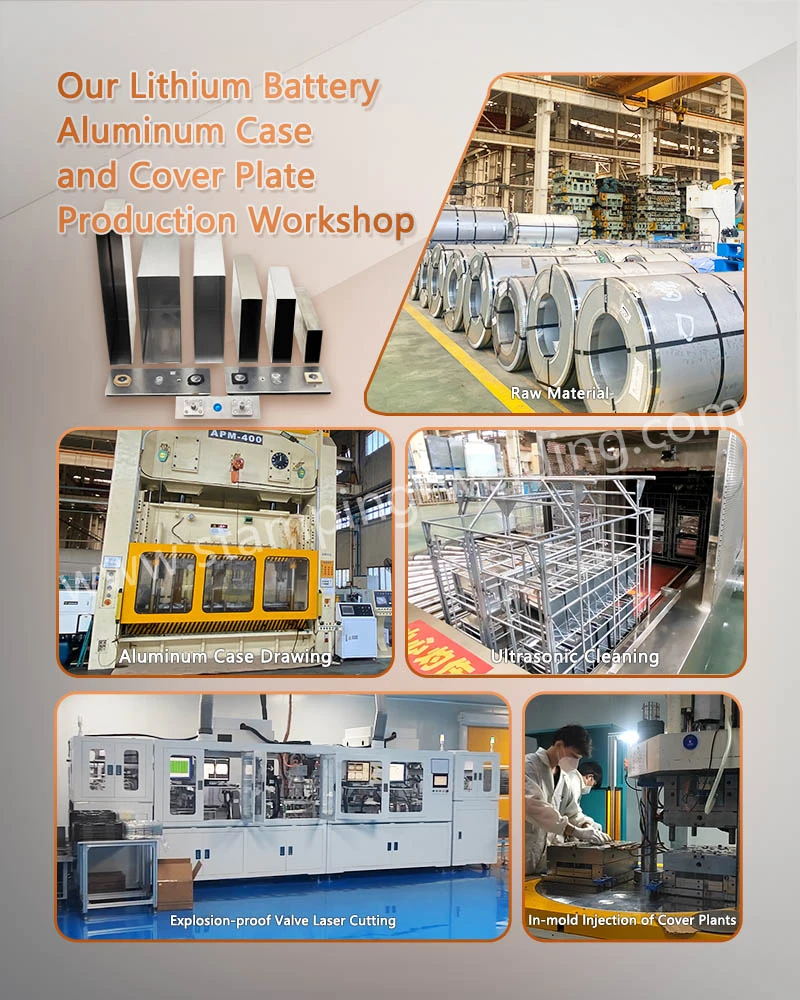
Prismatic battery casings are generally manufactured using a stamping and deep-drawing process. Aluminum sheets undergo processes such as blanking, deep drawing, sizing, trimming, and cleaning to gradually form a casing structure that meets design specifications. Compared to standard sheet metal components, battery casings require greater precision regarding sidewall thickness uniformity, bottom flatness, opening dimensions, and surface quality. Any localized thinning, wrinkling, cracking, or dimensional deviation can negatively impact cell assembly efficiency and subsequent sealing integrity.
Key Technical Challenges in the Stamping and Deep Drawing of Aluminum Casings
Prismatic battery casings typically feature deep-drawn structures, requiring careful control over material flow and the degree of deformation during manufacturing. During the deep-drawing process, aluminum alloys are sensitive to factors such as die corner radii, blank-holding force, lubrication conditions, and stamping speed. Improper process parameters can lead to issues such as sidewall cracking, excessive thinning at the bottom, wrinkling at the opening, and material accumulation at the corners.
Die design is the fundamental basis for ensuring the quality of the formed casing. Parameters-including die clearance, corner radii of the punch and die, blank-holding mechanisms, and guiding precision-must be carefully matched to the material thickness, alloy grade, and the specific geometry of the product. For different specifications of aluminum-cased lithium-ion cells, one cannot simply reuse the same die parameters; instead, a stable production window must be established through trial runs, dimensional inspection, and process validation.
In mass production, the operational stability of stamping equipment is equally critical. Factors such as machine rigidity, slide precision, feeding/positioning accuracy, and the condition of the dies all influence the dimensional consistency of the final product. Manufacturers must employ measures-such as first-article inspection, in-process monitoring, regular die maintenance, and statistical analysis of key dimensions-to minimize quality fluctuations between production batches. For power battery projects requiring continuous supply, a stable forming process is far more significant than merely achieving the required dimensions in a single sample.
Different battery applications impose varying requirements on the casing structure. For instance, certain aluminum-cased lithium titanate (LTO) prismatic cells for electric vehicles (EVs) require specific packaging dimensions and structural strength tailored to the LTO chemistry and the unique design of the cell. Meanwhile, other types of prismatic power batteries may require adjustments to their height, width, and wall thickness based on capacity, internal space constraints, and the specific integration requirements of the vehicle. Structural design and manufacturing processes must be validated in tandem to ensure an optimal balance between material utilization and product reliability.
Challenges in the Structural Design and Manufacturing of Prismatic Battery Cover Plates
Compared to the battery casing, the cover plate of a prismatic battery features a more complex structure. It typically integrates components such as positive and negative terminals, explosion-proof valves, electrolyte filling ports, insulating assemblies, and sealing structures-all of which require precise electrical connections, mechanical fixation, and airtight sealing. Consequently, the manufacturing of these cover plates encompasses not only metal stamping but also processes like welding, riveting, injection molding, sealing, and automated assembly.
The terminal post serves as the critical interface between the battery cell and external circuitry; the choice of conductive material must align with the specific battery chemistry and connection design. The material, dimensions, and surface treatment of the positive and negative terminals directly influence connection resistance, weldability, and long-term operational performance. For copper-aluminum composite terminals, particular attention must be paid to the weld quality at the dissimilar metal interface to prevent issues such as incomplete penetration, interfacial defects, or insufficient joint strength.
The explosion-proof valve is a vital safety feature within the cover plate. In the event of an abnormal rise in internal cell pressure, the valve is designed to open, providing a release path for internal gases. Its opening pressure is determined by factors such as structural dimensions, material thickness, the depth of any score lines (notches), and manufacturing consistency. During production, strict control over the machining precision and batch-to-batch stability of these valves is essential, with functionality verified through rigorous pressure testing and safety validation.
The cover plate assembly also involves sealing the electrolyte filling port, installing insulating components, and performing final welding. Techniques such as laser welding are commonly used to join the cover plate to the battery casing; however, welding parameters must be carefully validated based on the specific materials, plate thickness, joint geometry, and equipment status. Quality control must encompass weld continuity, penetration depth, the absence of porosity or spatter, and the management of the heat-affected zone. Furthermore, a visually sound weld does not guarantee a hermetic seal; therefore, airtightness testing is required to confirm that the sealing performance meets the necessary specifications.
Requirements for Structural Components Across Different Battery Packaging Formats
Power batteries are primarily manufactured in prismatic, cylindrical, or pouch (soft-pack) formats. Each packaging architecture entails distinct requirements regarding structural design, material selection, manufacturing processes, and system integration. Prismatic batteries typically utilize a metal casing and a cover plate to form a rigid enclosure; their regular, structured shape facilitates efficient arrangement and securing within a battery pack. Cylindrical batteries employ a tubular metal shell-a mature design well-suited for standardized mass production. Pouch cells, by contrast, are primarily encapsulated using an aluminum-laminate film, offering greater flexibility in terms of weight and external form factor.
It is important to note that the aluminum-laminate film used for lithium-ion pouch cells is distinct from the rigid aluminum-alloy casings used for prismatic batteries. While both contain aluminum, they differ significantly in terms of material structure, forming methods, sealing processes, and application requirements. When encountering terms like "EV battery pouch cell aluminum case," it is essential to clarify whether the description refers to an aluminum-laminate film, a metal support structure, or another type of casing component, in order to avoid confusion during procurement or engineering discussions.
In prismatic battery applications, the aluminum casing material must balance formability, mechanical strength, corrosion resistance, and weldability. For LiFePO4 (LFP) battery cells, the design of structural components must also account for cell capacity, internal expansion space, thermal management strategies, and the methods used to secure the cells within the battery pack. Even when following the same encapsulation approach, different specifications of LiFePO4 cells may require unique casing and cover plate designs due to variations in dimensions, terminal layouts, and internal cell architecture.
Cost and Manufacturing Efficiency of Prismatic Battery Structural Components
The cost structures for prismatic battery casings and cover plates differ. The casing is a typical metal-stamped component, where raw material costs usually account for a significant portion of the total; manufacturing costs are closely tied to material utilization rates, die lifespan, equipment efficiency, and production cycle times.
The cover plate, which integrates multiple functional components, involves a more complex production process. Beyond the metal material itself, it incorporates terminals, explosion-proof valves, insulation components, and seals, requiring numerous assembly steps. Consequently, labor costs, equipment depreciation, and process quality control have a more pronounced impact on the unit cost of the cover plate.
For aluminum-cased products, the raw material utilization rate is a critical factor influencing manufacturing costs. Efficient nesting layouts, scrap recovery management, and the optimization of deep-drawing processes help minimize material waste. Furthermore, factors such as die lifespan, stamping cycle times, and the capability for automated loading and unloading directly influence the production efficiency of each unit.
The manufacturing of cover plates relies heavily on the coordination of multiple processes. Quality is interdependent across the stamping, welding, assembly, and inspection stages; any deviation in a single process can compromise the final product's yield rate. Consequently, manufacturers must establish a quality traceability mechanism between processes and implement targeted inspections for critical dimensions, weld quality, sealing performance, and the functionality of explosion-proof valves. While automated assembly helps reduce variability caused by manual labor, the integration of such equipment requires rigorous process debugging, cycle-time validation, and long-term operational assessment.
For external battery structural components-such as aluminum battery boxes-purchasers must clearly define the intended application and structural boundaries. Battery cell casings, module housings, and full battery pack enclosures differ significantly in terms of load-bearing requirements, protection ratings, connection structures, and manufacturing processes; therefore, technical requirements cannot be determined solely based on the product name.
Quality Control and Supply Chain Coordination for Battery Structural Components
Quality control for power battery structural components must encompass the entire production lifecycle, from raw material intake and stamping to welding, assembly, and final product inspection. At the raw material stage, it is essential to verify the alloy grade, material temper, thickness, and surface quality. During stamping, the focus shifts to critical dimensions, wall-thickness variations, flatness, and potential forming defects. In the welding phase, inspections must cover weld continuity, joint strength, and airtightness. Finally, the finished product must undergo verification-based on customer specifications-regarding dimensions, appearance, sealing, and functional performance.
For export and international projects, material compliance, batch traceability, and comprehensive inspection records are equally critical.
Manufacturers must establish inspection standards and quality documentation that align with customer blueprints, technical specifications, and the requirements of the target market. For components critical to cell safety, reliance on simple visual sampling is insufficient; instead, manufacturers must define key characteristics, inspection frequencies, and process control methods based on the associated risk level. As battery products evolve toward higher capacity, lighter weight, and greater system integration, suppliers of structural components must shift from simple stamping processes to an integrated approach encompassing material selection, mold development, precision forming, welding and assembly, and quality verification.
The increasing complexity in the design of battery casings and cover plates demands higher precision in molds, greater equipment stability, and superior process coordination. A manufacturing system capable of consistently controlling dimensional deviations, welding quality, and batch-to-batch uniformity will serve as a critical foundation for the supply chain of power battery structural components.
How Engineering Procurement Teams Should Evaluate Suppliers of Prismatic Battery Structural Components
For battery manufacturers, module producers, and new energy system integrators, the procurement process for prismatic battery structural components should begin with a clear classification of the items-whether they are aluminum cell casings, cover plate assemblies, terminal components, or external battery pack enclosures. Procurement teams should provide the corresponding 2D drawings, 3D models, material grades, sheet thicknesses, and dimensional tolerance requirements. For cover plate components, specifications should also cover terminal materials, explosion-proof valve activation requirements, sealing structures, welding methods, and insulation design.
During the supplier evaluation phase, key areas of focus should include mold development capabilities, experience with deep-drawing processes, proficiency in welding dissimilar metals, the level of automation in assembly, and the robustness of quality inspection systems.
Furthermore, evaluations should account for project-specific factors such as sample development timelines, trial production and verification plans, mass production throughput, and batch traceability requirements-ensuring that supplier capability is not judged solely on the unit price.
For projects involving customized aluminum casings, cover plate assemblies, or other precision metal structural components for prismatic batteries, manufacturers should be provided with product drawings, material specifications, dimensional requirements, and the intended operating conditions. Through an initial engineering review, stakeholders can confirm the compatibility of materials and structures, define the stamping and welding process routes, finalize mold development strategies, and establish inspection requirements-thereby laying a reliable foundation for subsequent sample validation and stable, large-scale production.
contact us