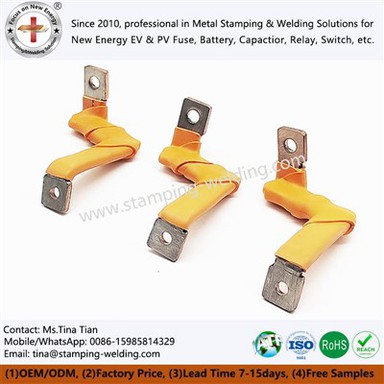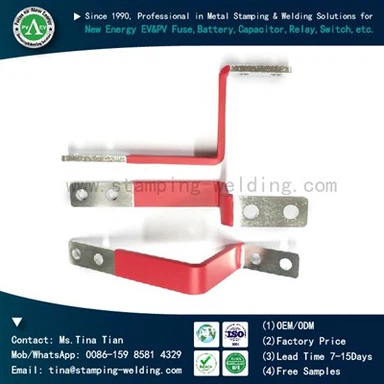
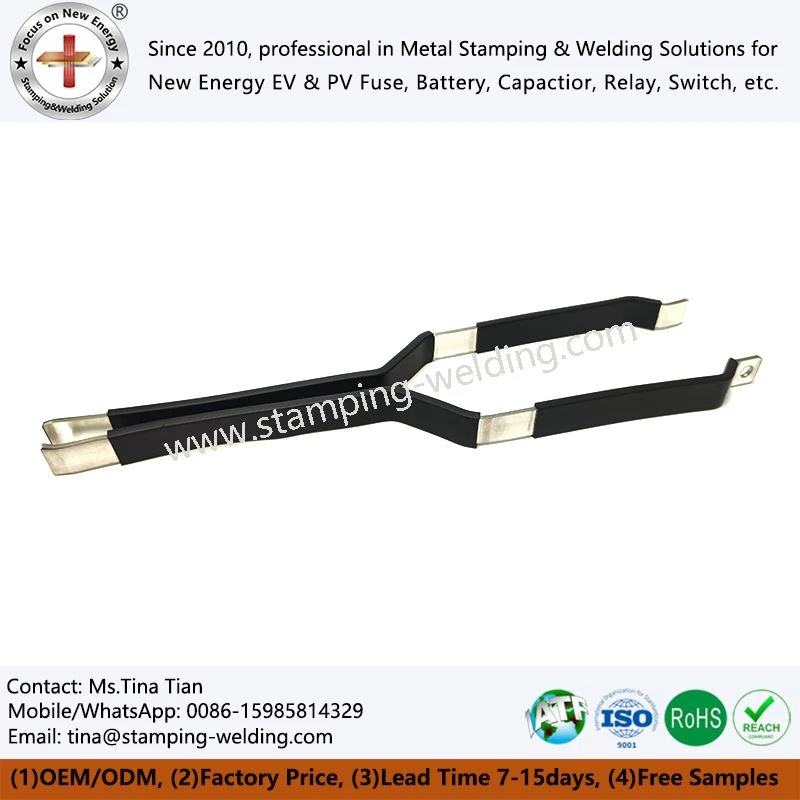

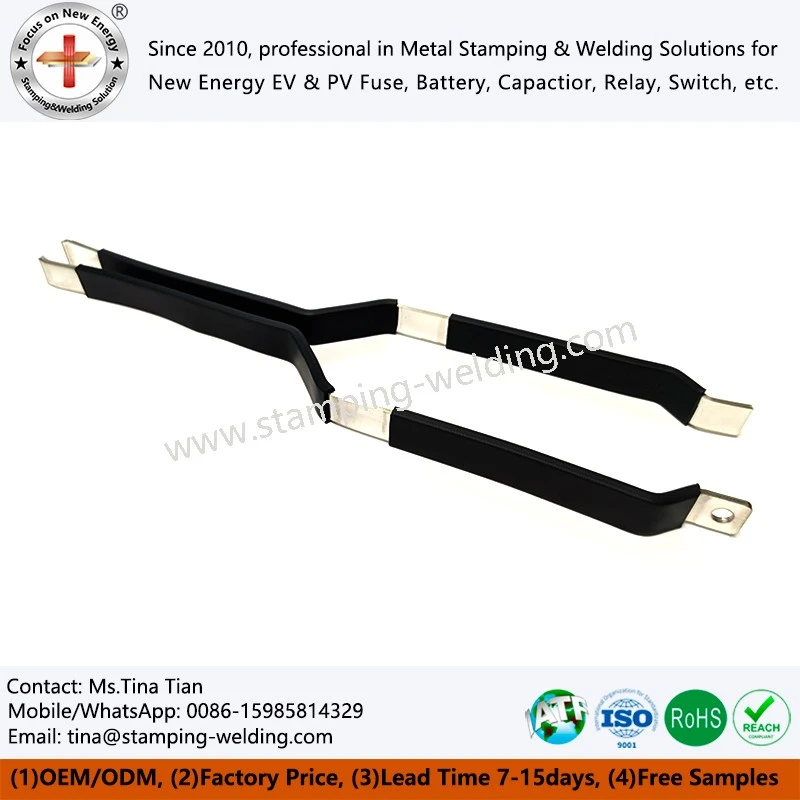
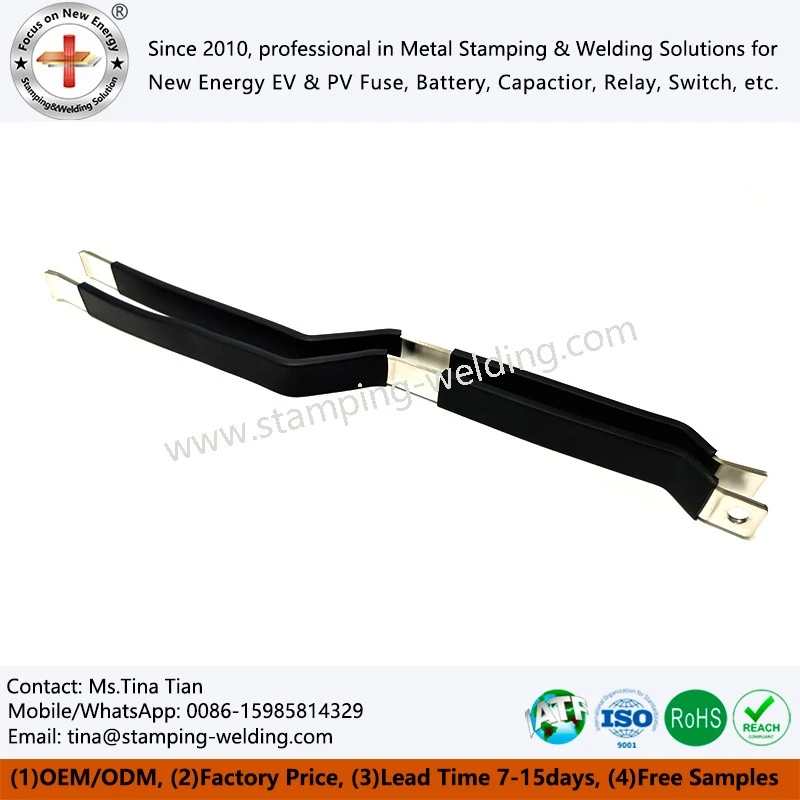
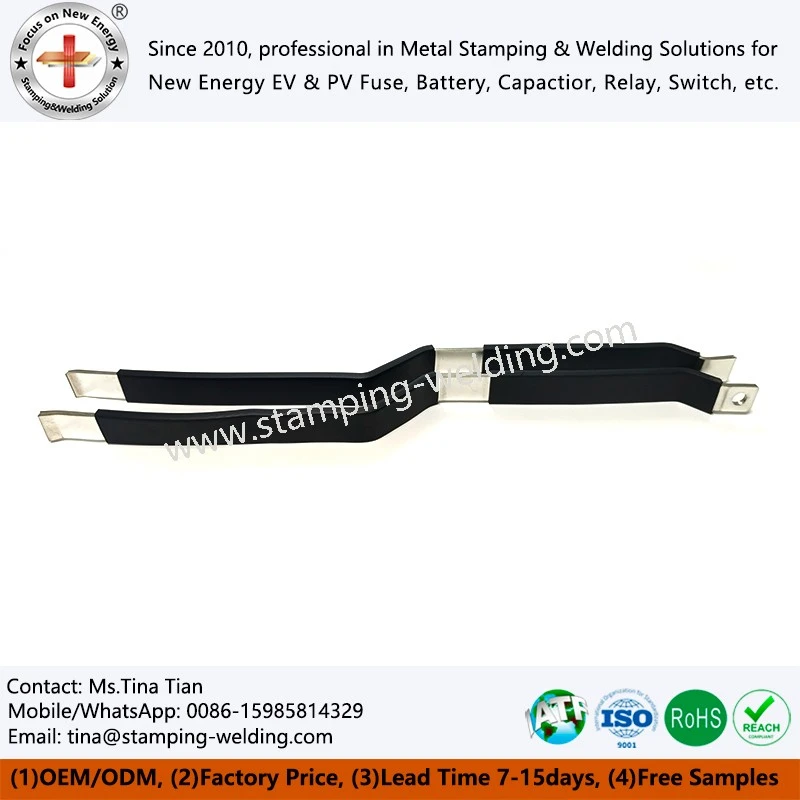
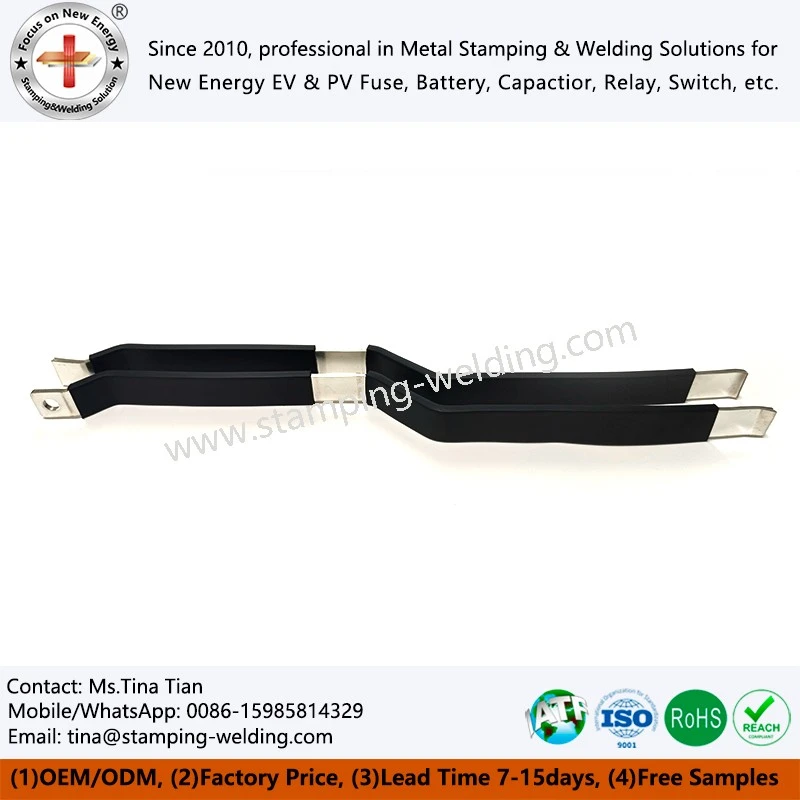
Heat Shrink Tube Insulation Copper Busbar
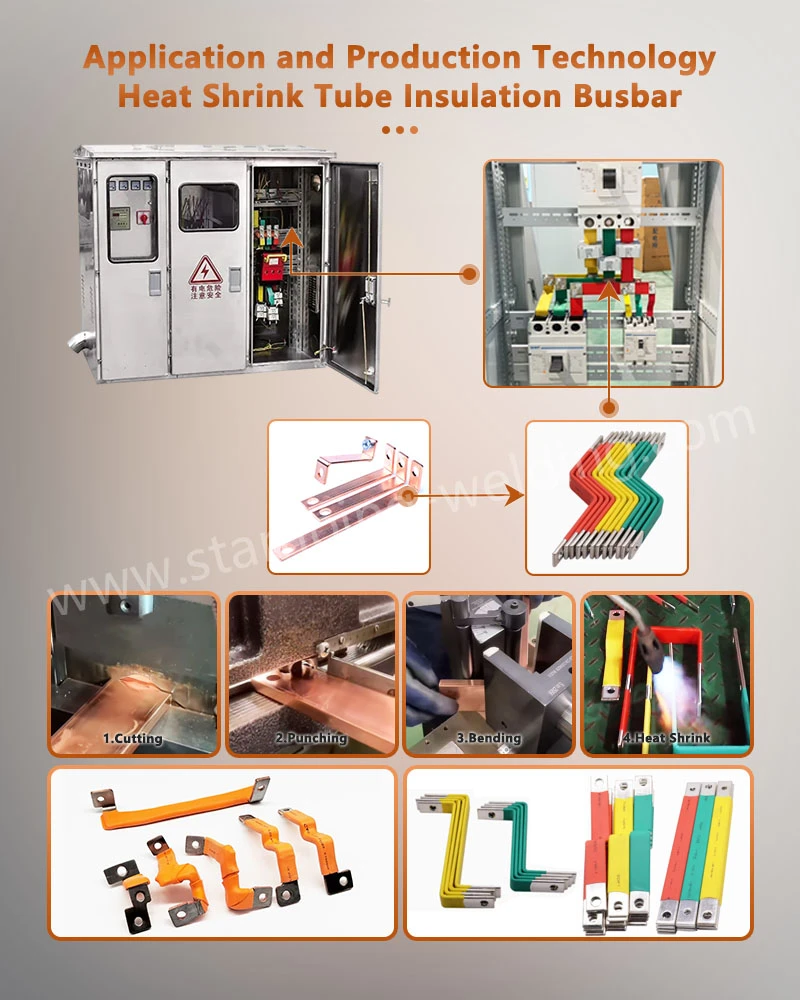
Heat Shrink Tube Insulation Copper Busbars are rigid electrical connection components consisting of a copper conductor core encased in an external layer of heat-shrink tubing. These components are manufactured by cutting, punching, bending, and surface-treating copper bars, which are then covered with heat-shrink tubing that is heated to shrink-fit tightly around the copper surface. The resulting assembly provides electrical conductivity, mechanical support, and insulation protection. Compared to bare copper busbars, heat-shrink insulated versions offer a continuous insulating layer over the non-conductive portions of the busbar, reducing the risk of accidental contact between adjacent conductors and facilitating clearer electrical partitioning within equipment.
- Fast Delievery
- Quality Assurance
- 24/7 Customer Service
Product Introduction
Heat-shrink insulated copper busbars consist of a composite structure: a rigid conductor paired with a "memory-effect" heat-shrinkable insulating layer. The copper busbar provides a low-resistance current path and structural support, while the heat-shrink tubing-utilizing the memory effect of cross-linked polymers-contracts radially upon heating to tightly encapsulate the conductor. Once shrunk, the insulating layer forms a seamless bond with the copper, effectively preventing the ingress of moisture and dust, while simultaneously increasing creepage distances and enhancing safety margins between phases.
Compared to simple wrapping or partial coverage, full-length heat-shrink insulation provides comprehensive protection; it is particularly well-suited for complex geometries featuring bends, punched holes, or terminal connections. The insulation can be color-coded to denote phase sequences or safety markers, facilitating on-site identification, operation, and maintenance. Due to their rigid nature, these busbars are ideal for fixed installations that require vibration resistance and long-term, stable electrical contact-as opposed to flexible links subject to frequent movement.
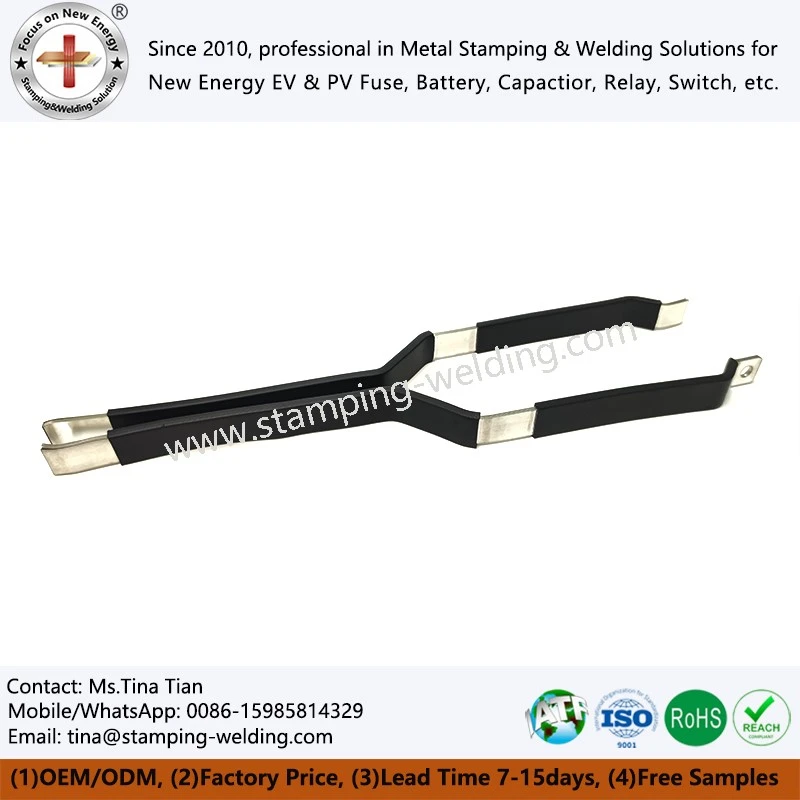
Design Advantages: High Adaptability for Practical Engineering Applications
Addressing the specific pain points faced by procurement professionals and engineering designers, we have implemented several optimizations at the engineering design level:
Chamfered and Rounded Edges
The edges of the Insulated Flexible Busbar With PVC Insulation cross-section are precision-rounded (R-radiused) to completely eliminate sharp corners and burrs. This prevents the insulation tubing from being scratched or punctured during the heat-shrinking process and mitigates the risk of corona discharge (tip discharge) under high-voltage conditions.
Anti-Oxidation and Temperature-Rise Optimization for Terminals
Contact surfaces are finished with nickel, tin, or silver plating. This significantly reduces contact resistance, protects against oxidation caused by heat and humidity, and ensures that the temperature rise at contact interfaces remains within IEC standards during continuous high-current operation.
Customized Heat-Shrink Ratios and Wall Thicknesses
For complex-shaped joints and thick copper busbars, we provide thick-walled heat-shrink tubing with high shrink ratios (2:1 or 3:1). This ensures that the insulation remains robust and sufficiently thick, even over bends and protrusions.
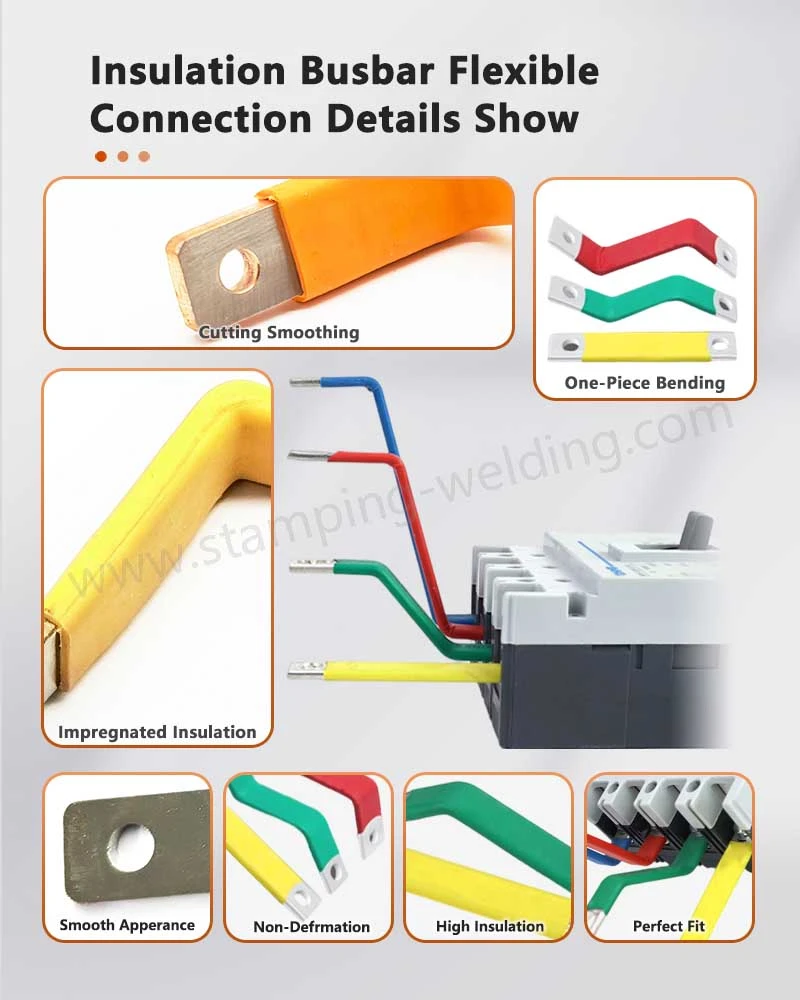
Manufacturing Advantages and Production Processes for Heat Shrinkable Busbar Insulating Tape
A comprehensive process chain determines the final quality of sleeved insulated busbars:
Cutting and Stamping
Precision molds are used for punching and shearing the busbars. Tolerances for hole positioning and the flatness of contact surfaces are strictly controlled, ensuring that no on-site adjustments are required during installation.
01
Bending and Forming
Hydraulic or CNC busbar bending equipment is used to shape the components according to customer drawings in a single operation. Each bent section undergoes a dual inspection for surface appearance and conductor integrity.
02
Surface Treatment
Contact areas are tin-plated or silver-plated, while the remaining surfaces are cleaned and passivated, balancing electrical conductivity with corrosion resistance.
03
Sleeving and Heat-Shrinking
The insulating sleeve is cut to the required length, positioned, and then heat-shrunk via a programmed process. Process parameters-such as temperature and feed rate-are standardized and documented to ensure uniform shrinkage, the absence of air bubbles, and the prevention of localized overheating or material degradation.
04
End Sealing and Edge Finishing
The ends of the sleeves at the exposed contact sections are reinforced to prevent the edges from lifting or moisture from seeping in during long-term service.
05
Frequently Asked Questions for Insulated Heat-Shrinkable Copper Bars
1. Will the sleeving on bent components wrinkle or crack?
-
This depends on the bend radius, the type of sleeving selected, and the shrinking method. We calculate the curvature and shrinkage allowance during the drawing review stage and employ segmented temperature control during the shrinking process to minimize wrinkling and material thinning.
2. Can the length of the exposed section be specified?
-
Yes. The exposed length is determined based on the connection method, required clearance for tools, and specified spacing requirements; we will provide recommended values during the drawing confirmation process.
3. Can different sleeving materials be used for different circuits?
-
Yes. Selecting materials based on specific locations and operating conditions is standard practice; a single order can incorporate multiple types of sleeving systems.
4. Can localized damage to the insulation be repaired?
-
In most cases, the affected section of sleeving can be replaced or reinforced, eliminating the need to scrap the entire component. The feasibility of repair depends on the location and extent of the damage.
5. Do dimensional changes require new tooling (molds)?
-
No. Since this process primarily involves conductor forming and the application of sleeving, adjustments to dimensions and lengths are managed through drawing revisions-making it well-suited for procurement involving various specifications in small batch quantities.
contact us
Leveraging our deep engineering expertise in the precision forming of conductive substrates and the application of polymeric insulation, we provide zero-defect, highly compatible custom Heat Shrink Tube Copper Insulated Busbar solutions for your power distribution systems-ensuring long-lasting, stable operation of your electrical equipment even under demanding, rigorous conditions.
Hot Tags: Heat Shrink Tube Insulation Copper Busbar, Heat Shrink Insulated Copper Busbar, Insulated Copper Busbar, Copper Busbar with Heat Shrink Tubing