The Development Of High-capacity Energy Storage And New Energy Vehicles Is Driving Upgrades in Busbar Insulation Technology: Ultra-thin Epoxy Powder Coatings Are Emerging As A Key Solution For High-voltage Electrical Connections.
Nov 04, 2026
As new energy vehicles, energy storage systems, photovoltaic (PV) inverters, and industrial power electronic equipment trend toward higher voltages, greater power capacities, and higher switching frequencies, the structural design and insulation performance of busbars-the core conductive components in power transmission systems-are receiving increasing attention.
In high-power energy storage converters, PV inverters, and the high-voltage electrical control systems of new energy vehicles, in particular, busbars must not only provide stable current-carrying capacity but also meet stringent requirements for electrical isolation, high-temperature resistance, tolerance to voltage surges, and long-term operational reliability.
Against this backdrop, insulation technology for low-inductance busbars has emerged as a critical development area for power electronic interconnection systems. By applying a uniform, continuous insulating protective layer to the surface of copper busbars, it is possible to ensure electrical isolation while optimizing the spacing between busbar layers.
This reduces loop stray inductance, thereby facilitating the design of compact, high-voltage power systems. Among the available methods, electrostatic powder coating with epoxy-valued for its excellent adhesion, electrical insulation properties, and process adaptability-has become a key solution for the surface insulation of busbars.
Growth in Low-Inductance Busbar Applications Drives Upgrades in Insulation Coating Technology
Traditional busbar insulation methods-such as the use of insulating sleeves, film wrapping, or thick-layer epoxy powder coatings-are generally sufficient for standard power distribution equipment. However, they face limitations in applications involving high voltages, high-frequency pulses, or compact structural designs.
As the power ratings of energy storage converters continue to rise, the internal current density and switching frequency also increase.
Consequently, electrical coupling between busbars, parasitic parameters, and the distribution of local electric fields have become significant factors affecting system performance. Optimizing the structure of laminated busbars and the insulation between layers allows for a reduction in the distance between current loops, which lowers loop stray inductance and enhances electrical performance under high-frequency operating conditions.
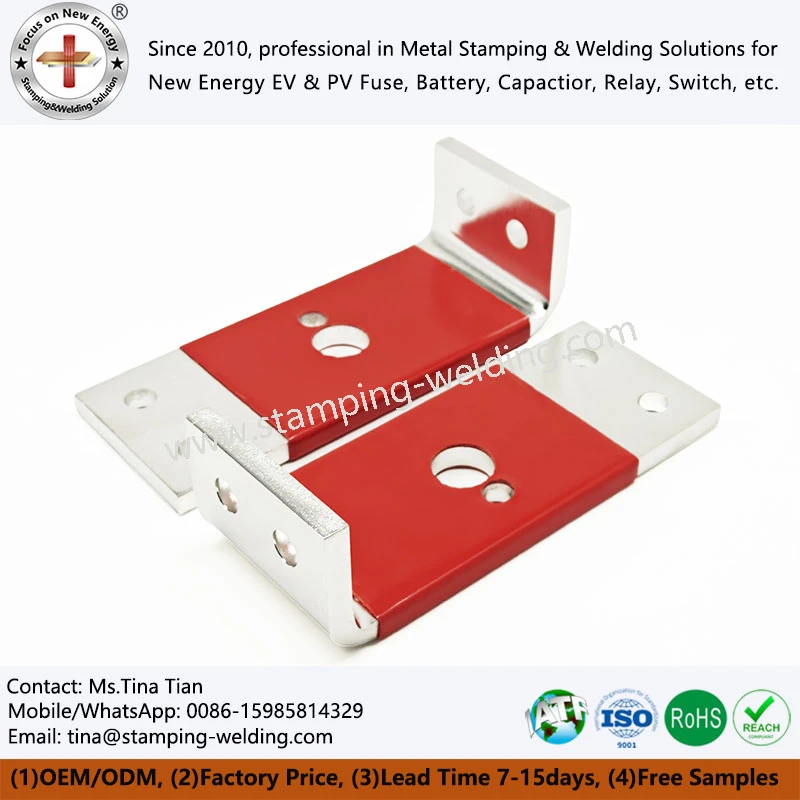
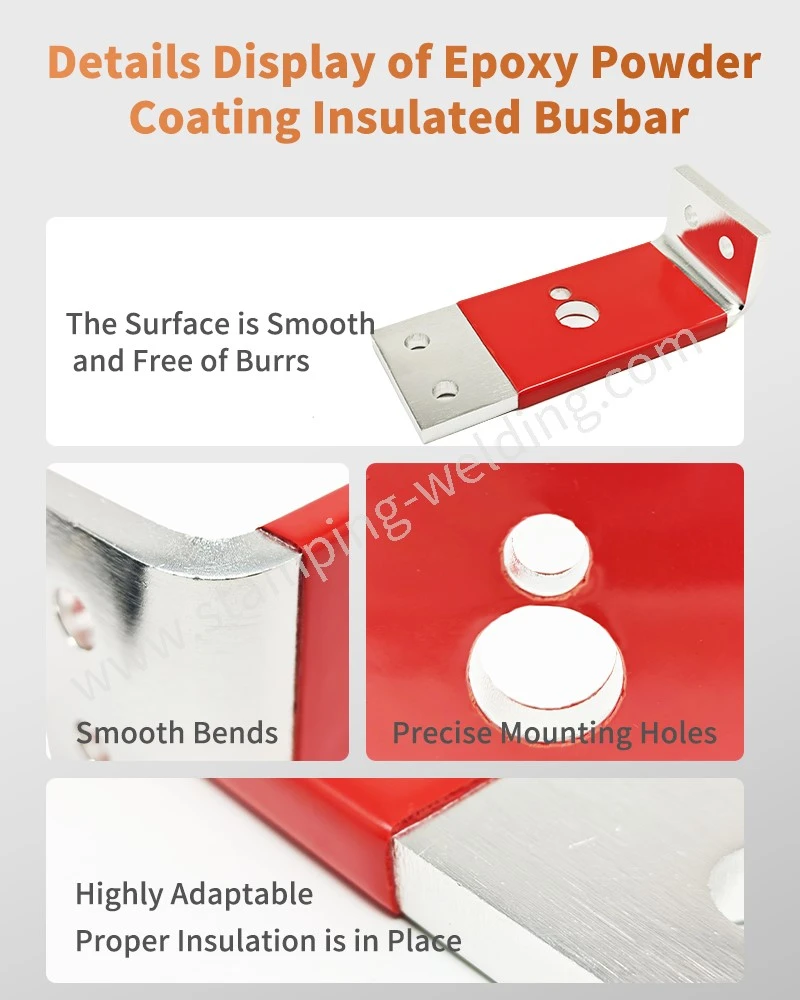
In such applications, epoxy-coated copper busbars-produced via an electrostatic spraying process-feature a thermoset insulating film on their surface. This enables the conductive components to maintain a compact structure while providing the necessary electrical isolation. Compared to traditional insulating sleeves, powder coatings can accommodate busbar structures of various shapes and sizes, offering excellent adaptability for complex contours, bent sections, and irregularly shaped connection points.
For high-power energy storage equipment, an insulating coating must not only meet initial withstand voltage requirements but also remain stable under conditions such as long-term temperature fluctuations, hot and humid environments, and voltage pulses.
Consequently, the focus in the development of busbar insulation materials has shifted from basic dielectric strength toward the integrity of thin-film coatings, resistance to pulse-induced aging, and long-term reliability.
Epoxy Powder Coating as a Key Insulation Solution for Copper Busbars
Epoxy powder coating is a type of thermosetting powder material. It is typically applied to pre-treated metal busbars via electrostatic spraying, followed by a thermal curing process that forms a continuous insulating layer.
Unlike traditional liquid coatings, powder coatings do not rely on conventional solvents to form a film; they offer superior adhesion and process stability. By adjusting the resin system, curing agents, fillers, and additives, one can optimize the coating's heat resistance, mechanical properties, surface leveling, and electrical insulation performance.
Epoxy powder-coated busbars represent a common method for busbar insulation, widely used in power distribution equipment, energy storage power conversion systems, and industrial electrical installations. In practical applications, the quality of the coating depends not only on the powder material itself but also on the cleanliness of the busbar surface, electrostatic spraying parameters, the grounding status of the workpiece, and the curing temperature and duration.
In terms of material composition, epoxy resin serves as the primary matrix that dictates the fundamental properties of the coating; its molecular structure and cross-linking density influence the mechanical strength, heat resistance, and electrical insulation performance of the cured film. The curing agent governs the cross-linking reaction and must be well-matched with the resin system. Meanwhile, inorganic fillers and functional additives can enhance the coating's electrical resistance, surface leveling, and adaptability during the application process.
For busbar products requiring a combination of conductive surface treatment and insulating protection, nickel-plated and tin-plated insulated busbars represent different approaches to integrating metal surface treatments with insulation structures. The specific surface treatment to be employed is determined by factors such as the busbar material, connection interfaces, operating environment, and downstream processing requirements.
Ultra-thin Coatings Demand Higher Standards for Insulation Integrity
A key focus in the design of low-inductance busbars is to optimize the spacing between conductors while still meeting electrical insulation requirements. An excessively thick coating can increase the distance between busbar layers, hindering compact structural design; conversely, a coating that is too thin may result in incomplete coverage, pinholes, or insulation defects along the edges, thereby compromising overall insulation reliability.
Consequently, the manufacturing of insulated copper busbars requires striking a careful balance between coating thickness and insulation performance. This is particularly challenging for copper busbars featuring complex bends, punched holes, rounded corners, or specific edge geometries; during the electrostatic powder coating process, factors such as electric field distribution, workpiece shape, and spray angle can lead to uneven powder deposition across different areas.
In the production of ultra-thin coatings, the control of pinholes is a critical aspect of quality management. Minute pores, impurities, or localized weak points within the coating can become sites of electric field concentration, potentially triggering partial discharge or insulation breakdown under long-term voltage stress.
To address this, the formulation of the insulating powder must be optimized-specifically regarding resin flow, degassing capabilities, and the curing reaction window-to ensure the powder spreads thoroughly during the melting phase, thereby minimizing residual air bubbles and surface defects. Furthermore, the particle size distribution of the powder must be strictly controlled to ensure uniform deposition during the coating process.
From a practical manufacturing perspective, the production of insulated busbars requires not only monitoring the average coating thickness but also conducting rigorous inspections of edges, hole locations, bent sections, and connection areas. For products with specific installation requirements, it is essential to clearly define-based on design blueprints-which areas must remain as conductive contact surfaces, ensuring that the insulation layer does not interfere with subsequent bolted connections or electrical assembly.
Key Properties of Insulating Coatings: Voltage Resistance, Heat Resistance, and Environmental Stability
Evaluating the performance of busbar insulation materials cannot rely solely on a single voltage-withstand test; it requires comprehensive verification based on the actual operating environment.
First is electrical breakdown performance. The coating must possess sufficient dielectric strength to withstand voltage stress during normal equipment operation and under specified test conditions. For high-voltage energy storage systems and electronic control systems in new energy vehicles, it is also critical to consider insulation stability under conditions of rapid voltage fluctuations and repetitive pulse stress.
Second is heat resistance. Busbars generate Joule heat during high-current operation, and temperature fluctuations can affect the mechanical and dielectric properties of the insulation material. Therefore, the resin system for powder coatings must be selected according to the equipment's actual operating temperature class, and performance changes over long-term use must be assessed through thermal aging tests.
Third is resistance to heat, humidity, and corrosion. In coastal energy storage power stations, outdoor photovoltaic equipment, and high-humidity industrial environments, moisture and corrosive agents can compromise coating adhesion and surface insulation properties. Material development must focus on moisture absorption, resistance to hydrolysis, and insulation stability following hygrothermal cycling.
Furthermore, the effectiveness of busbar insulation coatings is closely linked to the pre-treatment of the substrate. The presence of oil, oxides, or processing residues on the surface of copper busbars can reduce coating adhesion, increasing the risk of subsequent defects such as blistering or peeling. Consequently, the substrate must undergo degreasing, cleaning, and other necessary surface treatments prior to coating application.
Energy Storage and New Energy Vehicles Drive the Diversification of Busbar Insulation Structures
As energy storage systems evolve toward higher power density and modularity, busbars are transitioning from traditional single-layer conductive connections to laminated and integrated structures. Separating conductors with insulating layers helps optimize current paths and spatial layout, thereby increasing the level of integration within the equipment's internal connection architecture.
In energy storage power conversion systems (PCS), busbars primarily facilitate current transmission between the battery side, the DC bus, and the power modules. The insulation design must be determined by holistically considering the DC operating voltage, switching frequency, operating temperature, and available installation space. Epoxy powder coating for copper busbars creates an insulating surface layer, making it a suitable solution for insulating complex-shaped copper busbars and intricate structural components.
The upgrade to high-voltage platforms in new energy vehicles (NEVs) has further driven the evolution of busbar insulation technology. With the increasing adoption of 800V high-voltage electrical architectures and high-power electric drive systems, automotive busbars must now withstand more demanding electrical and thermal environments. Coatings for electric vehicle busbars must not only meet electrical isolation requirements but also account for factors such as vibration, thermal cycling, mechanical friction, and long-term adhesion reliability.
For internal connection components within power batteries and energy storage systems, the insulation layer must be compatible with the battery pack structure, electrical clearances, creepage distances, and assembly processes. Epoxy-coated copper battery busbars can be utilized in such battery connection designs; however, the specific coating solution must be validated based on the battery system's voltage class, structural dimensions, and operating conditions.
Advancements in Busbar Insulation Manufacturing: Precision and Traceability
Across the industrial chain, the quality of busbar insulation products is determined by several stages, including raw materials, metal processing, and surface treatment. The upstream sector encompasses copper materials, epoxy resins, curing agents, and functional fillers.
The midstream involves copper busbar stamping, bending, machining, surface pre-treatment, and electrostatic powder coating. The downstream sector covers applications such as energy storage converters, photovoltaic (PV) inverters, new energy vehicles, and industrial power distribution equipment.
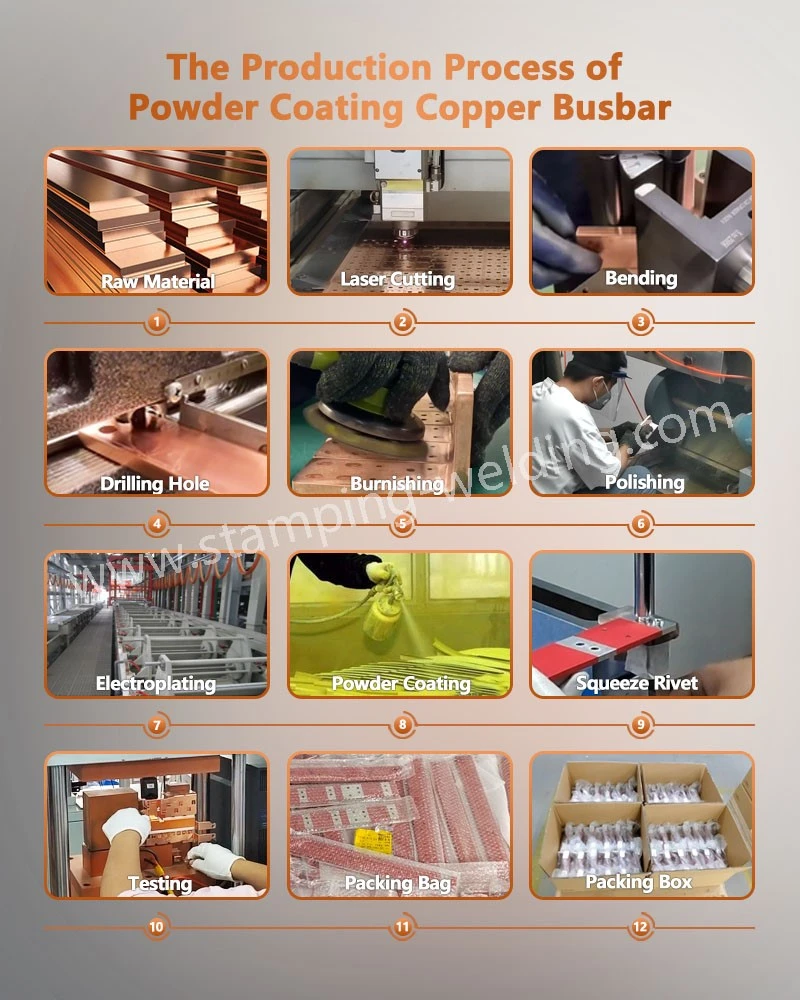
During the manufacturing process, copper busbars typically undergo cutting, punching, bending, and dimensional calibration before proceeding to surface cleaning and insulation coating. For products with complex geometries, factors such as edge profiles, hole layouts, and bend radii can influence powder deposition; therefore, the compatibility with manufacturing processes must be carefully considered during the product design phase.
The mass production of powder-coated copper busbars requires a robust process control system, encompassing critical parameters such as coating voltage, spray gun distance, powder feed rate, curing temperature, and curing duration. Standardized operations and in-process inspections help minimize variations in coating quality between different batches.
Quality control typically involves verifying the coating against product technical specifications, including checks for coating thickness, visual appearance, adhesion, and withstand voltage, as well as conducting necessary thermal aging and damp-heat testing. For products intended for high-voltage applications, it is also essential to evaluate potential weak points in the insulation-considering actual operating conditions-to ensure the product meets all design and usage requirements.
Future Trends: A Shift Toward Ultra-Thin, Highly Reliable, and Customized Solutions
Looking ahead, busbar insulation technology is set to evolve across three key areas:
First, coating structures are trending toward thinner and more uniform profiles. In compact laminated busbar designs, the thickness of the insulation layer must be carefully balanced with electrical clearance, dielectric performance, and manufacturing capabilities to maximize power transmission capacity within a given space.
Second, material systems are advancing toward higher heat resistance and greater pulse-withstand capability. With the increasing adoption of wide-bandgap semiconductor devices and high-frequency power electronics, busbar insulation materials must be able to endure more complex voltage fluctuations and thermal cycling, thereby enhancing long-term operational reliability.
Third, manufacturing processes are moving toward greater automation and precision. By optimizing factors such as powder particle size, spraying parameters, curing processes, and in-line inspection methods, manufacturers can improve coating consistency and mitigate quality risks-such as pinholes, incomplete coverage, or poor adhesion.
Furthermore, as different types of equipment impose varying requirements on busbar structure, mounting methods, and insulation ratings, the industry is increasingly moving toward a model that combines standardized materials with customized processing. For busbar manufacturers and electrical equipment integrators, the synergistic optimization of insulation material properties and metal-processing techniques is critical to the reliability of the final product.
ngineering Procurement and Customized Busbar Insulation Solutions
When procuring busbar insulation, selection should not be based solely on the type of coating or its visual appearance. Instead, it requires a comprehensive assessment of factors including the copper grade, busbar dimensions, bending geometry, rated voltage, operating temperature, insulation thickness, and the specific application environment. For energy storage converters, photovoltaic inverters, and high-voltage electronic control systems in new energy vehicles, it is essential to specify requirements regarding withstand voltage, temperature rise, environmental testing, and the dimensions reserved for conductive contact areas.
Depending on the specific application, procurement teams can provide 2D or 3D drawings of the busbars, along with material specifications, surface treatment requirements, and anticipated operating conditions. The manufacturing engineering team will then evaluate the feasibility of processes such as stamping, bending, surface treatment, and insulation coating, while also defining the requirements for sample testing and mass production.
If you are developing insulated copper busbars for energy storage systems, new energy vehicles, or industrial power equipment, please share your product drawings and technical parameters. We can discuss material selection, structural fabrication, insulation coatings, and quality inspection protocols to facilitate the evaluation of customized samples and subsequent mass production.
contact us