

Deep Drawn Metal Stamping
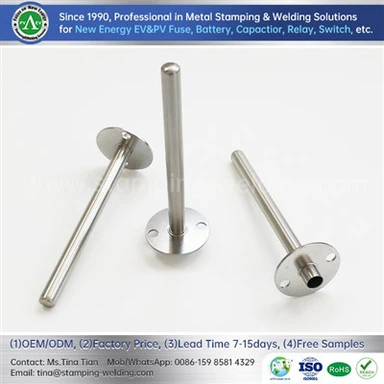
Deep drawn metal stamping is a forming process in which a flat metal blank is forced into a die through a punch, and stretched in a plastic flow state to form a hollow, seamless metal part with a depth greater than its diameter. This process is suitable for the mass production of battery housings for new energy vehicles, high-voltage electrical connectors, energy storage system housings, motor stator and rotor assemblies, and high-strength load-bearing components with stringent requirements for structural integrity and sealing.
- Fast Delievery
- Quality Assurance
- 24/7 Customer Service
Product Introduction

Deep drawn metal stamping process differs from ordinary flat stamping. It can complete the forming of complex deep structures without splicing or welding. It is the core process for mass production of high-end industrial precision hardware and core components of power and electrical equipment, and is suitable for engineering applications with various high load, high wear resistance and high precision working conditions.
Core technological advantages
High Strength and High Rigidity
Deep-drawn stamping parts, relying on high-quality steel base materials and cold-work hardening processes, significantly improve overall strength and rigidity, withstand high loads and alternating stresses, and are not easily deformed or broken. The seamless, one-piece forming structure enhances overall integrity, perfectly adapting to the high-intensity application requirements of automotive, heavy industry, and construction industries.
01
Wear Resistance and Durability
High-carbon steel and alloy steel deep-drawn parts, after professional heat treatment and strengthening, exhibit significantly improved surface hardness and wear resistance, stably adapting to harsh operating conditions such as dust friction and high-frequency operation. This effectively extends the service life of parts, reduces parts replacement and equipment downtime, and significantly lowers enterprise maintenance costs for Stainless Steel Stamping.
02
Compatibility with All Material Categories
This process is compatible with all categories of engineering metal materials, including carbon steel, stainless steel, copper, and aluminum. It can precisely match strength, corrosion resistance, conductivity, and heat resistance properties according to working conditions and design requirements, efficiently solving complex working condition adaptation problems and covering the customized mass production needs of various precision stamping parts.
03
Ultra-High Machining Precision
Relying on high-precision molds and automated stamping equipment, finished product dimensional tolerances are controllable, surfaces are smooth and flawless, and batch forming consistency is excellent. Finished products can directly meet precision assembly standards, eliminating the need for secondary processing such as grinding and turning, simplifying the production process and significantly improving overall mass production efficiency.
04
Large-Scale Mass Production
Using versatile and cost-effective steel base materials, combined with the advantages of deep drawing technology-high utilization rate, high cycle time, and high yield-effectively reduces unit costs in large-scale stamping sheet metal parts. Compared to forging and machining processes, it offers outstanding overall benefits and is suitable for standardized batch procurement needs.
05

Standardized processing procedures
Sheet Metal Positioning and Pressing: A high-precision pressure ring evenly locks the edges of the sheet metal, controlling the pressure force to be constant, effectively preventing sheet metal slippage and wrinkling during the forming process, ensuring stamping steel parts overall forming consistency.
Initial Deep Drawing: The punch presses down vertically, and the metal sheet plastically extends evenly along the mold cavity, completing the basic depth structure forming of the automotive stamping, strictly controlling the sheet metal thinning rate within the material's allowable threshold.
Multiple Secondary Drawings: For product parts with large depth and complex structures, multiple progressive drawing passes are used, with small deformation amounts added together to form the final automotive stamping by Die, effectively avoiding sheet metal cracking caused by single drawing.
Shaping and Trimming: After drawing, the mold is finished, trimmed, and leveled to correct metal stamping fabrication forming springback errors, accurately ensuring the dimensional accuracy and end-face flatness of the parts.
Post-Processing Strengthening: Depending on the working conditions, heat treatment, polishing, electroplating, and rust prevention treatments are applied to comprehensively improve the wear resistance, rigidity, and corrosion resistance of the sheet metal stamping die parts.

Frequently Asked Questions
What is the core difference between deep-drawn stamped parts and ordinary welded stamped parts?
The core difference lies in structural integrity and performance stability. Sheet metal stamping are integrally formed without welds, resulting in uniform structural strength, good sealing, no stress concentration, and excellent overall structural integrity. Welded parts, on the other hand, have seams and residual welding stress, making them prone to deformation, cracking, and leakage under long-term alternating loads and high-intensity conditions. This makes them unsuitable for high-precision, high-reliability industrial applications.
Can the dimensional accuracy of deep-drawn parts meet the assembly requirements of new energy electrical equipment?
Yes. Standardized deep-drawing mass custom metal stamping by dies processes can stably control dimensional tolerances, flatness, and perpendicularity accuracy. Finished products are burr-free and deformation-free, directly adapting to the precision assembly standards of high-end industrial fields such as EV new energy and energy storage equipment, without the need for secondary processing corrections.
Where does the cost advantage of mass-producing deep-drawn stamped parts lie?
With large-scale mass production, deep-drawing processes can achieve material utilization rates exceeding 90%, far surpassing machining processes. Simultaneously, automated stamping production boasts fast cycle times, minimal manual intervention, and stable yield rates, leading to continuously decreasing marginal costs per piece. Compared to forging, machining, and welding processes, bulk purchasing offers a significant cost-performance advantage.
Can deep drawn metal stamping undergo wear-resistant and corrosion-resistant strengthening treatments?
Yes. Depending on the operating conditions, post-treatment processes such as quenching and tempering heat treatment, electroplating, anodizing, and passivation can be applied to improve the wear resistance, surface hardness, and corrosion resistance of parts, making them suitable for complex industrial conditions such as high wear, humidity, and corrosion.

Contact Us
If you have any needs for custom deep drawn metal stamping, application condition selection and matching, or mass production solutions, please feel free to contact us. Our professional technical team will provide you with one-on-one precise engineering solutions and mass production adaptation services.

Hot Tags: deep drawn metal stamping, China, manufacturers, suppliers, factory