Breaking The Heat Dissipation Bottleneck Of Lithium Batteries Square Aluminum Shell: In-depth Analysis Of Four Core Optimization Paths
May 16, 2026
Against the backdrop of rapid development in new energy vehicles, energy storage, and electric mobility, the heat dissipation performance of lithium-ion batteries directly determines their safety, lifespan, and operational stability. The poor heat dissipation of lithium-ion battery aluminum casings has become a key pain point hindering the industry's high-quality development. Industry research indicates that the core to improving the heat dissipation of lithium-ion battery square aluminum shells lies in reducing internal thermal resistance and enhancing external heat exchange. Currently, the industry has developed four targeted optimization paths, providing a clear direction for upgrading the heat dissipation of Lithium Batteries Square Aluminum Shell.
Fill with thermally conductive medium to improve efficiency at low cost
Adding a thermally conductive interface medium has become a fundamental optimization method for low cost and high efficiency. Traditional lithium-ion batteries often have air gaps between the aluminum casing and the cell, significantly hindering heat conduction efficiency. The industry generally addresses this problem by filling the space between the cell and the aluminum casing with a thermally conductive medium. By filling the space between the cell and the aluminum casing with thermally conductive silicone grease or gel, air gaps can be effectively eliminated, maximizing the contact area between the two, significantly reducing thermal conduction resistance, and enabling rapid heat conduction in the Lithium-Ion Battery Pack, thus improving overall heat dissipation performance.
Enhanced active cooling, suitable for high-end scenarios
Enhanced external active cooling caters to the high heat dissipation demands of mid-to-high-end applications. For applications with stringent heat dissipation requirements, such as new energy vehicles, active cooling technology has become the mainstream choice in the industry, primarily divided into liquid cooling and air cooling. Liquid cooling systems utilize a cold plate-type liquid cooling circuit designed to fit the aluminum casing, forcibly removing heat with circulating coolant, achieving industry-leading heat dissipation efficiency and widely used in products such as aluminum cases for automotive batteries. Air cooling, on the other hand, adds heat dissipation fins to the aluminum casing surface, combined with fans to accelerate air convection or a well-designed airflow channel to achieve forced air cooling, balancing cost and heat dissipation effect, and is suitable for low-to-medium power applications.
Optimize shell structure and improve quality at the source
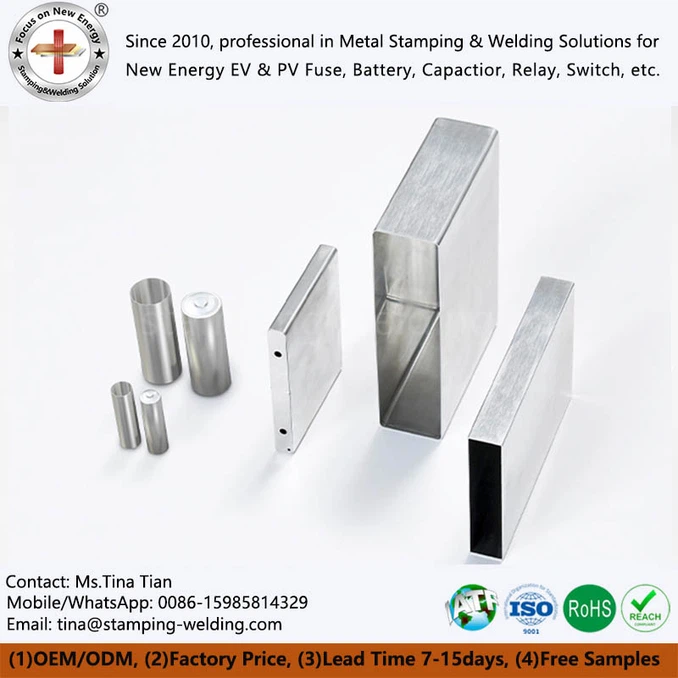
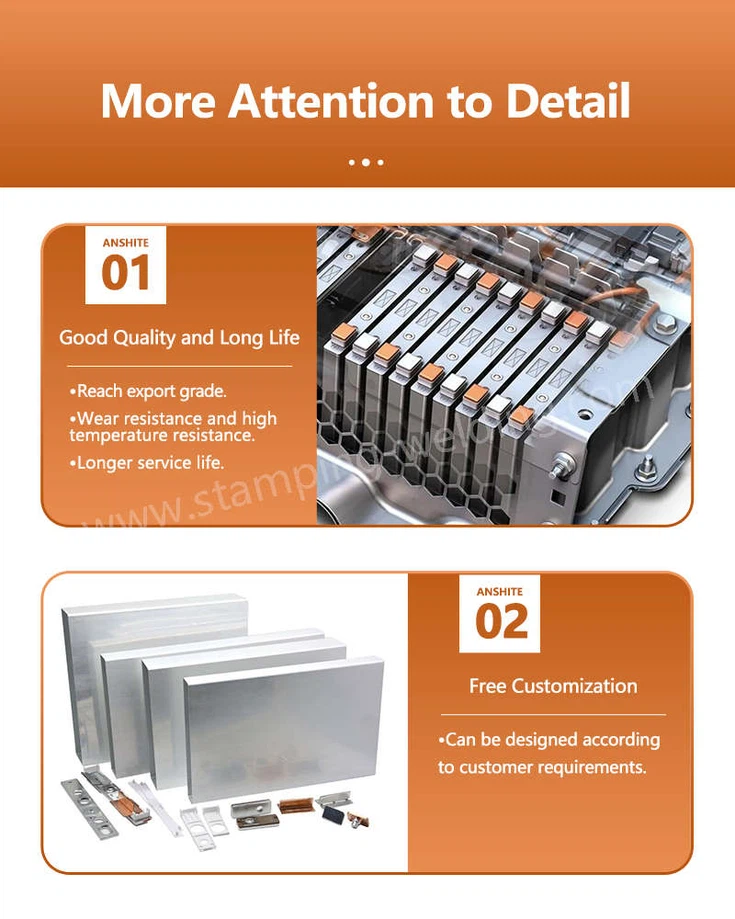
Optimizing the casing material and structure improves heat dissipation and temperature uniformity from the source. In terms of material and structural optimization, the industry is achieving breakthroughs through a two-pronged approach: on the one hand, anodizing the aluminum casing surface or spraying a high-radiation heat-dissipating coating enhances the casing's thermal radiation capacity and accelerates heat dissipation; on the other hand, adopting a composite casing design, combining high thermal conductivity fillers to modify the aluminum casing, or selecting metal and thermally conductive polymer composite materials, effectively improving temperature uniformity while ensuring the structural strength of the aluminum casing, thus supporting the differentiated heat dissipation needs of Customized Prismatic Battery Cell Casings.
Controlling heat at its source and ensuring safety through collaborative optimization
Controlling heat generation at its source enables synergistic optimization of heat dissipation and battery performance. In addition to external heat dissipation optimization, software intervention to reduce heat generation at its source has become an important supplement to industry optimization. Companies use Battery Management Systems (BMS) to reasonably limit the battery charge/discharge rate, avoiding excessive heat generation from continuous high-current charging and discharging. Simultaneously, they monitor battery temperature in real time, providing timely warnings and preventing overheating. This approach requires no additional hardware costs and can work in conjunction with external heat dissipation solutions to further improve the heat dissipation stability and safety of LiFePO4 Battery Packs.
Industry Outlook
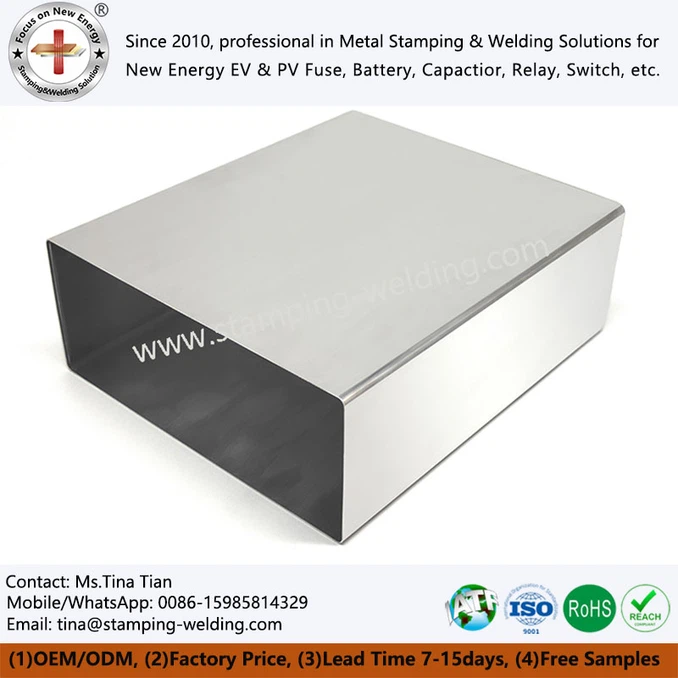
Industry insiders point out that optimizing the heat dissipation of Lithium Batteries Square Aluminum Shell is a systematic project that requires a flexible combination of various optimization solutions, taking into account factors such as application scenarios and cost budgets. With the continuous iteration of industry technology, the future will further promote the deep integration of heat dissipation technology and aluminum casing design, optimizing the heat dissipation performance of products such as Aluminum Case for EV Lithium Battery Packs. This will help lithium-ion batteries achieve safer and more stable applications in various fields, promoting the sustained and healthy development of the new energy industry.
Contact Us
If you have a need for heat dissipation optimization for Lithium Batteries Square Aluminum Shell and would like to obtain a professional solution suitable for your scenario, please feel free to contact us for further discussion.