Application Of Heat-Shrinkable Insulation Materials in Substations And Power Busbar Systems: Enhancing Electrical Protection And Operational Reliability
Nov 14, 2026
As power systems evolve toward higher voltages, larger capacities, and greater intelligence, the requirements for insulation protection, operational stability, and ease of maintenance in substations and power distribution equipment continue to rise. Busbars-critical conductive components used for the collection and distribution of electrical energy-are frequently exposed to complex environments characterized by high current loads, temperature fluctuations, humidity, salt spray, and dust. If exposed conductors come into contact with foreign objects, condensation, or contaminants, it can lead to issues such as phase-to-phase short circuits, ground faults, and partial discharge.
Heat-shrinkable insulation materials, valued for their ability to shrink-fit, provide robust insulation, and offer high installation adaptability, are increasingly used to protect busbars in substations, connections within switchgear, and other electrical conductors. By creating a continuous insulating layer over the surface of exposed conductors, these materials reduce the risk of contact with foreign objects and improve the operating conditions of electrical equipment in challenging environments. Heat-shrink insulation technology also offers a viable protective solution for busbar connections in new energy vehicles, energy storage systems, and industrial power distribution equipment.
Working Principle and Main Types of Heat-Shrinkable Insulation Materials
Heat-shrinkable materials are a class of polymers that exhibit "shape memory" properties. Their manufacturing process typically involves radiation or chemical cross-linking, which establishes a stable, three-dimensional network structure among the polymer chains. After being expanded and cooled to set their shape, these materials can return to their original, pre-set dimensions when reheated, allowing them to tightly encapsulate conductors or connection components.
In electrical insulation applications, heat-shrinkable tubing or tape is placed over or wrapped around the surface of exposed busbars. Controlled heating causes the material to shrink and conform precisely to the shape of the conductor, forming a continuous, protective insulating layer. Compared to traditional insulating varnishes, heat-shrinkable materials provide a more complete physical covering, minimizing the risk of exposed conductor sections and preventing direct contact with external foreign objects.
Common heat-shrinkable insulation products used in substations include busbar insulation sleeves, composite insulating tapes, custom-shaped insulating covers, cable termination accessories, and insulator creepage distance extenders. Different products correspond to specific structures and usage scenarios; selection should be based on factors such as conductor shape, electrical clearance, operating voltage, and installation conditions.
Busbar insulation sleeves are primarily used for the comprehensive covering of main and branch busbars. Composite insulating wrap tapes are suitable for components with complex geometries, those that are difficult to disassemble, or situations where downtime for installation is limited. Specialized insulating covers (shrouds) are better suited for busbar joints, connection points, and irregular conductive structures.
For power connection components that require both electrical conductivity and insulation, the insulating design must also account for contact surfaces, bolted connection points, and future maintenance requirements.
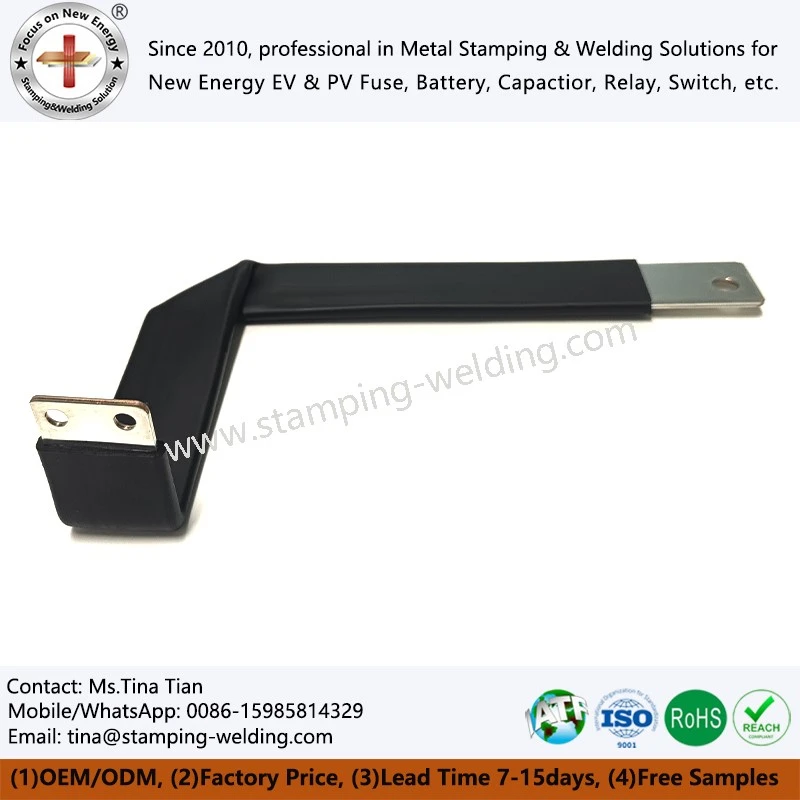
In low-voltage power distribution and battery interconnection systems, similar protective designs are applied to insulated busbars-such as those featuring PVC insulation. By applying a polymer insulating layer over copper busbars, the risk of accidental contact between conductors during installation is reduced, while also providing greater design flexibility for compact electrical layouts.
Key Performance Requirements for Heat-Shrinkable Insulating Materials
When heat-shrinkable materials are used in power equipment, their suitability cannot be judged solely by their shrinkage performance. Instead, a comprehensive evaluation is required, covering electrical properties, thermal characteristics, flame retardancy, aging resistance, and environmental adaptability.
First and foremost, insulation performance is the foundation for material selection. The material must possess a dielectric strength compatible with the equipment's rated voltage and operating conditions, and it must pass relevant tests-such as power-frequency withstand voltage tests, partial discharge tests, or other applicable electrical evaluations. For high-voltage busbars and switchgear, overall insulation coordination-considering phase-to-phase clearance, phase-to-ground clearance, and structural layout-is essential; simply increasing the thickness of the insulation layer cannot substitute for sound electrical design.
Secondly, thermal performance directly impacts the long-term operational reliability of busbars. Under high-current conditions, busbars generate Joule heat; therefore, the insulating material must maintain dimensional stability, mechanical integrity, and electrical performance within the temperature range specified for the equipment. Since the addition of an insulating layer may alter heat dissipation from the busbar surface, it is necessary to verify temperature rise by considering factors such as conductor cross-sectional area, rated current, ambient temperature, installation space, and ventilation conditions.
Flame retardancy is another critical metric for electrical insulating materials. Substations, switchgear, and energy storage equipment contain numerous electrical connection points. In the event of abnormal overheating or an arcing fault, the combustion characteristics of the materials used can significantly influence the progression of an incident. Therefore, when procuring such components, it is essential to verify their flame-retardant ratings, the testing methods employed, and the applicable standards; results obtained under different testing conditions should not be treated as equivalent.
Furthermore, heat-shrinkable materials must possess adequate resistance to damp heat, ultraviolet (UV) radiation, salt spray, and chemical corrosion. In environments such as coastal substations, industrial sites, or outdoor power installations, the presence of salt, dust, and corrosive gases can accelerate material degradation. Selecting insulation materials tailored to the specific operating environment helps extend the service life of protective structures.
Application of Heat-Shrinkable Insulation Technology in Busbar and Electrical Connection Systems
In substations, busbars are responsible for the collection and distribution of electrical energy. They feature numerous connection points and limited spacing between conductors, with some areas often remaining exposed. Applying insulation-such as heat-shrinkable coverings-to main busbars, branch busbars, and connection joints reduces the risk of short circuits caused by small animals, foreign metallic objects, or other external factors.
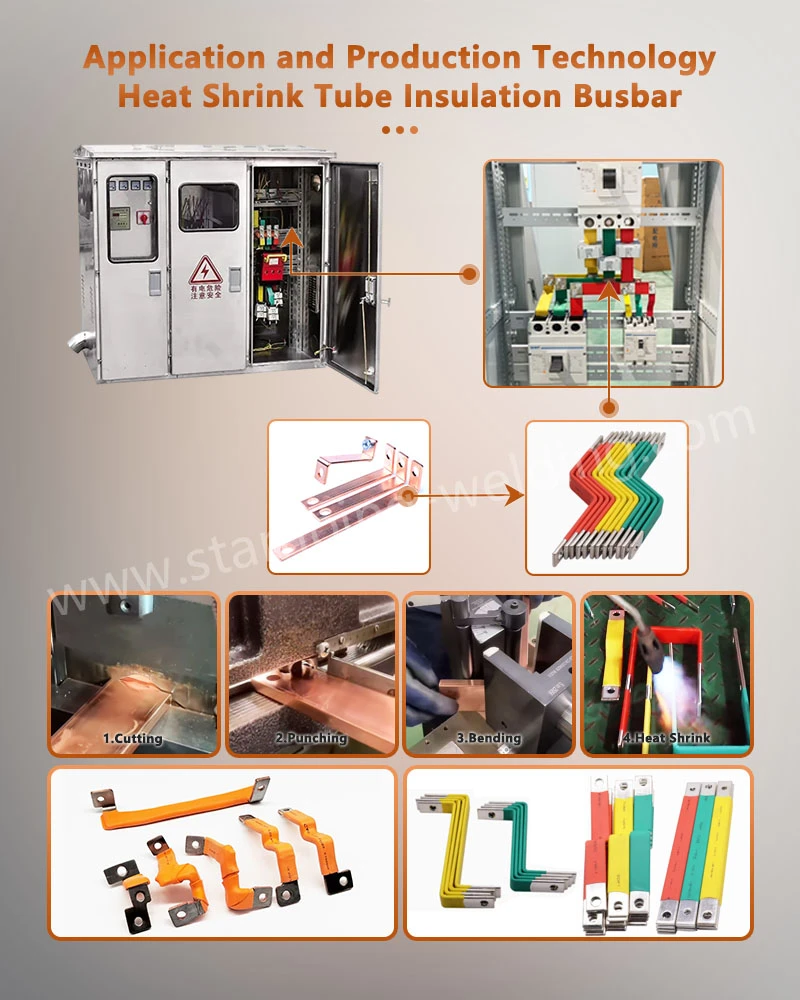
For copper busbars within switchgear, heat-shrinkable tubing can be matched to the conductor's cross-section and geometry, creating a tightly fitted insulation layer. In electrical systems where phase identification is required, insulation materials of different colors can be used to distinguish between phases A, B, and C, thereby facilitating installation, inspection, and routine maintenance. A common example is the use of orange heat-shrinkable tubing on copper busbars, which provides both electrical insulation and visual phase identification.
In new energy vehicles and energy storage systems, copper busbars are typically used to transmit current between battery modules, busbar assemblies, power distribution units, and high-voltage connection components. These components must deliver high current-carrying capacity within confined spaces while meeting requirements for insulation clearance, mechanical fixation, and reliability under vibration. Utilizing heat-shrinkable insulation on copper busbars creates a protective, insulating layer around the conductor-an ideal solution for designs that require both high electrical conductivity and robust protection.
For flat connectors within battery modules, the conductors typically require customization based on battery terminal positions, installation orientation, and spatial constraints. Flat copper battery busbars with heat-shrink tubing combine flat copper conductors with heat-shrinkable insulation, serving as connections between battery cells or between battery assemblies and electrical modules. Key design considerations include the busbar cross-section, hole tolerances, bending locations, the extent of insulation coverage, and the contact areas at the ends.
In high-current applications, the electrical conductivity of a busbar and the quality of its connections directly impact system power loss and temperature rise. Pure copper, which offers high electrical conductivity, is well-suited for various power transmission configurations. Pure solid copper busbars with heat-shrink tubing utilize an insulating layer to protect non-contact areas while leaving the conductive contact surfaces exposed, facilitating bolted connections or other assembly methods.
Synergistic Design of Busbar Surface Treatment and Insulation
Insulating a busbar involves more than simply adding a layer of material to its exterior; it requires careful consideration of the compatibility between the conductor's surface treatment, the connection method, and the insulation layer.
In certain power connection applications, copper busbars are tin-plated to enhance oxidation resistance and improve the stability of the connection interface. Tin-plated copper busbars with heat-shrink insulation are ideal for components that require both reliable electrical contact and external insulation. During the design process, plating specifications should be determined based on factors such as contact resistance, the operating environment, and the assembly technique; furthermore, it must be verified that the heat-shrink material is fully compatible with the metal surface treatment.
For busbars utilizing PVC insulation, the PVC material can be applied to the conductor surface via extrusion, sleeving, or heat-shrinking. PVC heat-shrink sleeves are suitable for busbar connections requiring insulation coverage; however, the material's temperature rating, flame retardancy, shrinkage ratio, and long-term aging characteristics must align with the equipment's operating conditions.
In the design of busbar connectors, the insulation layer must be kept clear of essential conductive contact surfaces to prevent improper coverage, which could otherwise compromise contact pressure or increase contact resistance. For connection points that may require disassembly for maintenance, the design of the insulation protection structure should allow for easy opening and restoration. Avoid completely enclosing detachable joints, as this would hinder future inspection and repair work.
Furthermore, the insulation layer may be subject to stretching or mechanical damage during bending, punching, or assembly. Designers should evaluate the insulation design by considering factors such as the bending radius of the copper busbars, edge chamfering, hole positioning, and available installation space, ensuring that the insulation does not sustain damage at sharp corners or areas prone to localized stress concentration.
Installation Process and Quality Control for Heat-Shrinkable Insulation Materials
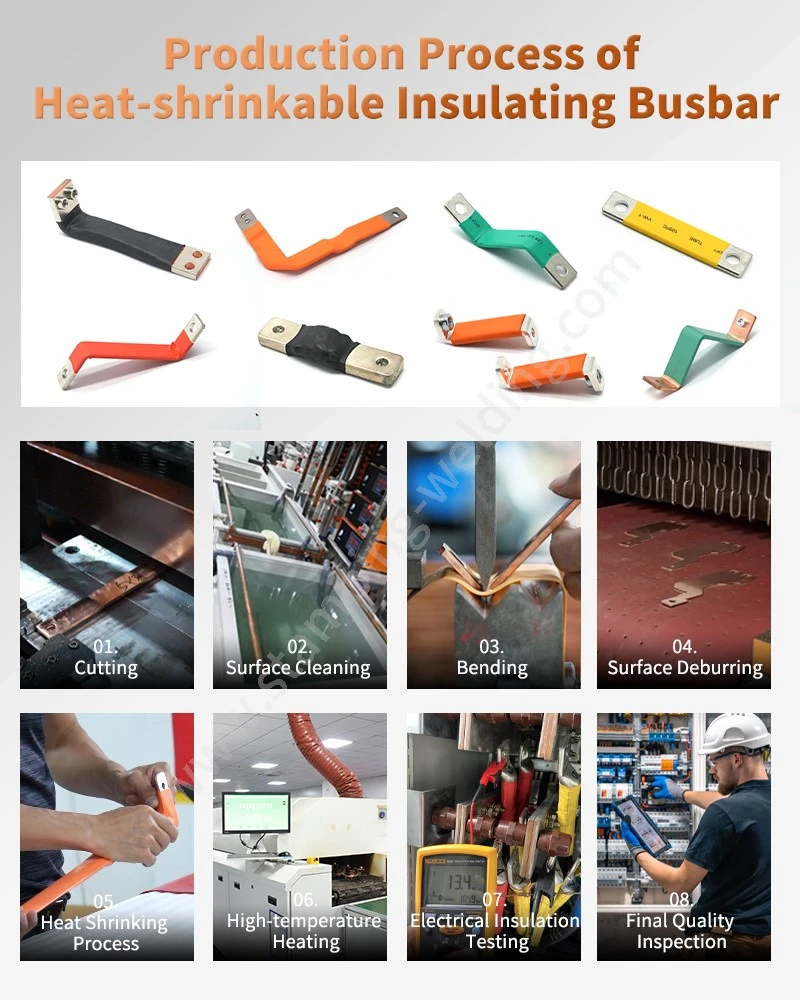
The final performance of a heat-shrinkable insulation structure depends not only on the material itself but also, to a significant extent, on the installation process. Before installation, the surface of the busbar must be cleaned to remove oil, dust, oxides, and burrs; the conductor should also be inspected for any significant deformation or sharp edges. For corners, joints, and irregular structures that require insulation, the dimensions and shrinkage range of the materials must be verified in advance.
During the heating process, operations must strictly follow the temperature range and installation methods specified by the manufacturer to ensure uniform shrinkage. Insufficient heating may result in incomplete shrinkage, leading to the formation of air gaps or loose fits, while excessive heating can cause material discoloration, surface damage, or a degradation in insulating properties. Therefore, it is essential to control the heating distance, the speed of movement, and the duration of heat application-paying particular attention to busbar corners, transition points at connections, and areas where heat-shrinkable materials overlap.
Once the shrinkage process is complete, the surface of the insulation layer should be inspected to ensure it is smooth and continuous, with no wrinkles, air bubbles, cracks, scorch marks, or localized peeling. In cases involving multiple segments of tubing or heat-shrinkable tape, special attention should be paid to the overlap areas to ensure continuous insulation coverage and to prevent the creation of weak points.
For detachable busbar connections, sufficient space must be reserved during installation to facilitate future inspection and voltage testing.
The insulation protection must not interfere with the equipment's required voltage testing, grounding, or maintenance procedures, nor should it alter the specified tightening requirements for the original connection structure. After the connections are restored, the tightness of the bolts, the quality of the contact surfaces, and the overall reliability of the connections must be verified in accordance with the equipment's technical documentation; if necessary, temperature-rise tests or electrical performance verification should be conducted.
Future Development Directions for Heat-Shrink Insulation Technology
With the advancement of new energy vehicles, energy storage systems, data centers, and industrial power distribution equipment, busbar structures are evolving toward higher integration, higher current capacity, and greater compactness. In certain applications, traditional bare copper busbars can no longer meet the complex requirements for safety isolation, spatial layout, and assembly efficiency; consequently, there is a growing demand for insulated busbars and customized connection components.
For battery systems, EV battery connectors must not only facilitate current transmission but also withstand vibrations, temperature fluctuations, and constraints within limited installation spaces. The selection of insulation materials must align with the copper busbar structure, terminal configuration, and the equipment's voltage rating to ensure the long-term operational stability of the connection components.
In battery terminal connections and module busbar designs, the dimensions of battery terminal busbars must be tailored to the layout of the battery terminals, their polarity, and the available assembly space. While heat-shrink insulation can be applied to protect non-contact areas, terminal contact surfaces, fastening points, and designated inspection zones must remain exposed in accordance with electrical design specifications.
For connection components requiring unique shapes or complex routing, customized copper busbar solutions-incorporating heat-shrink tubing-integrate copper fabrication with insulation processing. Based on client specifications, these components undergo processes such as punching, bending, surface treatment, and the application of heat-shrink sleeves. This integrated approach minimizes the need for secondary on-site processing, while enhancing dimensional consistency and assembly efficiency.
As equipment structures become increasingly integrated, various configurations-such as heat-shrink-insulated copper busbars and copper busbar connectors equipped with heat-shrink tubing-will continue to be utilized across diverse power connection applications and battery systems. Future product development must place greater emphasis on factors such as material temperature resistance, insulation thickness, shrinkage uniformity, flame retardancy, and long-term environmental adaptability, with performance verified through rigorous sample testing and validation under actual operating conditions.
Procurement and Selection Recommendations for Custom Busbars
When procuring busbars for projects such as substations, industrial power distribution equipment, new energy vehicles, or energy storage systems, the selection of heat-shrink insulated busbars should be based on actual operating conditions, rather than solely on copper dimensions or the color of the insulation material. Procurement and engineering teams must define key parameters, including conductor material, cross-sectional dimensions, rated current, operating voltage, connection method, extent of insulation coverage, surface treatment, and operating temperature.
For custom busbar projects, it is advisable to provide product drawings, installation space constraints, hole dimensions, copper grade, plating requirements, and insulation material specifications during the inquiry phase. If a project involves high-current operation or high-voltage connections, relevant requirements for temperature rise, insulation, and environmental testing should also be provided. This allows the manufacturer to evaluate the compatibility of the busbar structure, fabrication processes, and insulation strategy.
Xiamen Apollo offers custom processing solutions for copper busbars and electrical connection components-including stamping, bending, drilling, surface treatment, and the application of heat-shrink insulation. Engineering and procurement personnel are encouraged to submit product drawings, technical specifications, and details regarding the intended application. This will facilitate further discussion on material selection, structural feasibility, sample validation, and mass production requirements, ultimately ensuring an optimal busbar connection and insulation solution tailored to the specific operating conditions of the equipment.
contact us