Industry Technical Analysis: Copper Cap For In-line PV Fuse - High Current Stable Conductivity Principle
May 17, 2026
Copper Cap for In-line PV Fuse play a crucial role in photovoltaic systems, and their ability to stably transmit high currents directly impacts the system's safety and reliability. Achieving stable high-current conduction hinges on four key dimensions: material selection, interface bonding, surface treatment, and thermal management.

Core material selection
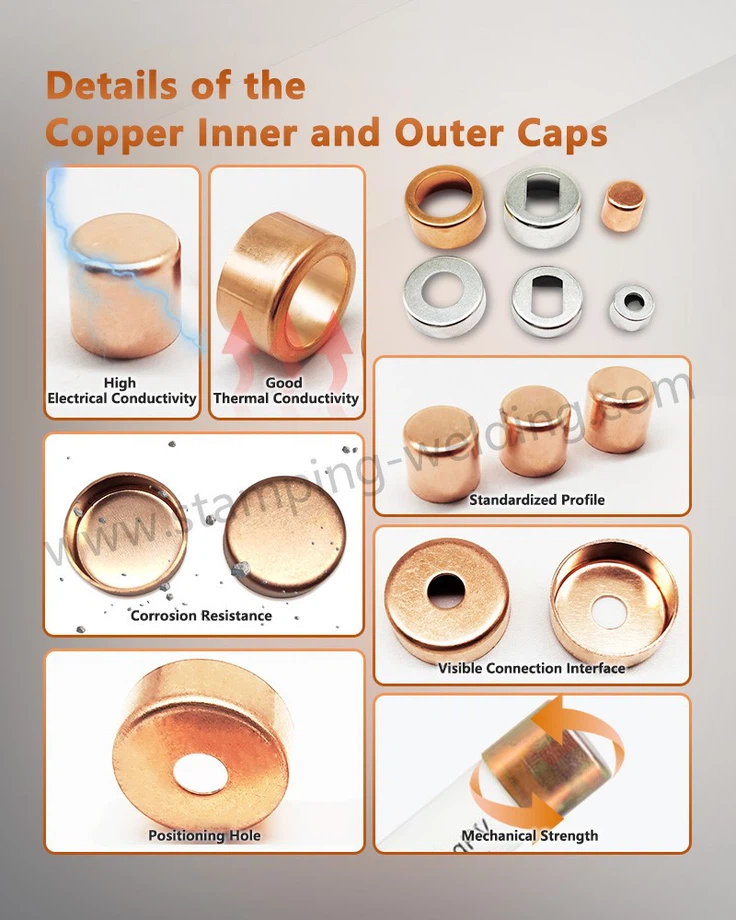
Photovoltaic fuse copper caps (Copper End Caps) are typically made of high-purity copper (such as T2 or C11000) or highly conductive brass. These copper materials, second only to silver in conductivity among all commonly used metals, ensure low resistivity and high current carrying capacity. According to Joule's law (Q = I²Rt), low resistance effectively reduces heat generation when carrying large currents, minimizing the risk of overheating at the source. The conductivity of the Cap Copper material directly determines the stability of the fuse copper cap under high-power photovoltaic operation.

Tight and reliable interface connection
- Welding Process: A high-precision welding process (such as soldering or high-frequency resistance welding) is used between the copper end cap fitting and the fuse element to form an equipotential surface, eliminating contact resistance and arcing caused by minute gaps.
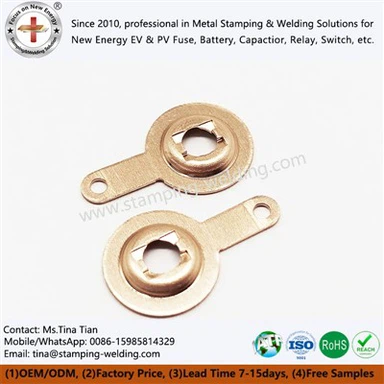
- Mechanical Crimping: The photovoltaic in-line fuse end caps are achieved through high-precision stamping or custom machining (Custom Copper Caps) to ensure a tight fit with the fuse body, guaranteeing unobstructed flow of high current through the connector.
Surface modification and antioxidant coating
Surface modification and anti-oxidation coating treatment effectively extend the service life of the copper cap and maintain stable conductivity. Photovoltaic systems are often exposed to harsh outdoor conditions, and copper is prone to oxidation at high temperatures. The resulting copper oxide drastically increases contact resistance, affecting current transmission. Therefore, the copper cap surface undergoes special electroplating treatments (such as silver, tin, or nickel plating), which not only effectively isolates the copper from air and prevents oxidation, but also fills in microscopic unevenness on the contact surface, significantly reducing contact resistance and ensuring stable current transmission during long-term use. This process is also applied to related copper end cap products such as Copper Metal End Caps.
Thermal conductivity and thermal equilibrium capabilities
High-current operation inevitably generates heat. Copper End Cap, Copper Pipe End Stop, and Copper Cap for European Cylindrical Fuse Link feature high thermal conductivity, rapidly dissipating heat generated by the fuse and contacts to the fuse holder or surrounding air. This efficient thermal management maintains temperature balance in the current path, preventing localized overheating that could lead to reduced material strength or accidental melting.
summary
The Copper Cap for In-line PV Fuse achieves extremely low electrical impedance and stable high-current conduction through superior conductive materials, anti-oxidation coating, precision welding and crimping processes, and excellent thermal management. In high-power photovoltaic systems, these technologies ensure the reliability and safety of current transmission, providing a stable operating foundation for photovoltaic power generation and energy storage systems.
Contact Us
If you have any needs for Copper Cap for In-line PV Fuse and related copper end cap products, or if you would like to inquire about product compatibility details, please feel free to contact us to discuss cooperation.