What To Do If Carbon Steel Sheet Metal Stamping Rust? Corrosion Protection Treatment And Procurement Selection Guide
Aug 13, 2026
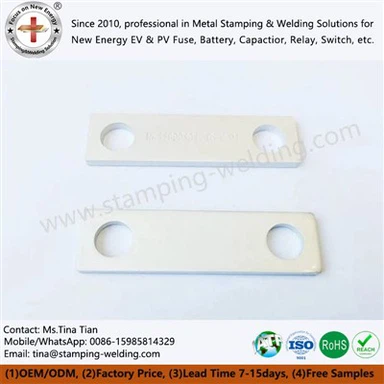
Carbon Steel Sheet Metal Stamping are characterized by high strength, high processing efficiency, and low overall cost, and are widely used in brackets, structural components, connectors, and industrial parts. However, carbon steel stampings, such as those made with galvanized deep draw metal stamping, may oxidize and rust during humid environments, long-term storage, or transportation. Solving the rust problem cannot rely solely on rust-preventive oil; instead, a suitable surface treatment solution should be selected based on the usage environment, product lifespan, corrosion protection requirements, and target cost.

Why are carbon steel stamped parts prone to rust?
Carbon steel surfaces are prone to oxidation upon contact with moisture and air. Therefore, Chinese manufacturers of carbon steel stamping parts need to pay attention to rust protection during both production and procurement. Common causes include three aspects: moisture and condensation caused by humid environments or temperature differences; surface scratches generated during stamping, handling, and assembly; and insufficient moisture-proof packaging during storage and transportation. It is clear that rust is not just a material issue, but is also closely related to the production, packaging, and usage environment.
For mass-produced stamping carbon steel parts, if surface protection measures are insufficient, even if the product shows no obvious rust upon leaving the factory, corrosion may occur after long-term transportation or storage. Therefore, the usage environment and corrosion protection requirements of the product should be clearly defined in advance during procurement, rather than waiting until the product rusts before taking action.
Common methods for corrosion protection of carbon steel stamping parts
For short-term storage or transportation, rust-preventive oil is a relatively simple protective method, suitable for products that require further processing or assembly. For Carbon Steel Metal Stamping and Custom Carbon Steel Stamping products requiring longer-term corrosion protection, galvanizing, powder coating, or other surface treatments can be considered depending on the operating environment.
Zincizing is suitable for long-term corrosion protection needs in general industrial environments; powder coating and painting are more suitable for exposed structural components, providing corrosion protection while improving appearance; phosphating is usually used as a pretreatment for subsequent coatings to improve coating adhesion. For Carbon Steel Sheet Metal Stamping products, the final process should be determined comprehensively based on corrosion resistance requirements, service life, and cost targets.

How to choose the right rust prevention solution?
Purchasing personnel can make judgments based on the actual use conditions of the product: anti-rust oil can be given priority for short-term warehousing and transportation; galvanizing can be considered for general indoor industrial environments; further evaluation of plating or coating solutions is required for humid or outdoor environments; if the product also has requirements for appearance, spray painting or powder coating can be considered. For Precision Carbon Steel Customized Bending parts with complex structures, it should also be confirmed whether the bending position, hole position and edge area can obtain sufficient surface protection.
Therefore, no anti-corrosion treatment is suitable for all carbon steel stampings. A reasonable plan should also consider the use environment, corrosion resistance requirements, product life, surface requirements and target cost, and be determined in advance during the product design and procurement stages.
Not sure which surface treatment fits your application environment?
Get a Custom Surface Treatment Recommendation
What needs to be confirmed when purchasing carbon steel stamping parts?
When procuring Carbon Steel Sheet Metal Stamping, or Custom OEM Carbon Steel Zinc Coated Metal Stamping, it is recommended to specify at least five pieces of information: material grade and sheet thickness, surface treatment method, corrosion resistance or salt spray testing requirements, critical dimensional tolerances, and expected annual purchase volume. For products requiring bending, punching, or deep drawing, complete drawings should also be provided to assess material and process compatibility.
It is particularly important to note that it is not advisable to simply request "rust resistance" from suppliers. More accurate procurement information should include the product's operating environment, expected service life, corrosion resistance rating, or testing standards. The more specific the requirements, the easier it is to determine suitable materials, stamping processes, and surface treatment solutions, and the less quality risk is expected during subsequent prototyping and mass production.
Frequently Asked Questions
Q: Why do carbon steel stamping parts rust?
A: This is mainly related to moisture, air, surface damage, and storage and transportation conditions. Proper surface treatment and moisture-proof packaging can reduce the risk of rust.
Q: How to prevent carbon steel stamping parts from rusting?
A: Rust-preventive oil, galvanizing, spraying, or other surface treatments should be selected based on the usage environment, along with appropriate storage and transportation packaging.
Q: What is the best surface treatment for carbon steel stamping parts?
A: There is no single best solution; the choice should be based on the corrosive environment, service life, appearance requirements, and cost objectives.
Q: Is zinc plating suitable for carbon steel stamping parts?
A: Galvanizing is suitable for many industrial carbon steel stamping parts requiring long-term corrosion protection, but the specific solution should still be determined based on the actual usage environment and corrosion protection requirements.
Contact Us
If you are procuring carbon steel stampings, you can provide product drawings, material thickness, operating environment, corrosion protection requirements, and expected purchase quantity so that we can assess suitable stamping processes and surface treatment solutions in advance.