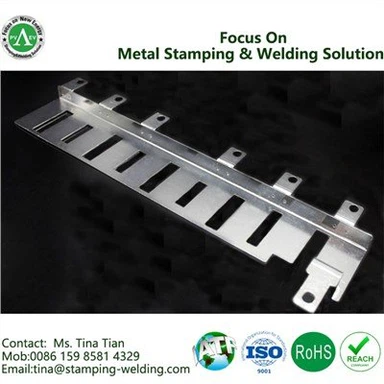
Global Nickel And Lithium Shortages Impact The New Energy Supply Chain. How Can Nickel Sheet Copper Foil Flexible Connection Busbar Companies Break Through?
Mar 06, 2025
(March 5, 2025, Shanghai) The International Energy Agency (IEA)'s latest "2025 Global Energy Transformation Report" shows that the demand for nickel in the electric vehicle and energy storage industries surged 140% year-on-year in the first quarter of 2025, reaching a historical peak of 1.25 million tons. At the same time, the London Metal Exchange (LME) nickel price has risen by more than 150% this year, and the spot price of spodumene has soared to US$8,700/ton, a three-year high. This supply chain crisis caused by resource shortages is pushing battery key component companies such as nickel sheet, copper foil busbar, and flexible copper connections, on busbars, to a crossroads of transformation.

1. Busbar supply chain: the "blood vessel" crisis of new energy systems
As the core connector between battery modules and power systems, nickel sheet copper foil flexible connection busbars have the dual functions of high current transmission and structural support. According to data from the China Battery Industry Association, each new energy vehicle needs to use 8-12 sets of busbar components, and their performance directly affects the energy density and safety of the battery pack. Industry research shows that a leading battery company in the industry was forced to reduce production by 30% due to the interruption of nickel raw materials, and the order volume of its supporting busbar manufacturers fell by 45% year-on-year. "The procurement cost of nickel sheets has risen from 1.2 yuan/piece in 2023 to 4.1 yuan, and the delivery cycle has been extended from two weeks to three months." A new energy supply chain manager revealed.
Three major causes of structural shortages:
| Imbalanced resource distribution | 70% of the world's nickel resources are concentrated in Southeast Asian countries, while China's consumption accounts for 55% of the world's total, with a foreign dependence of over 80% |
| Intensified policy disturbances | A major nickel producer's export ban in 2024 has caused the international market supply gap to expand to 380,000 tons. |
| Explosive demand growth | The IEA predicts that global electric vehicle nickel demand will reach 4.5 million tons in 2030, 10 times that of 2020 |
2. Technological breakthrough: the road to innovation of busbar materials
Faced with the dilemma of raw materials, the industry is reconstructing the supply chain ecology through material innovation. The "nickel-free copper-based composite busbar" developed by a listed battery material company has entered mass production testing, reducing nickel usage by 75%, while conductivity and corrosion resistance still meet industry standards, and production costs are reduced by 60%. The new copper foil busbar using nano-coating technology maintains stable performance in extreme environments of -40℃ to 150℃, providing safety protection for energy storage systems.
Comparative analysis of technical routes:
| Material type | Nickel content | Conductivity (S/m) | Corrosion resistance (salt spray test) | Cost index |
| Traditional nickel-copper busbar | 35% | 5.8×10^7 | 500 hours | 1.0 |
| Nickel-free copper-based busbar | 0% | 5.5×10^7 | 800 hours | 0.4 |
| Nano-coated busbar | 5% | 6.2×10^7 | 1200 hours | 0.7 |
The production side achieves cost reduction and efficiency improvement through Industry 4.0 technology. A smart factory uses an AI quality control system to increase product yield from 89% to 96%, reduce energy consumption of a single production line by 42%, reduce unit cost by 28%, and maintain a 5% profit margin amid nickel price fluctuations.

3. Resource layout: strategic balance between globalization and localization
To solve the resource dilemma, domestic companies are accelerating their global layout. A Southeast Asian nickel ore hydrometallurgy project plans to build a laterite nickel ore base with an annual production capacity of 500,000 tons in 2026; an African nickel-cobalt resource cooperation project has started exploration. These measures will increase the domestic nickel resource self-sufficiency rate from 23% to 45%.
Supply chain reconstruction path:
1. Diversified resource acquisition: layout of laterite nickel mines in the Philippines and Indonesia, and development of nickel sulfide resources in Canada and Russia
2. Circular economy system: through power battery recycling, the nickel recovery rate reaches 98%, providing 30,000 tons of renewable resources annually
3. Strategic cooperation mechanism: establish long-term supply agreements with resource countries to reduce price volatility risks
4. Industry early warning and value empowerment
The China Nonferrous Metals Industry Association pointed out that the third quarter of 2025 will be a key window period for the contradiction between nickel supply and demand. The industry's authoritative organization launched the "2025-2026 Global Nickel Price Trend Forecast Report", which includes the LME nickel price volatility model and the busbar production and procurement strategy guide. The report predicts that if Indonesia resumes exports and the strike subsides, nickel prices may fall back to the $28,000/ton range in Q4.
Core conclusions of the price forecast model:
| Short-term (Q2) | 35,000-42,000 USD/ton high fluctuations |
| Medium-term (Q3-Q4) | Supply recovery may push prices back to 28,000-32,000 USD/ton |
| Long-term (2026-2027) | Entering the normalized range of 30,000-35,000 USD/ton |
"The security of the busbar supply chain directly affects the development speed of the new energy industry." Analysts from the Shanghai Futures Exchange pointed out that "companies with technical reserves, resource integration capabilities and global layout will establish a dominant position in this round of reshuffle."
5. Future Outlook: Reconstruction Path of the Busbar Industry
1. Material diversification strategy: accelerate the development of nickel-free and low-nickel busbar technology, and explore alternative materials such as aluminum-based and carbon fiber
2. Supply chain flexibility construction: establish a multi-regional supply network, and hedge price risks through futures hedging and strategic reserves
3. Smart manufacturing upgrade: use digital twin technology to optimize production processes, achieve full-process traceability and energy consumption optimization
4. Policy coordinated development: participate in the national strategic mineral resource reserve plan, and strive for industrial subsidies and tax incentives

contact us