

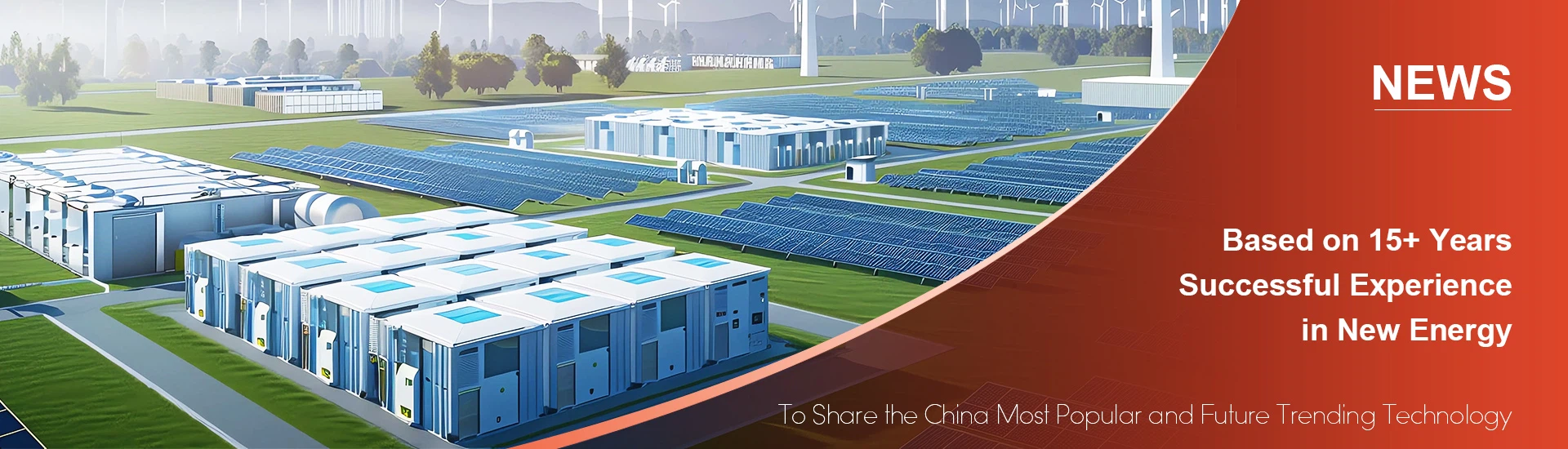
Integrated Energy Storage Cabinet Activates New Momentum For New Energy Storage
Feb 21, 2026
As the global energy structure accelerates its transformation towards cleaner and smarter energy, Integrated Energy Storage Cabinet are becoming a key infrastructure supporting new power systems. As a highly integrated outdoor battery storage system (BESS), the Integrated Energy Storage Cabinet integrates core components such as lithium battery packs, battery management systems (BMS), power converters (PCS), energy management systems (EMS), thermal management units, and fire protection systems into a standardized cabinet. This enables "plug-and-play, flexible deployment" advantages, widely serving diverse scenarios such as peak shaving and valley filling in industrial and commercial sectors, photovoltaic power consumption, and emergency backup power.

Working principle
Energy Storage Principle: High-Efficiency Energy Storage, Safe and Extended Battery Life.The product uses lithium iron phosphate (LFP) cells as its core, combined with solutions such as the Pylontech US5000 cabinet to construct energy storage units, storing energy during grid off-peak hours or when there is a surplus of renewable energy generation. The BMS system monitors the battery status in real time, controlling the charging and discharging rhythm, preventing overcharging and over-discharging, and balancing energy storage efficiency and battery life.
Energy Conversion Principle: Bidirectional Regulation, Adaptable to the Grid.The product achieves bidirectional energy conversion through a built-in PCS. During charging, it converts AC power to DC power for storage in the battery, and during discharging, it reverses the conversion to supply power or connect to the grid. Combined with a High Voltage Cabinet for 50kW 100kWh Energy Storage System, the product achieves high-power conversion and improves grid compatibility.
Intelligent Control Principle: Precise Scheduling, Optimized Efficiency.The product relies on an EMS system combined with AI algorithms to achieve intelligent control, linking the BMS and PCS to optimize charging and discharging strategies, achieving peak-valley arbitrage and clean energy utilization. Some products are equipped with monitoring modules to enable remote control and fault early warning, thereby improving operational efficiency and ease of maintenance.

Core advantages
- Flexible Installation and Efficient Deployment
Our products encompass battery energy storage cabinets and containerized energy storage units. Smaller units are compact and can be flexibly installed in various indoor and outdoor locations. Containerized units are mobile, allowing for rapid transport and deployment, making them particularly suitable for emergency power supply and remote area power supply scenarios, catering to both distributed and centralized energy storage deployment needs.
- High Energy Efficiency and Outstanding Conversion
Our backup battery cabinet boast high charge and discharge efficiency, enabling rapid storage and release of electrical energy to meet diverse power supply needs. An advanced built-in power conversion system (PCS) efficiently converts AC to DC power bidirectionally, reducing energy loss. Combined with relevant energy storage technologies, this further enhances energy utilization efficiency and highlights energy-saving value.
- Intelligent Management and Convenient Maintenance
Our battery backup cabinet are equipped with an advanced battery management system (BMS) and intelligent monitoring system. This system monitors battery status, charge/discharge status, and temperature in real time, enabling remote monitoring, fault warnings, and automatic protection functions. This significantly reduces manual maintenance costs while improving the reliability and operational safety of the entire energy storage system.
- Multiple Protections, Safe and Controllable
Adhering to high safety standards, the product is equipped with multiple electrical protection measures, including overcharge protection, over-discharge protection, short-circuit protection, and leakage protection. It also features a comprehensive fire suppression system, comprehensively mitigating safety risks during operation. Combined with the safety characteristics of lithium iron phosphate battery cells, it builds a solid safety barrier for energy storage operation.
- Environmental Adaptability, Stable Operation
The product boasts a high level of protection. Whether it's a battery energy storage electrical cabinet or a containerized energy storage cabinet, it can adapt to harsh environmental conditions such as high temperature, high humidity, and dust storms, effectively resisting external environmental corrosion and ensuring continuous and stable operation of the energy storage system under various operating conditions. It is suitable for diverse and complex scenarios such as outdoor and industrial applications.

Application scenarios
Grid Side: Peak Shaving and Frequency Regulation for Grid Stabilization. In grid-side applications, the product undertakes the core responsibilities of peak shaving, frequency regulation, and backup power, effectively alleviating grid load pressure and improving grid stability and reliability. During off-peak hours, the battery bank cabinet stores excess energy; during peak hours, it releases energy, precisely balancing grid supply and demand, contributing to efficient grid operation, and adapting to large-scale power dispatch needs.
User Side: Arbitrage and Energy Saving for Power Supply. In commercial and industrial user scenarios, the product can reduce electricity costs for users through peak-valley electricity price arbitrage, covering compatible forms such as battery energy storage cabinets and containerized energy storage cabinets. Simultaneously, the product can serve as a backup power source, providing continuous power during sudden power outages, ensuring the normal operation of industrial production and commercial activities, and mitigating losses caused by power outages.
New Energy Power Generation: Energy Storage and Integration for Collaborative Development. The product is deeply integrated with new energy power generation equipment such as solar and wind power, effectively solving the problems of intermittency and instability in new energy power generation. When there is a surplus of new energy power generation, the product stores excess energy; when power generation is insufficient, it releases energy, ensuring a stable output of new energy power, improving the utilization rate of clean energy, and contributing to the large-scale development of the new energy industry.
Emergency Power Supply: Rapid Deployment, Safety Net Guarantee. In emergency power supply scenarios, containerized CCS Cabinet, with their advantages of mobility and ease of deployment, can be quickly transported to the scene of natural disasters and emergencies. As an emergency power source, they provide stable power support for rescue equipment and temporary power facilities, filling emergency power gaps and ensuring the smooth progress of rescue and temporary operations.

in conclusion
Integrated energy storage cabinet, as core equipment in the energy storage field, have been widely used in various sectors due to their mature storage, conversion, and intelligent control principles, as well as their flexible installation and high storage efficiency. Through highly integrated and modular design, and paired with various supporting equipment, these products address the pain points of new energy power generation, optimize grid balance, reduce costs and increase efficiency for users, and strengthen the power safety barrier. In the future, these products will be upgraded to be more intelligent, efficient, and green, deepening their integration with the new energy industry and contributing to the transformation of the energy structure and the achievement of "dual-carbon" goals.
contact us
In practical engineering applications, the technical principles of the aforementioned Integrated Energy Storage Cabinet ultimately need to be implemented through specific product design. Different combinations of structures and materials will directly affect the long-term stability of the system.


