Stainless Steel Stamping: Rising Demand, Tech Advances & Key Solutions To Common Issues
Jul 10, 2025

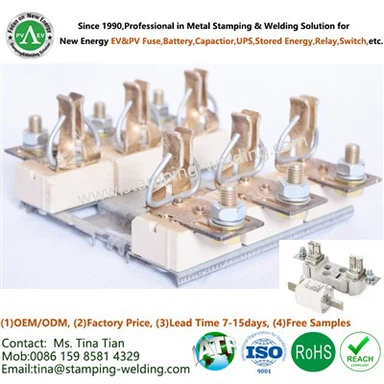
Recent weeks have seen growing demand for stainless steel stamping. Sectors like automotive, electronics, and construction are placing more orders. Electric vehicle makers, such as Tesla, need more custom-stamped parts for battery enclosures. Electronics firms, like Apple, use them in new devices. New CNC stamping machines and simulation software are being used.
Rising Demand, Tech Advances
Surging Demand for Translation
In recent years, the demand for Custom Metal Stamping Parts has grown rapidly. According to market data, the global stainless steel market size reached $117.63 billion in 2023 and is expected to continue expanding at a compound annual growth rate of 6.7% from 2024 to 2030. This growth is driven by strong demand across multiple fields.
In the construction sector, whether it is infrastructure construction or residential housing construction, stainless steel is widely used due to its characteristics such as corrosion resistance, high strength, and low maintenance costs. For example, Carbon Steel Sheet Metal Stamping are used in bridge structural components and building facade decorations. With the increasing emphasis on infrastructure construction in various countries, such as the $2 trillion infrastructure plan launched by the Biden administration in the United States, a large amount of funds will be used for projects such as bridges and highways, which will undoubtedly further stimulate the demand for stainless steel stamping parts in building structure applications.
The automotive industry is also an important demand end for Stainless Steel Stamped Parts. In traditional automobile manufacturing, Carbon Steel Sheet Metal Stamping are used in automobile exhaust systems and body structural parts, which can effectively improve the durability of the parts. With the rise of new energy vehicles, the application of Stainless Steel Zinc Plating Drawing Custom Metal Stamping Parts in battery casings and motor components has become increasingly critical. Take Tesla as an example; some of its models extensively use 304 Stainless Steel Punching parts to manufacture body structures, which not only improves the safety of the vehicles but also achieves better lightweight design due to the characteristics of stainless steel.
Breakthroughs in Technological Innovation
Technically, the field of Metal Stamping Techniques is also constantly innovating. In terms of Steel Welding Stamped Parts processes, although the traditional hot stamping process has applications, it has many limitations, such as difficulty in ensuring the surface quality of outer cover parts, complex coating processes, and high energy consumption. Nowadays, new processes are constantly emerging.
Some enterprises have developed cold rolling optimization processes for stainless steel. By cold rolling, the surface hardness and finish of stainless steel can be improved, which can directly meet the high requirements of outer cover parts for vision and touch, skipping the secondary painting process required for traditional hot Custom Metal Stamping Parts, reducing costs, and improving production efficiency.
The application of advanced Computer Numerical Control (CNC) stamping equipment in the industry is becoming more and more widespread. These devices can achieve higher precision control, and the tolerance of some CNC stamping machines can be as low as ±0.01mm, which greatly improves the processing accuracy of stainless steel stamping parts with complex shapes, meeting the needs of industries such as electronics and medical care that have extremely high requirements for component precision. At the same time, the application of simulation software in Steel Electrical Parts process simulation can predict the Metal Stamping Techniques effect in advance, optimize process parameters, and reduce material waste and trial-and-error costs in production.

Key Solutions to Common Issues
Surface Scratches
Causes: Workpieces and molds rub under pressure. Heat from deformation makes metal bits stick to molds, scratching workpieces.
Solutions: Use high-quality mold materials. Keep molds clean.
Workpiece Cracking
Causes: Austenitic stainless steel hardens easily when cold-worked. Uneven sheet structure, bad process settings, or mold issues (like small gaps) can cause cracks.
Solutions: Optimize annealing. Adjust the mold pressure. Fix mold alignment.
Poor Stamping Oil Quality
Causes: Bad oil can't prevent hardening, deformation, burrs, or cracks. High viscosity makes cleaning hard.
Solutions: Use low-viscosity special oil with sulfur-chlorine additives.
Springback Deformation
Causes: Stainless steel is hard. It springs back after Metal Stamping Techniques.
Solutions: Predict springback in mold design. Add anti-springback features.
Heat Treatment Challenges
Causes: Hard materials are hard to stretch. Heat treatment after forming may cause deformation.
Solutions: Plan for deformation in mold design.
Mold Material Sticking
Causes: Dull mold edges, wrong gaps, or non-special stamping oil (oxidizes and gets sticky).
Solutions: Sharpen mold edges. Use special stamping oil.

Products Applications
In the automotive industry, the depth and breadth of applications of 304 Stainless Steel Punching parts continue to expand. In traditional fuel-powered vehicles, key components such as manifold flanges and muffler end caps in the exhaust system are all stamping sheet metal products. The 304 stainless steel material can withstand temperatures above 400°C and resist corrosion from sulfides in exhaust gas, extending the service life of the components to more than 8 years. The door hinges achieve an axle hole tolerance of ±0.02mm through precision Steel Electrical Parts, ensuring a smooth damping feel when opening and closing the door, with no loosening after one million opening and closing tests.
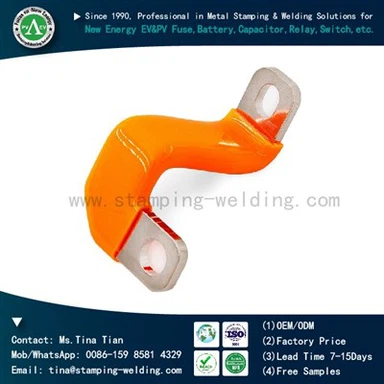
In the field of new energy vehicles, the value of stainless steel stamping parts is even more prominent. The battery pack shell is made of 1.5 mm-thick 316 stainless steel through multiple Steel Welding Stamped Parts processes, with an overall sealing performance reaching IP6K9K level. It can prevent electrolyte leakage in an environment of -40°C to 85°C. Combined with the reinforcing rib structure formed by stamping, the impact strength is increased by 40%. The heat dissipation guide fins in the motor controller are made into 0.3mm ultra-thin blades through micro-precision Steel Electrical Parts, with 12 guide holes per square centimeter, which increases the heat dissipation efficiency by 30% and ensures the stable operation of the motor under high load. In addition, after customized stamping, the fixing bracket of the high-voltage wire harness controls the fitting error between the insulating layer and the metal parts within 0.05mm, effectively reducing the risk of electromagnetic interference.
Contact Us