Power Battery Shell: Reliable Solutions For Industrial Applications
Jul 12, 2025
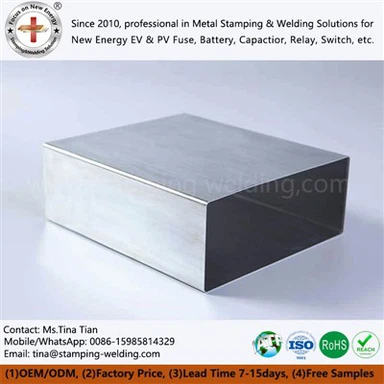
We are a leading manufacturer of high-performance lithium battery components, specializing in Power Battery Shell. Our Lithium-ion Battery Aluminum Shells are designed with precision engineering to meet the highest standards of quality and reliability. Each component undergoes rigorous testing and quality control processes, ensuring durability and optimal performance in various applications. We also offer Powerwall Lithium Battery Pack solutions for energy storage needs, providing efficient and reliable power management. Our commitment to excellence has earned us the ISO9001-2015 certification and widespread acclaim from customers. We can produce all metal parts for relays, further expanding our product range and capabilities. For inquiries or more information, please contact us.
Our packaging and transportation services are designed to ensure the safe and timely delivery of our products. We use customized shock-proof and moisture-proof packaging to protect our battery components during transit. Partnering with reputable logistics providers, we offer comprehensive tracking and reliable delivery options, both domestically and internationally. Our Prismatic Cell Aluminum Battery Cases are thoroughly inspected before shipping to guarantee they arrive in perfect condition, ready for immediate use.

Production process
High-Temperature Soaking
The process begins with high-temperature soaking, where the Prismatic Cell Aluminum Battery Cases are exposed to temperatures between 40-60°C to enhance the wetting of the electrodes with the electrolyte. This step helps reduce the time required to reach the optimal wetting level before the formation process starts.
Initial Charging
After soaking, the Lithium Batteries Square Aluminum Shells undergo initial charging, also known as pre-charging. A low charging current is applied until a low voltage (e.g., 1.5V) is reached. This step protects the copper-based current collector from corrosion and allows most of the gas generation during the first cycle to be completed.
Formation Cycling
This involves at least one and possibly several charge and discharge cycles with defined current and voltage limits. During this stage, the Solid Electrolyte Interphase layer is formed at the anode, which is crucial for protecting the anode from reactions with electrolyte components and influencing the battery's subsequent performance.
Aging
The Powerwall Lithium battery Packs are then aged at a defined state of charge and temperature. This process completes the cell formation and serves as a self-discharge test. If there is an increased capacity loss during storage, it may indicate unwanted self-discharge

Standard Configuration
1. Square Aluminum Shell Lithium Iron Phosphate Battery: A common standard configuration includes a nominal capacity of 50Ah, a nominal voltage of 3.2V, and an internal resistance of ≤0.7mΩ at 1kHz. The charge/discharge current is typically 0.5C, with a maximum continuous charge/discharge current of 3C and pulse charge/discharge current of 5C.
2. Dimensions and Weight: The battery dimensions are width 135.3±0.3mm, thickness 29.3±0.7mm, and height 185.3±0.5mm, with a weight of 1395±50g. These specifications ensure compatibility with various applications, including vehicle power systems and energy storage systems.
3. Operating and Storage Conditions: The charging working temperature range is 0ºC to 55ºC, while the discharging working temperature range is -20ºC to 55ºC. For storage, short-term storage (within a month) can be done between -20ºC and 45ºC, and long-term storage (within a year) between 0ºC and 35ºC.
4. Self-Discharge Rate: The monthly self-discharge rate is ≤3% when stored at (25±2)ºC with a 30% to 50% SOC. This low self-discharge rate ensures that the battery maintains its charge over extended periods, making it suitable for applications where frequent charging is not feasible.
Type Summary
1. Lithium Batteries Square Aluminum Shell: These batteries are designed with a robust square aluminum shell, providing mechanical protection and thermal stability. The square shape allows for efficient packing and integration into various systems, such as electric vehicles and energy storage units.
2. Lithium-ion Battery Aluminum Shell: This type of battery shell is made from aluminum, offering a combination of lightweight and high strength. The aluminum shell also provides good thermal conductivity, which helps in managing the heat generated during operation, enhancing the battery's lifespan and performance.
3. Prismatic Cell Alum Battery Case: Prismatic cells with aluminum cases are known for their flat, rectangular shape. This design is advantageous for applications requiring a compact form factor and high energy density. The aluminum case ensures durability and protection against external factors.
4. Powerwall Lithium Battery Pack: Powerwall batteries are designed for energy storage applications, such as home and commercial energy storage systems. These packs often consist of multiple prismatic cells housed in a protective casing, providing a reliable and efficient energy storage solution for renewable energy systems
Products feature
High-Quality Materials
Our products use high-quality aluminum for the battery shells, ensuring durability, corrosion resistance, and thermal stability. The aluminum material also contributes to the overall lightweight design of the batteries
Advanced Manufacturing Processes
We employ advanced manufacturing techniques, such as high-temperature soaking, pre-charging, and formation cycling, to ensure optimal battery performance and longevity. Our aging process further enhances the battery's stability and reliability.
Customization Options
We offer customization services to meet specific customer requirements. Whether it's adjusting the battery capacity, dimensions, or adapting to unique application scenarios, we can provide tailored solutions.
Stringent Quality Control
Each battery pack undergoes rigorous testing, including leak tests, weight and dimension checks, and performance grading. This ensures that every unit meets the highest standards of quality and safety.

Relays Parts
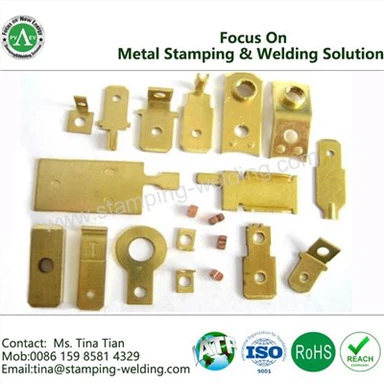
1. Precision Engineering: We produce all metal parts for relays with precision engineering, ensuring high accuracy and reliability. Our metal parts are designed to withstand repeated use and harsh conditions, providing long-term performance.
2. Material Selection: We carefully select high-quality metal materials for the relays, ensuring durability, conductivity, and resistance to wear and tear. This choice of materials guarantees the long-term reliability and consistent performance of our products, even under demanding operating conditions. Our metal components are designed to withstand repeated mechanical stress and exposure to harsh environments, thereby minimizing the risk of failure and maximizing operational efficiency. By prioritizing superior material selection, we are able to deliver solutions that not only meet but exceed industry standards, contributing to the overall safety and effectiveness of the systems they are integrated into.
contact us