Technological Upgrades Of Brass Stamping Empower Electrical Components
Apr 18, 2025
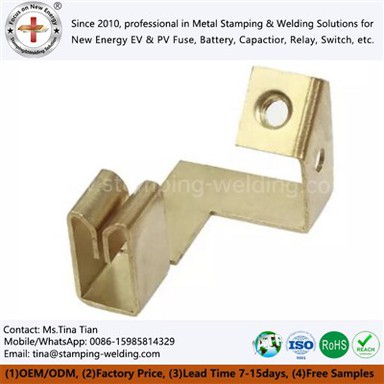
Brass stamping, as a core component of electrical components such as relays, switches, and contactors, has become a crucial link in the industrial chain upgrading, thanks to its excellent electrical conductivity, processing performance, and cost advantages. In 2025, with the advancement of process innovation, material optimization, and green manufacturing technologies, the Silver Plated Brass Terminal industry is stepping into a new stage of high-quality development.

Material and Performance Advantages Consolidate the Application Foundation
Brass (a copper-zinc alloy), due to its high electrical conductivity (with a conductivity rate of approximately 28% of that of red copper), good ductility, and corrosion resistance, has become a preferred material for stamping parts of electrical components. Among them, C2680 brass, with a zinc content of about 35%-40%, has both high toughness and stamping resistance characteristics, and is widely used in components such as the shrapnel of relays with complex shapes and connectors. Its tensile strength can reach ≥29 MPa, and the elongation rate is ≥40%. In addition, H62 brass, with its cost-performance advantage, occupies a dominant position in general-purpose Electrical Brass Press Parts For Switch Socket, but brass stamping needs to deal with challenges such as cracks and deformations that are likely to occur during processing.
Industry analysis shows that optimized Electrical Brass Switch Socket Part can reduce the energy consumption of electrical components by 15%-20%, and at the same time increase the product lifespan by about 10%, especially suitable for high-precision demand scenarios such as high-voltage relays in new energy vehicles.

Process Innovation Drives a Leap in Production Efficiency
Process Innovation Drives a Leap in Production Efficiency
In 2025, the Silver Plated Brass Terminal technology will have witnessed several innovations
Precision Fixture Technology
The new multi-directional adaptive fixture achieves rapid positioning through a four-way adjustment structure, solving the pain point of low efficiency of traditional fixing methods, and increasing the processing efficiency of Brass Sheet Metal Stamping by more than 50%.
Integrated Stamping Process
Through the integrated process of "blanking-forming-trimming", the time for process switching is reduced, the production efficiency is increased by 30%-40%, and the material loss rate of Electrical Brass Metal Stamping for Socket Switch is reduced to less than 5%.
Surface Treatment Optimization
The combined application of zinc-nickel alloy electroplating and polytetrafluoroethylene (PTFE) coating enables the Electrical Brass Switch Socket Part to have a salt spray corrosion resistance performance exceeding 3000 hours. At the same time, it reduces the friction coefficient, meeting the requirements of electrical components in high-humidity and strongly corrosive environments.
gluing phenomenon
It is worth noting that in response to the gluing phenomenon that is likely to occur during the brass stamping process, the industry has controlled the temperature rise of the mold within 50°C by improving the lubricant formula and the mold cooling system, effectively reducing surface scratches and mold sticking problems.
Coexistence of Surging Market Demand and Supply Chain Challenges
The global relay market size is expected to grow at an average annual rate of 6.2%. As the main production base, China has seen a year-on-year increase of more than 25% in the order volume of Electrical Brass Switch Socket Part parts, especially the surging demand for high-voltage relays used in new energy vehicles.
The fluctuations in international copper prices (the benchmark price of copper in Shanghai reached 72,000 yuan per ton in the first quarter of 2025) of Electrical Brass Press Parts For Switch Socke pose pressure on raw material costs. However, the industry has achieved cost control through waste copper recycling technology (with a recycling rate of over 85%) and process energy consumption reduction.
The hydrogen embrittlement problem of brass (such as H62 being prone to embrittlement in a high-stress environment) still needs to be overcome. Some enterprises of brass stamping have improved the hydrogen embrittlement resistance performance through alloy design (such as adding trace amounts of niobium and molybdenum elements). Experimental data shows that its fracture toughness has increased by more than 30%.

contact us