

Electrical Automotive Insulated Copper BusBar
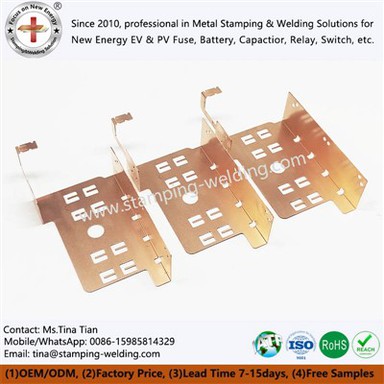
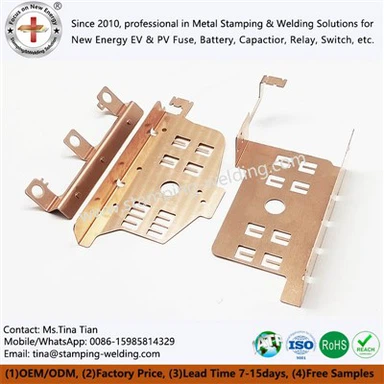
The Electrical Automotive Insulated Copper BusBar is a high-current conductive connection component designed specifically for automotive high-voltage/low-voltage electrical systems. It uses high-purity copper as the conductive substrate and is equipped with an integrated insulation and protection structure. It is mainly used for power transmission and circuit interconnection in new energy vehicles, on-board electronic control systems, and energy storage devices. It is a core basic component that ensures the safe, stable, and low-loss operation of automotive electrical systems.
- Fast Delievery
- Quality Assurance
- 24/7 Customer Service
Product Introduction

The Electrical Automotive Insulated Copper BusBar differs from ordinary civilian copper busbars. It fully complies with automotive-grade operating standards and can withstand complex environments such as high-frequency vibration, wide temperature differences, and enclosed humidity. It replaces traditional cables to achieve a compact, standardized, and highly reliable vehicle power distribution layout.
Working principle
The high-purity copper substrate has extremely low resistivity, which can continuously and stably transmit electrical energy under vehicle rated voltage and high current conditions, greatly reducing EV Laminated Busbars conduction heat and power loss, and solving the problems of insufficient current carrying capacity and serious heat generation of traditional cables.
The integrated insulation layer completely covers the copper busbar conductor, blocking the contact path between the conductor and the vehicle body or adjacent components. At the same time, it absorbs and buffers vehicle vibration stress, preventing electrical faults caused by Busbar for DC-Link Capacitor wear and exposure.

Core technological advantages
High Structural Integration
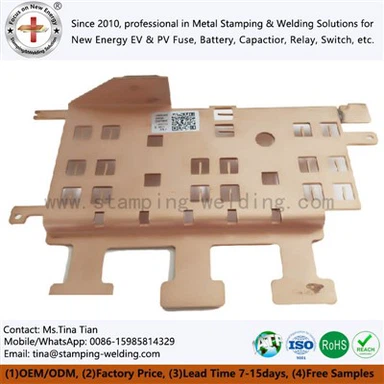
The Capacitor Busbar's neat panel structure allows for standardized layout, replacing multiple messy wiring harnesses and significantly optimizing the internal space of the battery pack and control box, contributing to the lightweight and miniaturized design of the entire vehicle.
Weather Resistance and Fatigue Resistance
Exclusive insulation materials and precision coating processes enable long-term resistance to harsh operating conditions such as high-frequency vibrations, alternating high and low temperatures, and confined, humid environments. The insulation layer is resistant to peeling, cracking, and aging, with a service life matching the vehicle's service life.
Controllable Precision
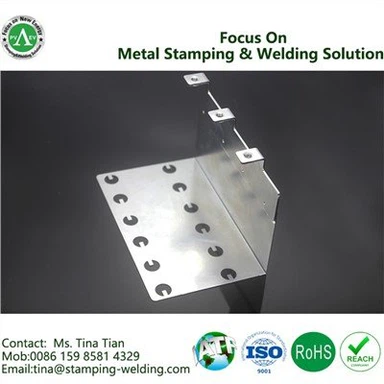
Overall processing accuracy reaches ±0.1mm, with standardized hole diameters, hole spacing, and bending dimensions. The Electrical Automotive Insulated Copper BusBar is compatible with automated assembly lines in automotive manufacturing, reducing manual assembly errors and the probability of after-sales malfunctions.

Frequently Asked Questions
Q: Can automotive insulated copper busbars replace traditional automotive high-voltage wiring harnesses?
A: Yes, they can completely replace traditional high-power, fixed-path automotive power distribution circuits. Insulated copper busbars have stronger current-carrying capacity, lower temperature rise, and a more regular structure, making them more suitable for fixed assembly scenarios such as battery packs, PDUs, and control boxes. They are only unsuitable for moving connection parts of the vehicle body that require significant flexible movement.
Q: Why do insulation layers peel off and crack during the use of automotive insulated copper busbars?
A: The core causes fall into three categories: first, substandard substrate pretreatment, with oil stains and oxide layers leading to insufficient adhesion; second, imbalance in insulation coating and curing process parameters; and third, incorrect selection, with the insulation material's temperature resistance and vibration resistance performance not matching the actual automotive operating conditions.
Q: How to determine the optimal thickness and current-carrying capacity of automotive insulated copper busbars?
A: The determination should be based on a comprehensive assessment of four parameters: continuous operating current, peak current, allowable temperature rise, and the heat dissipation conditions of the installation environment. Sealed battery packs should have a current-carrying capacity margin of at least 20%. Ventilated electrical control areas can be selected according to standard current-carrying parameters to avoid overheating and aging caused by long-term full-load operation.
Q: Are the temperature resistance and flame retardant standards for automotive-grade insulated copper busbars universal?
A: No. Industrial-grade busbars cannot adapt to the wide temperature and vibration conditions of automotive applications. Standard automotive-grade insulated busbars must meet the following requirements: a temperature resistance range of -40℃ to 125℃, V0 flame retardancy rating, and pass specific tests for automotive vibration, salt spray, and thermal shock before they can be used in mass production of complete vehicles.

Contact Us
For specifications of Electrical Automotive Insulated Copper BusBar that match your project's working conditions, to obtain mass production quotes and sample testing support, please feel free to contact us. We will provide one-on-one engineering selection solutions and technical support services.

Hot Tags: electrical automotive insulated copper busbar, China, manufacturers, suppliers, factory