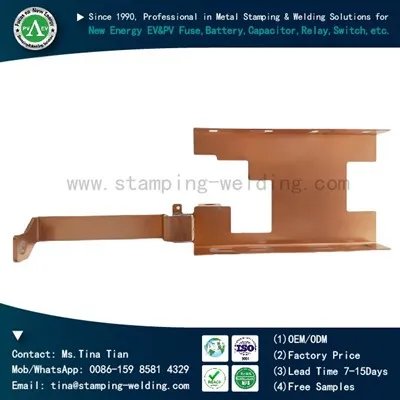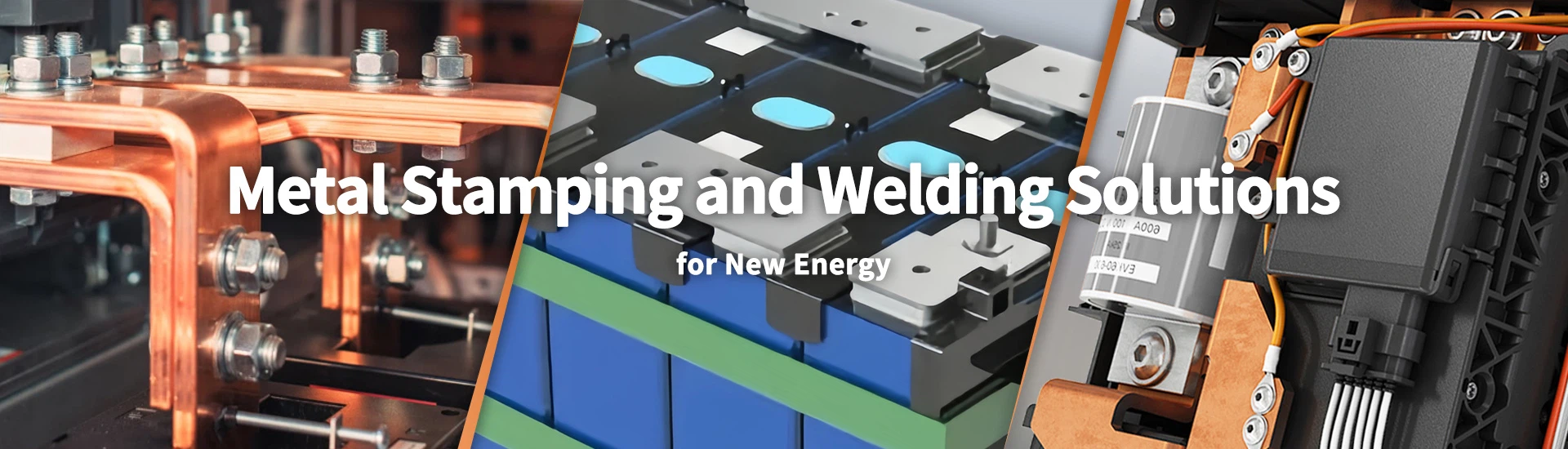
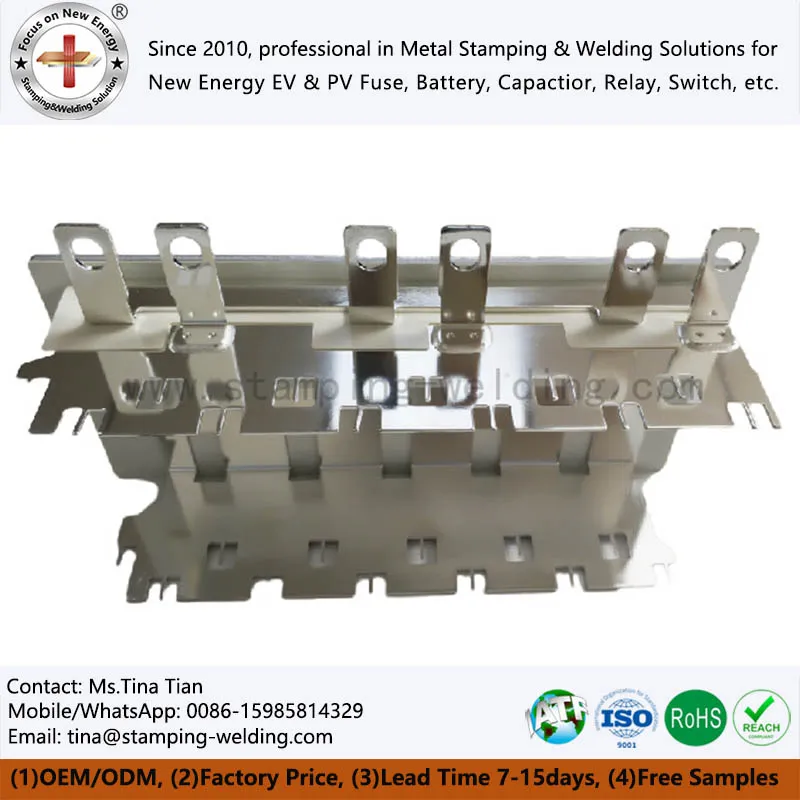


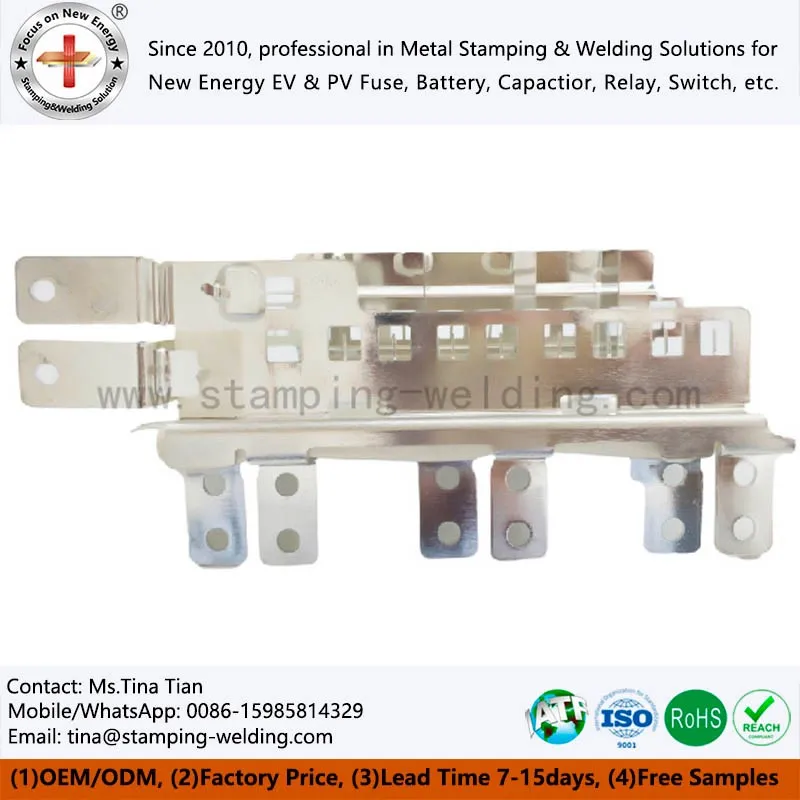
NEV Film Capacitor Busbar
The NEV Film Capacitor Busbar integrates parallel T2 copper conductors with vacuum-laminated PET insulation to achieve sub-10 nH stray inductance, 1000 V DC partial discharge resistance, and under 30 K temperature rise. Certified to IATF 16949, our group enterprise leverages 30+ years of expertise and fully integrated in-house stamping, welding, plating, and tooling workshops, supported by global branches that deliver free samples in 1–2 days and full orders in 15–20 days.
- Fast Delievery
- Quality Assurance
- 24/7 Customer Service
Product Introduction

What is an NEV Film Capacitor Busbar?
A NEV Film Capacitor Busbar is a conductive and insulating interconnection assembly designed to connect film capacitors with power semiconductor and DC-link circuits in new energy vehicles. It typically combines precision-formed copper conductors with PET film insulation to create compact, low-resistance, low-inductance electrical paths.
Electrical Performance & Parasitic Inductance Control of EV Film Capacitor Busbar
Magnetic Flux Cancellation
Parallel positive and negative copper plates separated by an ultra-thin PET insulation layer force equal and opposite currents to flow in extreme physical proximity, cancelling magnetic fields and dropping stray inductance below 10 nH.
Current Distribution Balancing
Precision-stamped New Energy Vehicle Film Capacitor BusBar geometries eliminate current crowding along edge boundaries, keeping temperature rise below 30 K under continuous full-load inverter current draw.
Partial Discharge Resistance
Automated film lamination eliminates internal air voids throughout the entire conductor structure, preventing partial discharge breakdown under high DC operating voltages reaching up to 1000 V in service for EV Film Capacitor Busbar.

Precision Manufacturing of Film Capacitor Busbar for HEV / EV Motor Control Unit
High-Speed Blanking & Edge Radiusing
CNC progressive presses punch precise conductor profiles. Automated edge-rounding eliminates sharp burrs along all cut edges to prevent puncturing thin PET insulation films for NEV Film Capacitor Busbar.
Laser & Resistance Terminal Welding
Complex flexible leads or threaded standoff studs are joined to the copper substrate via fiber laser or resistance welding, delivering high mechanical pull-off strength and void-free metallurgical bonds.
Automated PET Film Lamination
Heated vacuum press lines bond flame-retardant PET film layers over the planar copper conductors, applying uniform pressure to eliminate internal air pockets for Copper Busbar for Electric Vehicle Capacitors.
Selective Surface Plating
Terminal contact regions receive controlled electro-tin or silver plating, protecting bare copper against surface oxidation while maintaining maximum conductivity for Copper Busbar for DC Link EV Film Capacitor.

Frequently Asked Questions about Copper Busbar for DC Link EV Film Capacitor
Q: How does magnetic flux cancellation reduce stray inductance in an NEV Film Capacitor Busbar?
A: By arranging parallel positive and negative copper plates separated by thin PET insulation, equal and opposite currents flow in close physical proximity. This creates opposing magnetic fields that cancel each other out, dropping overall stray inductance below 10 nH to suppress harmful voltage spikes in high-frequency inverter switching.
Q: What manufacturing controls prevent thermal hotspots caused by current crowding along conductor edges?
A: Precision-stamped geometries ensure uniform conductor cross-sections that eliminate edge-current crowding. Balanced current distribution across the planar copper busbar minimizes localized resistive heating, keeping total temperature rise below 30 K even under continuous full-load inverter current draw.
Q: How does automated PET film lamination eliminate partial discharge risks under 1000 V DC operating conditions?
A: Heated vacuum press lines apply uniform pressure across the assembly to bond flame-retardant PET film directly to the planar copper conductors. This process completely eliminates internal air voids, preventing micro-corona discharges and dielectric degradation under continuous operating voltages reaching up to 1000 V DC.
Q: Why is edge radiusing necessary prior to applying the PET insulation layer?
A: CNC progressive blanking leaves tiny burrs along stamped edges. Automated edge-rounding finishes all cut margins into smooth radii, preventing sharp copper edges from puncturing or wearing through thin PET insulation films under thermal expansion or mechanical vehicle vibration.
Q: How does selective surface plating protect terminal pads without affecting insulation bonding?
A: Terminal contact pads receive electro-tin or silver electroplating while non-contact conductor areas remain bare or micro-etched for lamination. Selective plating protects critical contact interfaces from oxidation and maintains maximum electrical conductivity without compromising the adhesive bond strength of the surrounding PET film.

Contact Us
Engineering teams and procurement specialists can submit 2D/3D CAD models (STEP/DWG) or DC Link electrical parameters to receive a technical DFM review and factory-direct quotation within 24 hours.

Hot Tags: NEV Film Capacitor Busbar, EV Film Capacitor Busbar, Film Capacitor Busbar Manufacturer, EV Capacitor Busbar Supplier, Custom EV Busbar, OEM Film Capacitor Busbar, EV DC-Link Busbar, HEV Film Capacitor Busbar, Film Capacitor Copper Busbar, Oxygen-Free Copper Busbar, Precision Busbar Stamping, PET Film Insulation Busbar, Laser Welding Busbar, Resistance Welding Busbar, Custom EV Busbar Factory