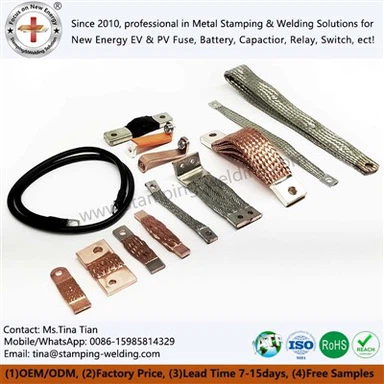
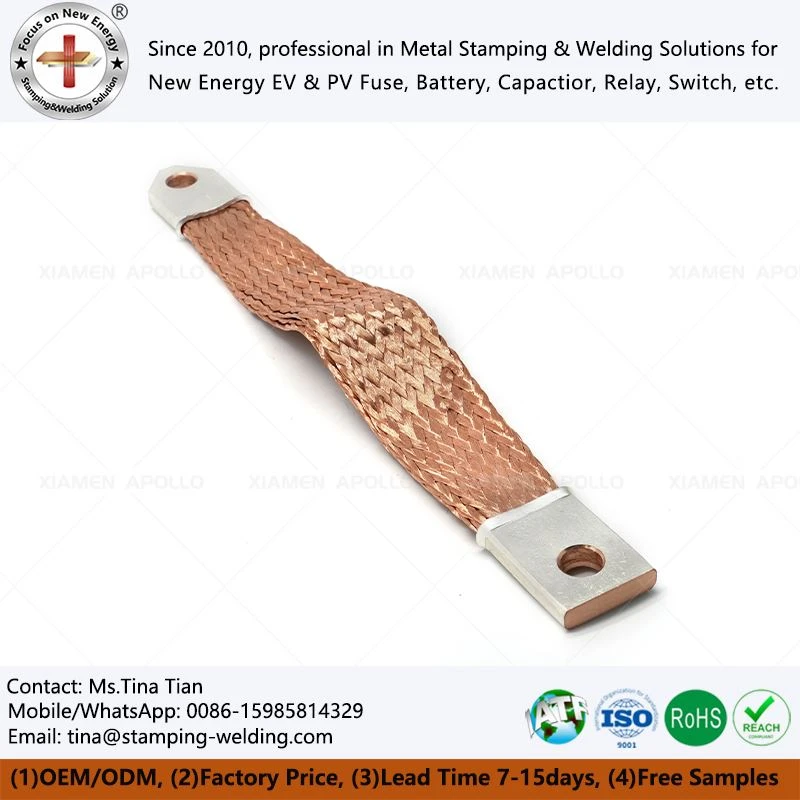

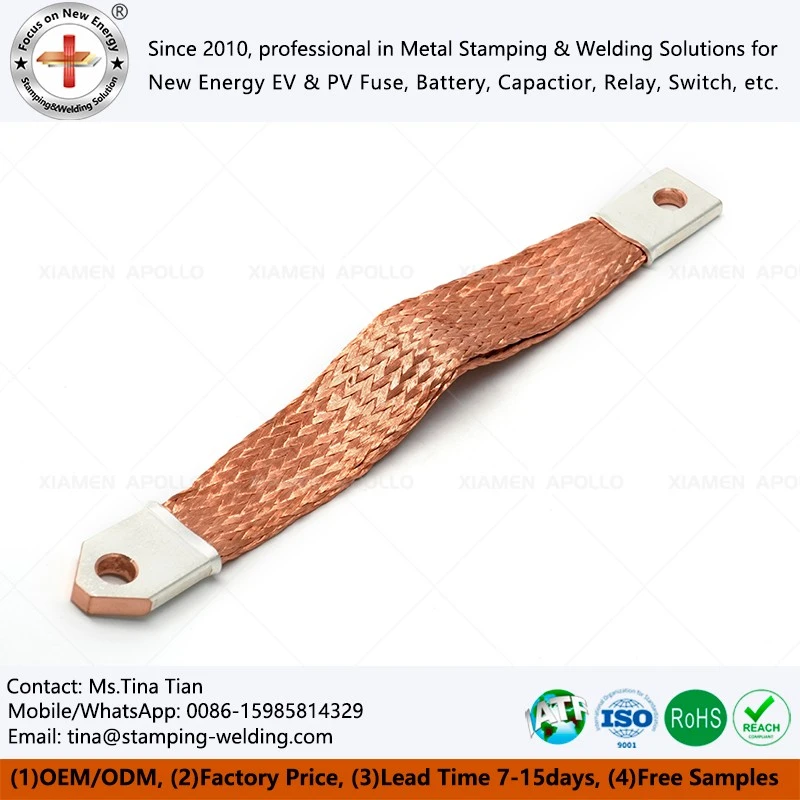
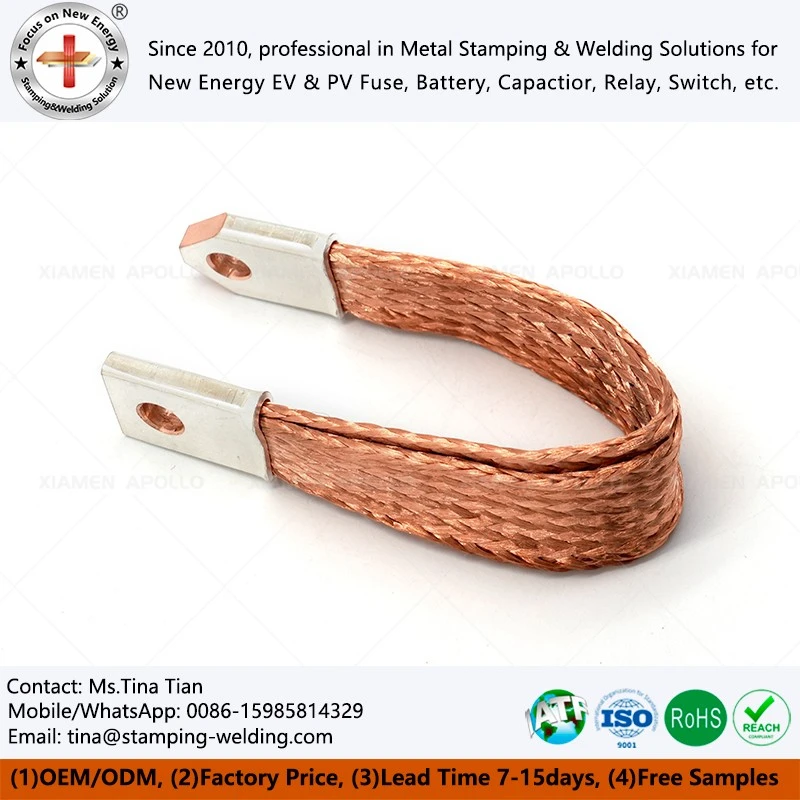
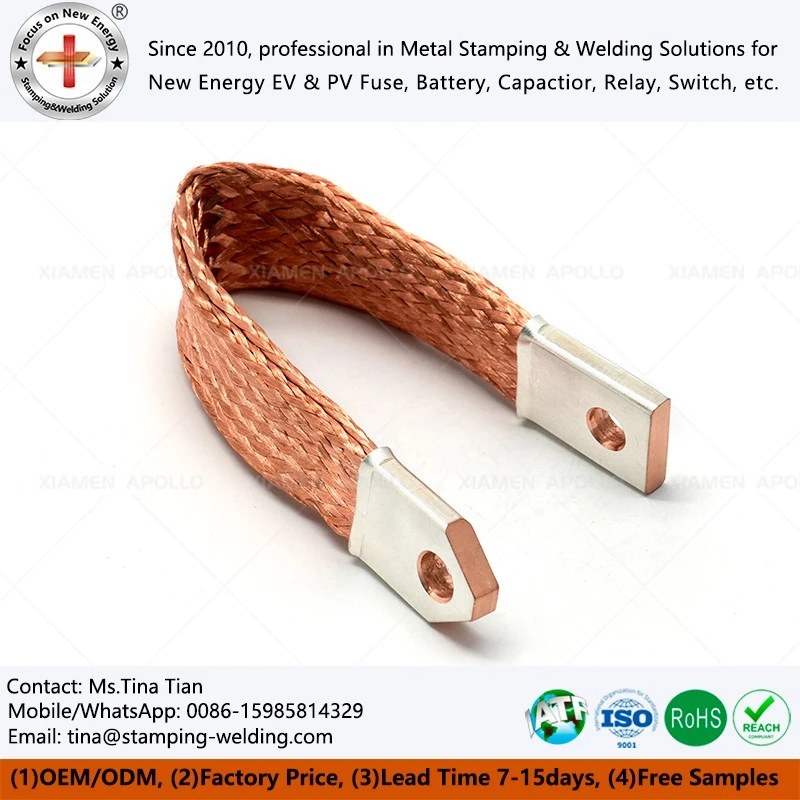
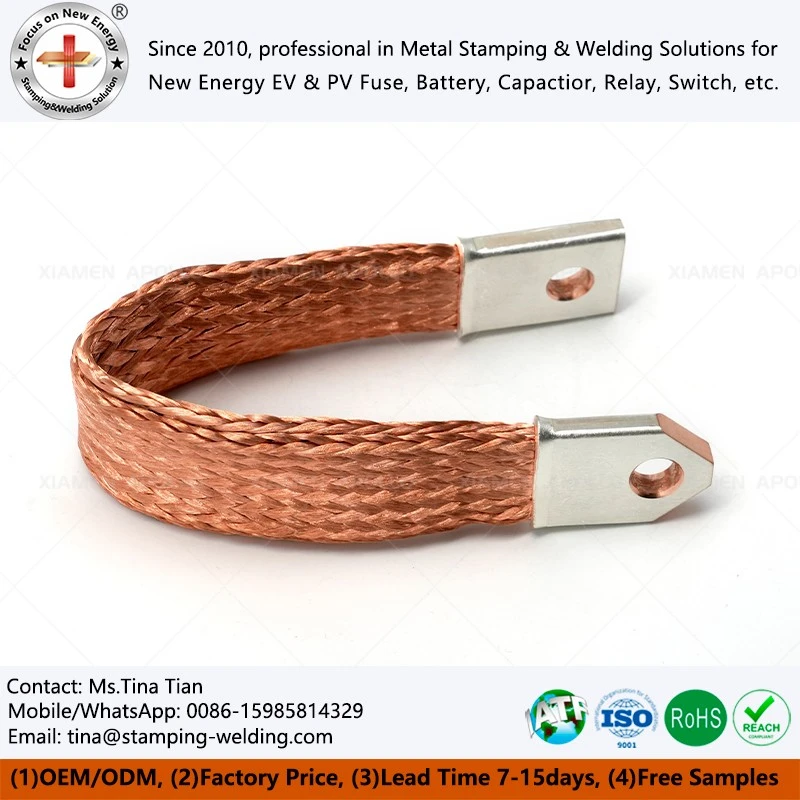
Copper Braided Flexible Busbar Connector
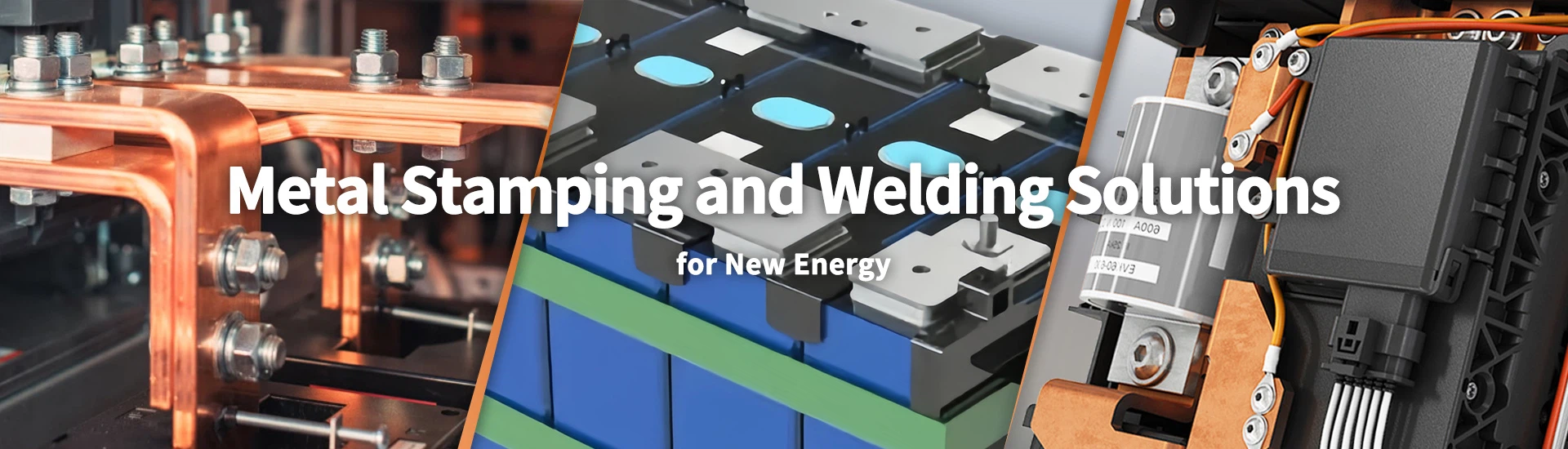
A Copper Braided Flexible Busbar Connector is a customized, rigid electrical connection component that utilizes a highly conductive copper bar as the conductor, encased in a heat-shrinkable insulating sleeve for electrical protection. By combining the superior current-carrying capacity of copper busbars with the effective insulation provided by heat-shrink tubing, this product is widely used in applications such as UPS (Uninterruptible Power Supply) systems, power distribution cabinets, server power modules, industrial control cabinets, and internal connections for new energy power equipment. Compared to traditional bare copper busbars, these versions—featuring an orange heat-shrink sleeve—maintain stable current transmission while minimizing the risk of direct contact between conductors. This enhances electrical safety within equipment and enables engineers to achieve more compact and organized power system layouts.
- Fast Delievery
- Quality Assurance
- 24/7 Customer Service
Product Introduction
This product consists of two components: a precision-machined copper busbar on the inside, and an orange heat-shrinkable sleeve on the outside that fits tightly around the busbar after being heated and shrunk. The heat-shrinking process ensures a secure bond, preserving the high electrical conductivity of the copper while providing surface insulation and protection. Key features include:
Rigid Connection: The copper busbar maintains its structural rigidity, making it suitable for fixation via bolting, crimping, or welding-ideal for stable, permanent power distribution paths.
Integrated Insulation: Upon heating, the sleeve shrinks to conform precisely to the surface of the copper busbar, leaving no significant gaps and thereby reducing the risk of dust accumulation or moisture ingress.
Orange Identification: The distinct orange exterior allows for quick identification within complex electrical enclosures, helping to minimize the likelihood of wiring errors.
Customizability: The cross-section, length, bending geometry, hole placement, and the wall thickness of the heat-shrinkable sleeve can all be tailored according to engineering drawings.
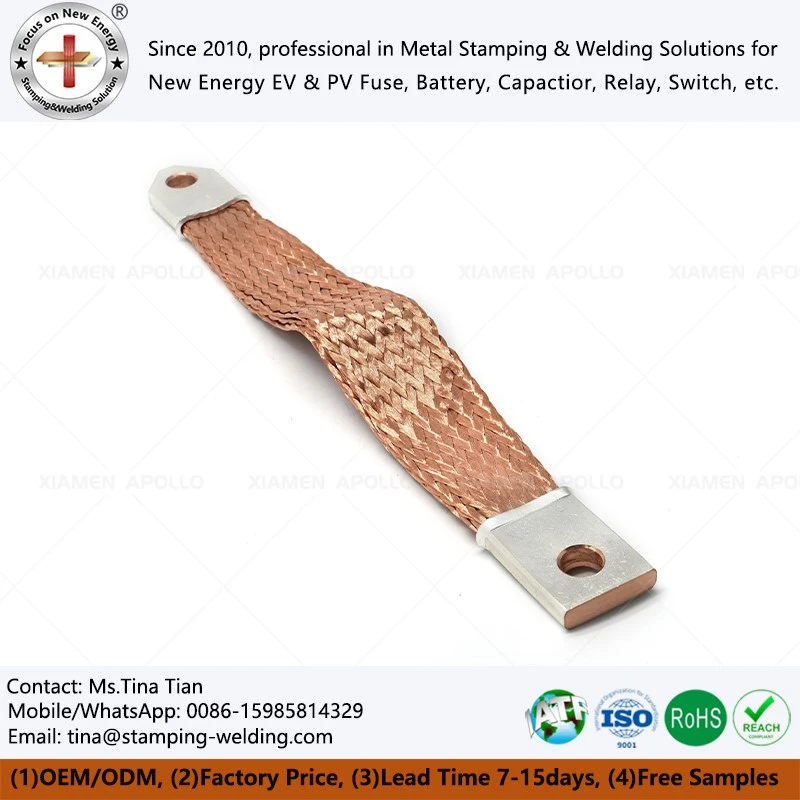
Technical Features for Flexible Copper Braided Connector Bus Bar: Reliability Embedded in the Details
Insulation Continuity
The heat-shrink layer provides continuous coverage along the copper busbar, eliminating exposed or vulnerable sections. Proper treatment of the ends further reduces the risk of partial discharge and surface tracking (creepage).
01
Tight Adherence
Once shrunk, the material conforms closely to the surface of the copper busbar, ensuring it remains secure and resistant to loosening or shifting caused by vibrations or temperature fluctuations.
02
Flame Retardancy
The heat-shrink material is flame-retardant; it does not readily sustain combustion when exposed to fire, thereby enhancing the safety level within the switchgear cabinet.
03
Temperature Resistance
The material is designed to withstand the typical operating temperature range found within switchgear cabinets, maintaining stability through repeated thermal cycling.
04
Color Stability
Identification colors-such as orange-remain vibrant and resistant to cracking or fading over the long term, ensuring that phase-sequence markings stay clear and durable.
05
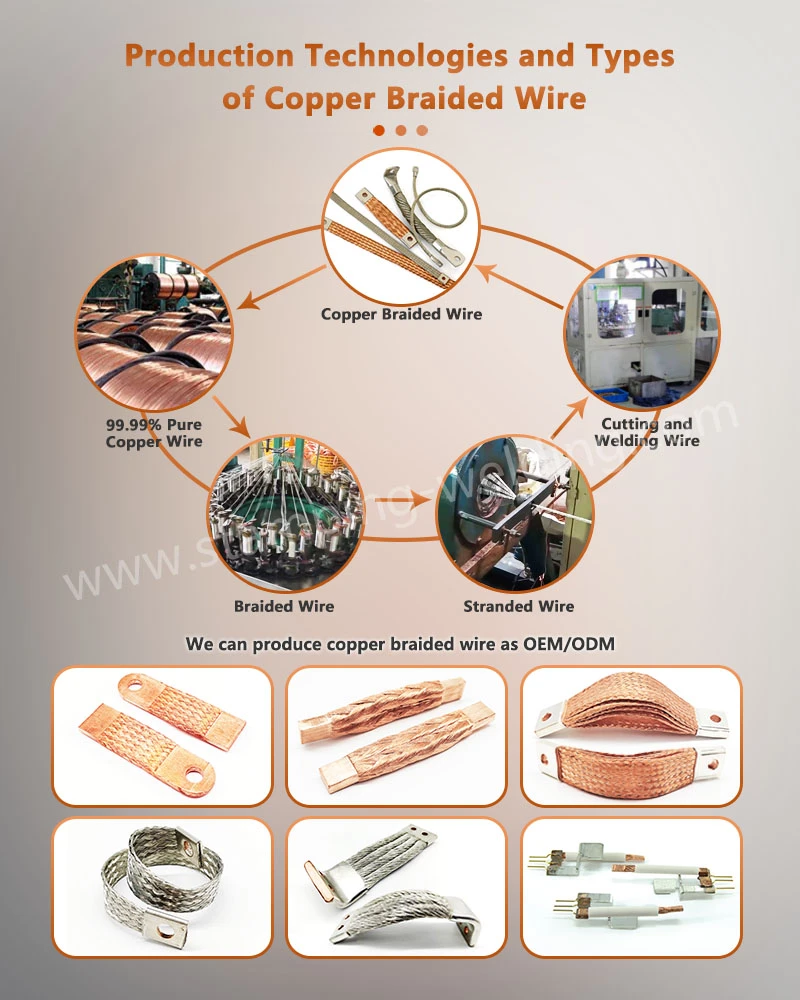
Flexible Electrical Copper Braided Connectors Advantages: Why Choose Prefabricated Insulated Busbars?
| Significant Gains in Assembly Efficiency | Traditional powder-coated or dip-coated busbars involve long production cycles and are difficult to rework, while manual insulation taping relies heavily on the skill of individual workers. By shifting the insulation process to the manufacturing stage, heat-shrink insulated busbars allow for "plug-and-play" installation on the customer's production line, drastically reducing the total assembly time for complete electrical equipment. |
| Guaranteed Insulation Consistency | The thickness of the insulating layer is determined by the specifications of the heat-shrink tubing and the shrinking process, eliminating human variability. This ensures uniform insulation quality across every busbar-a critical foundation for passing type tests and maintaining consistent quality across batches of electrical equipment. |
| Superior Weather and Contamination Resistance | The heat-shrink insulating layer features a smooth, dense surface that resists dust accumulation and moisture absorption. In harsh cabinet environments-such as those with high humidity, salt spray, or dust-these busbars offer far better insulation performance than bare busbars and eliminate the risks associated with the peeling or flaking of traditional coatings. |
| Effortless Phase Identification | Color-coding serves as an intuitive indicator of phase sequence, resulting in a neat, organized, and visually distinct interior. This enhances the overall professional appearance of the equipment-a significant advantage for products exported to markets in Europe, North America, and Southeast Asia. |
Frequently Asked Questions for Copper Braided Flex Connectors
Q1. What is a copper braided flexible busbar connector used for?
-
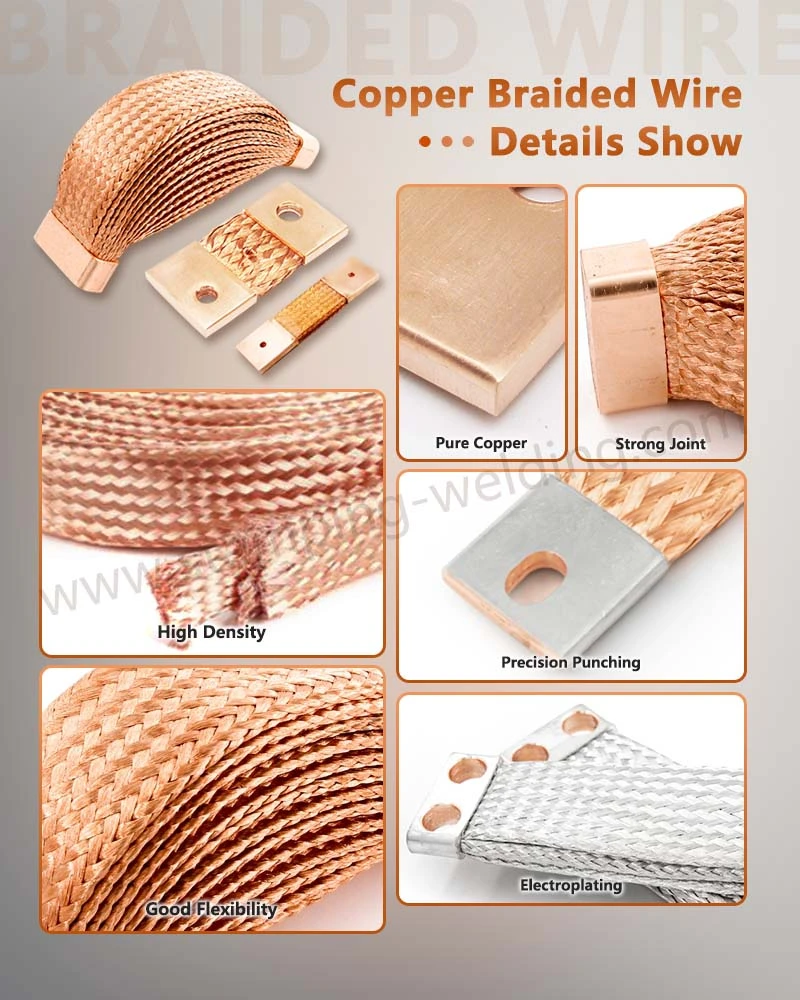
Copper braided flexible busbar connectors are used in electrical equipment that requires flexible conductive connections-such as UPS systems, power modules, switchgear, industrial power distribution systems, and certain types of new energy equipment. They are designed to accommodate a degree of bending, vibration, and thermal displacement.
Q2. What is the difference between a copper braided connector and a rigid copper busbar?
-
Rigid copper busbars are primarily used for fixed conductive paths, whereas copper braided connectors-composed of multiple strands of copper wire-offer superior flexibility. In applications involving vibration or relative displacement, the flexible braided structure helps reduce mechanical stress. Note, however, that the current-carrying capacity of both types must be evaluated based on their specific construction and operating conditions.
Q3. Can copper braided flexible busbar connectors be customized?
-
Yes. Customization options-including braid length, conductor specifications, terminal dimensions, mounting hole configurations, connection methods, and surface treatments-can be assessed based on project requirements. The specific manufacturing capabilities are subject to product drawings and technical process reviews.
Q4. How do I select the correct size for a copper braided connector?
-
Selection should be based on factors such as operating current, operating voltage, allowable temperature rise, ambient temperature, available installation space, terminal dimensions, and any expected vibration or displacement. For high-current applications, it is essential to verify contact resistance and temperature rise; relying solely on the total cross-sectional area of the copper strands is insufficient.
Q5. Can Apollo support prototype development and OEM mass production?
-
Apollo provides customized assessments, prototype development, and mass production services based on your project drawings and technical requirements. When submitting an inquiry, please provide drawings, target specifications, estimated procurement volumes, and inspection requirements so that we can determine technical feasibility and establish quality acceptance criteria.
contact us
If you are developing UPS systems, switchgear, or new energy power equipment and require copper braided flexible connectors that balance current-carrying capacity, flexible compensation, and high-precision terminal assembly, please submit your technical drawings and operating parameters. Apollo offers engineering assessment and custom manufacturing support, covering conductor configuration, connection techniques, and quality control for volume production.
Hot Tags: Copper Braided Flexible Connector, Flexible Copper Busbar, Copper Braid Shunt, Custom Copper Braided Connector, Flexible Busbar Manufacturer