

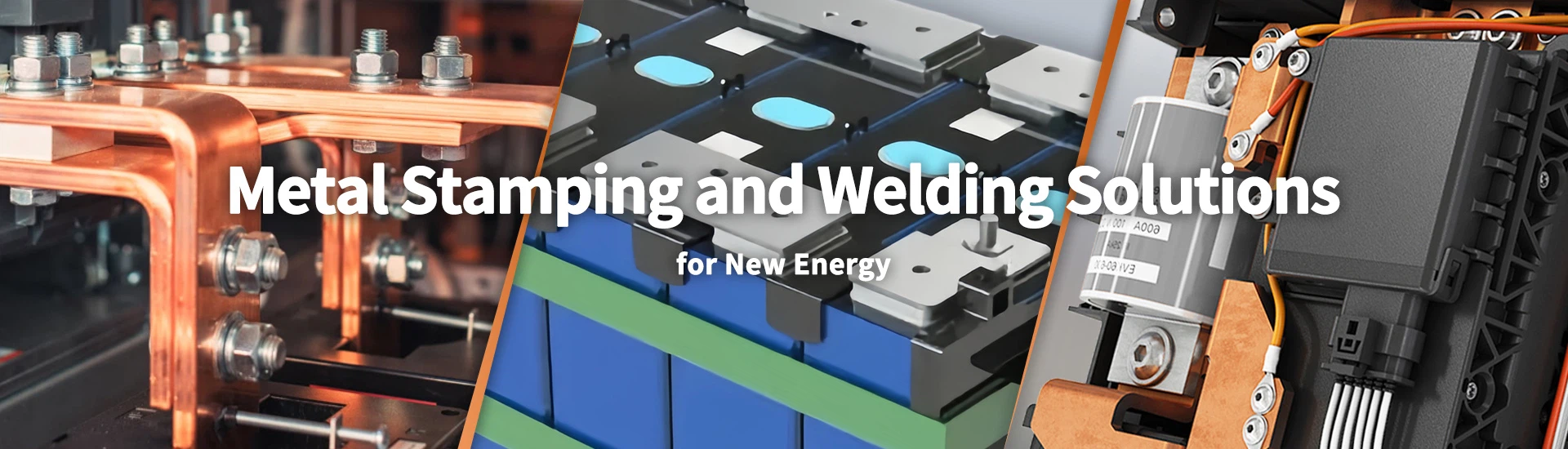


Copper Foil Busbar Used For High Current Voltage
In the context of battery pack interconnects for new energy vehicles and traditional electrical power systems, high-efficiency, reliable conductive components are essential for ensuring stable system operation. Copper Foil Busbar Used for High Current Voltages (also known as flexible copper foil connectors) have emerged as the preferred solution for high-current, high-voltage transmission applications due to their exceptional flexibility and conductivity. Whether used for compact, flexible connections within new energy vehicle battery packs or as large-scale busbars in electrical equipment, these products are perfectly suited to support components such as the ceramic bodies of traditional power fuses, thereby ensuring stable and efficient power transmission for engineering projects worldwide.
- Fast Delievery
- Quality Assurance
- 24/7 Customer Service
Product Introduction
Copper Foil Busbar Used for High Current Voltages. Designed for high-current and high-voltage applications, flexible electrical connection components are manufactured using a laminated structure of multiple layers of highly conductive copper foil. They are primarily used for power transmission and electrical interconnection in environments characterized by high currents and high voltages.
Compared to traditional rigid copper bars, copper foil busbars utilize a laminated structure of ultra-thin copper foils to achieve superior flexibility, thermal cycling adaptability, and stress relief capabilities. This effectively mitigates mechanical stress issues caused by vibration, thermal expansion, and assembly tolerances during equipment operation.
Depending on dimensions and structural design, they fall into two main categories:
Small-scale copper foil flexible connectors: Primarily used for internal connections within power battery packs, battery modules, and battery interconnection systems for new energy vehicles, as well as in energy storage systems.
Large-scale copper foil busbar assemblies: Primarily used in conventional power equipment, high-voltage electrical equipment, fuse systems, ceramic fuse connection structures, and industrial power distribution systems.

Design Advantage: Engineering-Driven Customization
Stress-Free Assembly
Finite Element Analysis (FEA) is used to simulate installation-induced deformation and design an optimal "free-state" geometry; this ensures the copper foil layers remain in a relaxed, natural state-neither stretched nor compressed-after installation, thereby maintaining peak electrical and mechanical performance.
Complex Bending Capabilities
Supports multi-angle, multi-directional 3D forming, allowing the component to navigate around complex structural elements to achieve "3D routing" and optimize the internal layout of electrical cabinets.
Precise Current-Carrying Capacity Calculation
Based on customer-provided operating conditions (ambient temperature, temperature rise limits, and current waveforms), the number of and cross-sectional area are precisely calculated to strike the optimal balance between performance and cost.

Application Advantages: Covering the full spectrum of new energy and electrical equipment scenarios
Energy Storage Systems (ESS)
Flexible connections between battery clusters in residential and C&I (commercial and industrial) energy storage cabinets require high current-carrying capacity, long-term reliability, and ease of installation within limited spaces.
Power Transformers and Switchgear
Flexible leads between transformer bushings and busbars, jumpers for switchgear busbars, and flexible transitions between circuit breakers
Power Generation and Rectification Equipment
Flexible connections between generator output terminals and conductive transition connections between rectification equipment and disconnect switches.
Industrial Electric Furnaces and Electrolytic Smelting
Flexible transitions between equipment and supply systems, capable of handling currents of tens of thousands of amperes.

Manufacturing Advantage: Vertically Integrated Supply Chain
End-to-End In-House Control
All critical processes-from copper foil slitting, surface cleaning, and stacking/positioning to diffusion welding and final inspection-are carried out within our own facilities. This vertical integration ensures absolute control over product quality and shortens lead times.
Advanced Testing Laboratory
Equipped with DC low-resistance testers, insulation resistance testers, withstand voltage testers, and X-ray flaw detectors. Each batch of Laminated Busbar undergoes destructive sampling tests-including flexural fatigue and temperature rise cycling-to verify reliability under extreme conditions.
Rapid Response and Customization Capabilities
Backed by a professional engineering team and flexible production lines, we can quickly meet customized customer requirements. Whether for R&D prototyping of single samples or large-scale production of volume orders, we deliver consistently high-quality solutions.

contact us
Laminated Connectors for Electrical Equipment designed for high-current and high-voltage applications serve not merely as conductive connectors, but as a critical guarantee of connection reliability within high-power electrical systems.
If you are developing projects involving new energy vehicle battery systems, power fuses, or high-current electrical equipment, we can provide professional design and manufacturing support tailored to your engineering specifications, helping you secure connection solutions that are more reliable and perfectly aligned with your application requirements.

Hot Tags: copper foil busbar used for high current voltage, China, manufacturers, suppliers, factory


