

Copper Foil Laminated Flexible Bus Bars
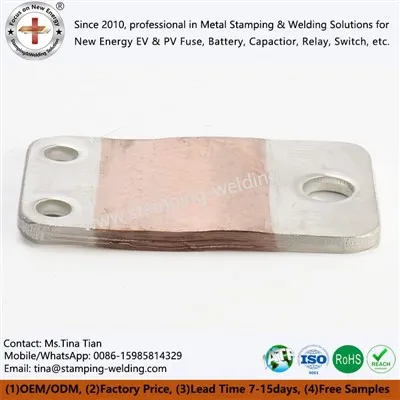
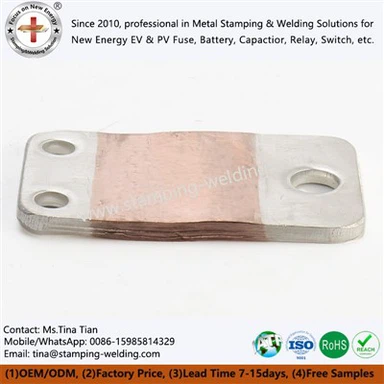
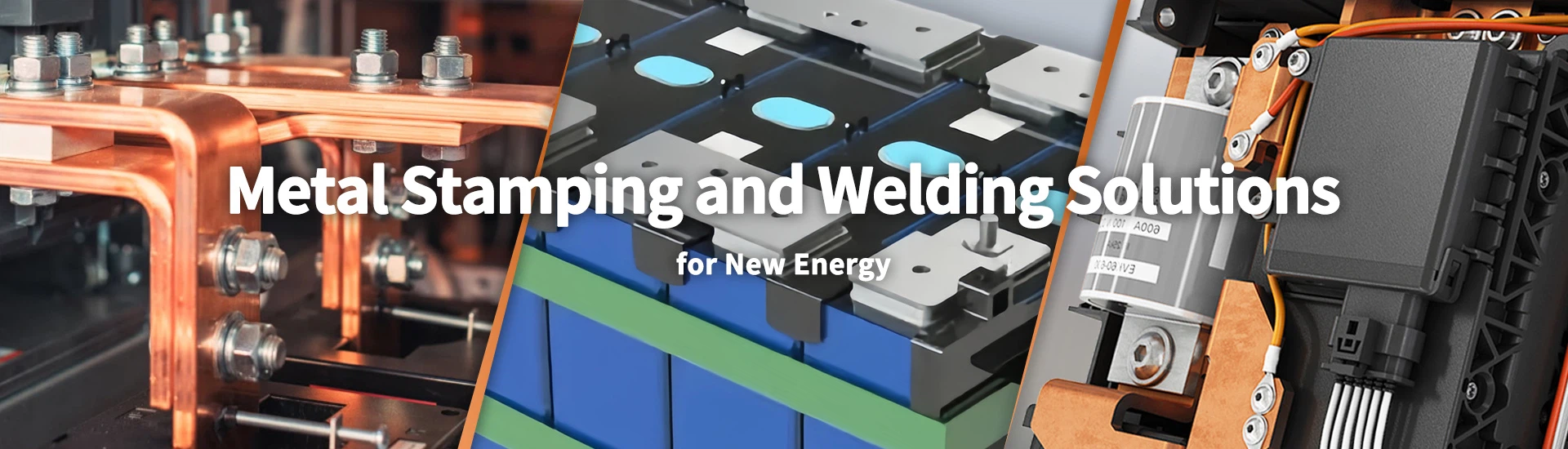
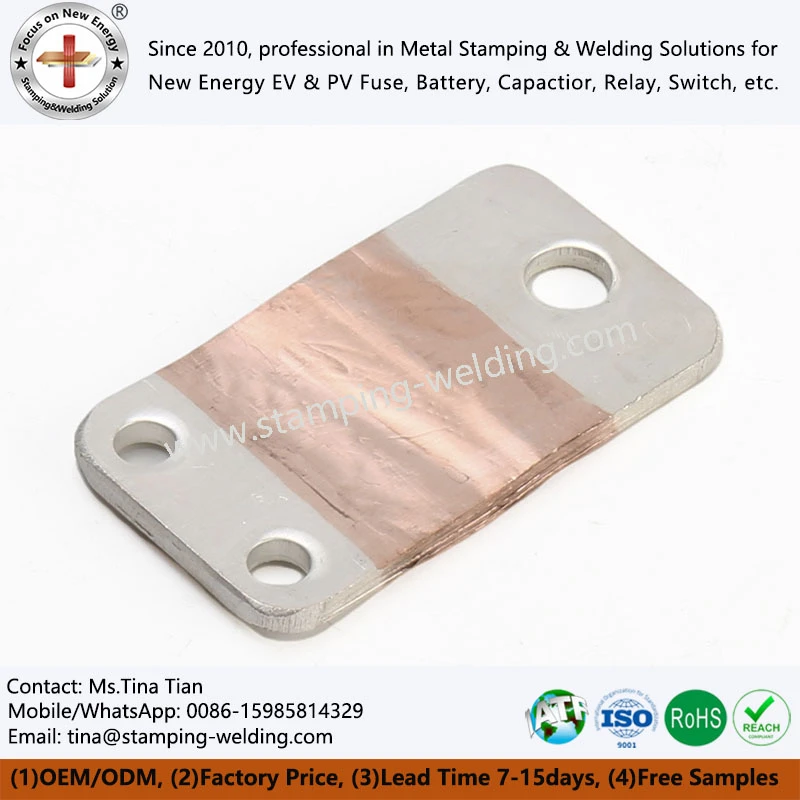
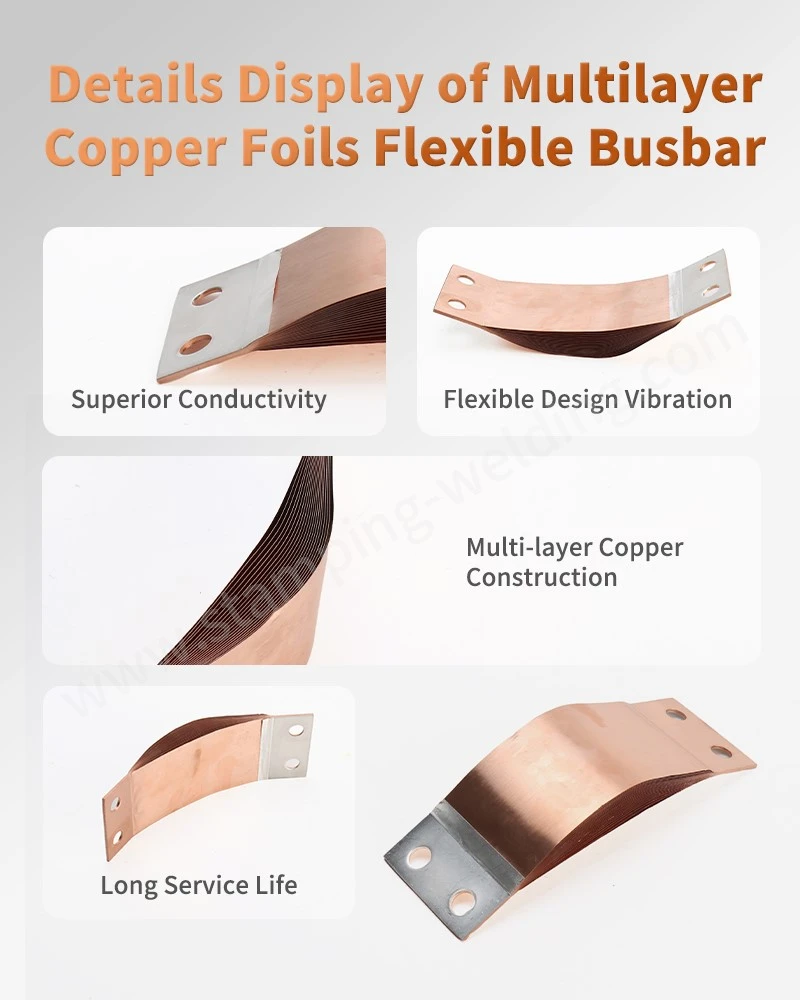
Copper Foil Laminated Flexible Bus Bars are flexible conductor assemblies formed by laminating multiple layers of high-conductivity copper foil and then bonding them through diffusion welding, molecular pressure welding, or high-voltage fusion processes. These products combine the high current-carrying capacity of traditional copper busbars with the flexible compensation capabilities of braided connections, and are widely used in new energy vehicle battery packs, energy storage systems, power equipment, rail transportation, power transformers, high-voltage switchgear, and industrial automation equipment. As the new energy industry develops towards high power, high integration, and lightweight designs, traditional rigid busbars can no longer fully meet the requirements for vibration compensation, thermal expansion absorption, and space adaptation in complex installation environments.
- Fast Delievery
- Quality Assurance
- 24/7 Customer Service
Product Introduction
Copper Foil Laminated Flexible Bus Bars, commonly known in the industry as "copper foil flexible connections," solve the same problem at different scales: compensating for relative displacement between connection points while carrying currents of hundreds to thousands of amperes.
Miniaturized (length 50~300mm): Used in new energy vehicle battery packs, as busbars connecting square-shell cell terminals or modules. Requirements include extremely low bending force (for automated assembly), vibration fatigue life exceeding tens of millions of cycles, and a flat shape (to avoid wasting the Z-axis space of the battery pack).
Large-scale (length 500~2000mm, cross-sectional area up to several thousand mm²): Used in power electrical appliances, such as flexible connections between rectifier transformers and rectifiers, and flexible connections for contact arms in high-power switchgear. Requirements include extremely high displacement compensation capacity (thermal expansion ±20mm or more), low resistance, and easy on-site installation.
Detailed Showcase: High-Level Microscopic Engineering Quality Control
Zero Delamination in Metallographic Section
Through destructive sampling and metallographic microscopy, the solid end after fusion shows no physical boundaries of single-layer copper foil. Grain rearrangement and a fusion rate of 100% perfectly prevent the penetration of external moisture and sulfide gases.
Stress Buffering in Transition Areas
At the transition between the solid welded area and the multi-layer flexible area, a smooth, stepped gradient treatment is used to prevent stress concentration at this location, ensuring that the Laminated Connector for Electrical Equipment is less prone to wire breakage during long-term dynamic reciprocating motion.
100% Electrical Inspection Before Shipment
Every Customized Silver Plated Copper Flexible Busbar assembly leaving the factory undergoes rigorous electrical path resistance testing and insulation section spark withstand voltage pinhole scanning to ensure that every product delivered to the customer's site meets zero-defect industrial aesthetics.
Main Functions: System Value Beyond Connection
Absorbing Thermal Expansion Differences: When two connecting components (such as copper and aluminum busbars) have different coefficients of thermal expansion, or when operating temperatures change significantly, the laminated section automatically expands and contracts, preventing internal stress.
Attenuating Vibration Transmission: Isolates the mechanical vibration of the motor at the flexible connection, protecting solder joints and relays on the control board.
Tolerating Installation Misalignment: Even if the hole position deviation of the equipment terminals reaches 2-3mm, the flexible connection can be aligned by gently bending it by hand during on-site installation, eliminating the need for rework, hole enlargement, or the addition of shims.
Short-Circuit Electrodynamic Buffering: The huge electrodynamic force generated during a short circuit instantly straightens the flexible connection, absorbing energy and preventing the equipment terminals from tearing.
Facilitating Modular Maintenance: In the battery pack, each flexible connection can be replaced independently without soldering or overall disassembly.
Serving as a Heat Dissipation Path: The bare copper flexible area can also serve as a heat conduction path, dissipating heat from the terminals into the air.

Key Manufacturing Advantages
Process Consistency
Rigorous pretreatment and lamination parameter monitoring ensure high consistency in interlayer bonding strength and electrical performance across batches.
Flexible Production Mode
Flexible Copper Foil Multi Layer Thin Sheet supports rapid small-batch prototyping to large-scale continuous production, meeting the needs of mass production in new energy vehicles and customized power projects.
Quality Control System
Implements multi-process online testing, including lamination peel testing, flexibility life testing, insulation withstand voltage testing, and salt spray environment simulation, ensuring products meet engineering-grade standards upon leaving the factory.
High Efficiency and Environmental Protection
The lamination process boasts high material utilization and low energy consumption, meeting green manufacturing requirements, with short delivery cycles and full traceability.

contact us
Whether it's the compact copper foil flexible connectors in new energy vehicle battery packs or the high-current Flexible Copper Foil Bus bar for EV Battery Packs in energy storage and power equipment, our engineering team can provide one-stop technical support from structural design and material optimization to mass manufacturing, based on current rating, installation space, temperature rise requirements, and lifespan targets.
Hot Tags: copper foil laminated flexible bus bars, China, manufacturers, suppliers, factory