
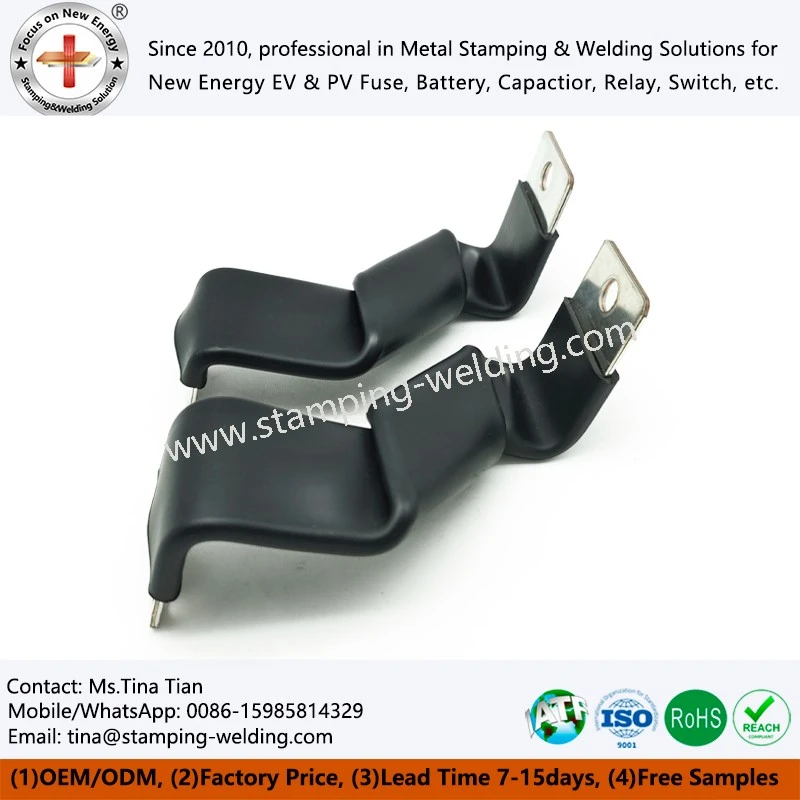
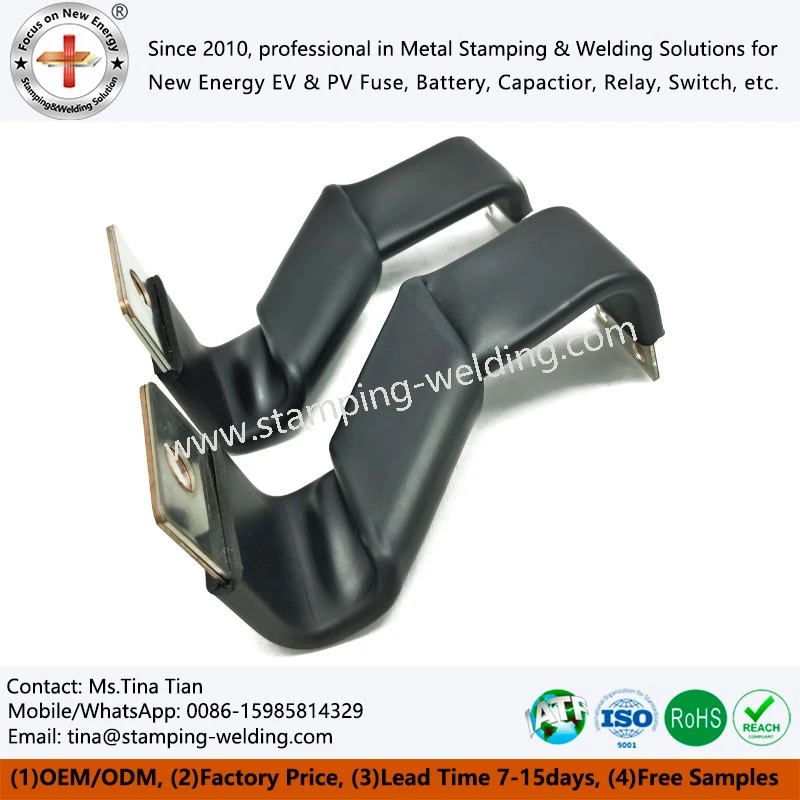
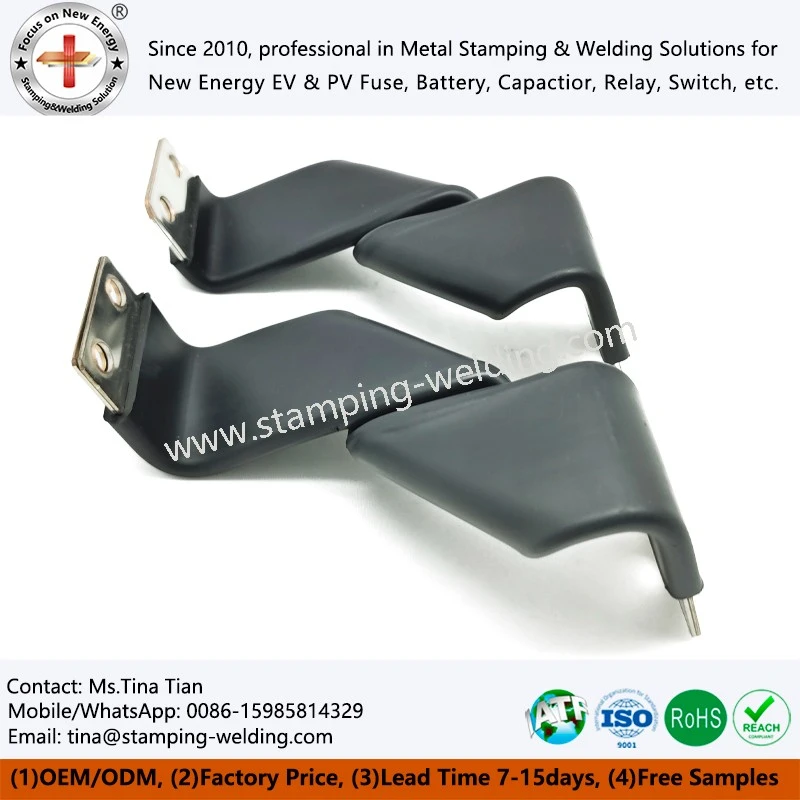
Copper Foil Laminated Flexible Bus Bars For New Energy Battery
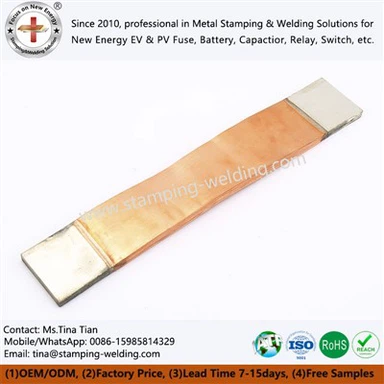
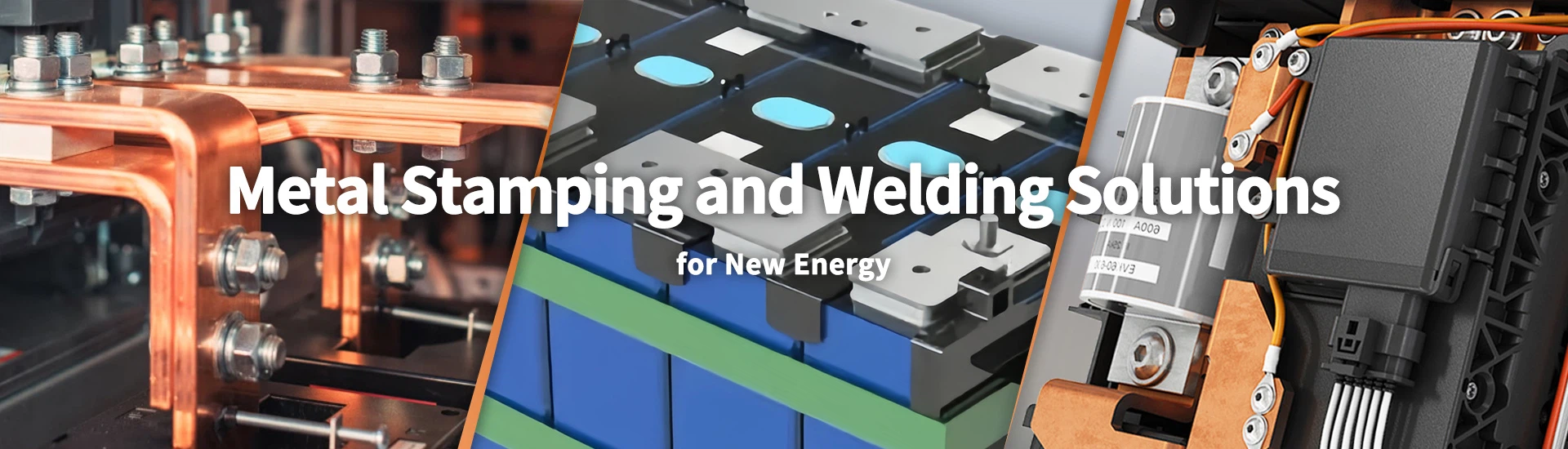
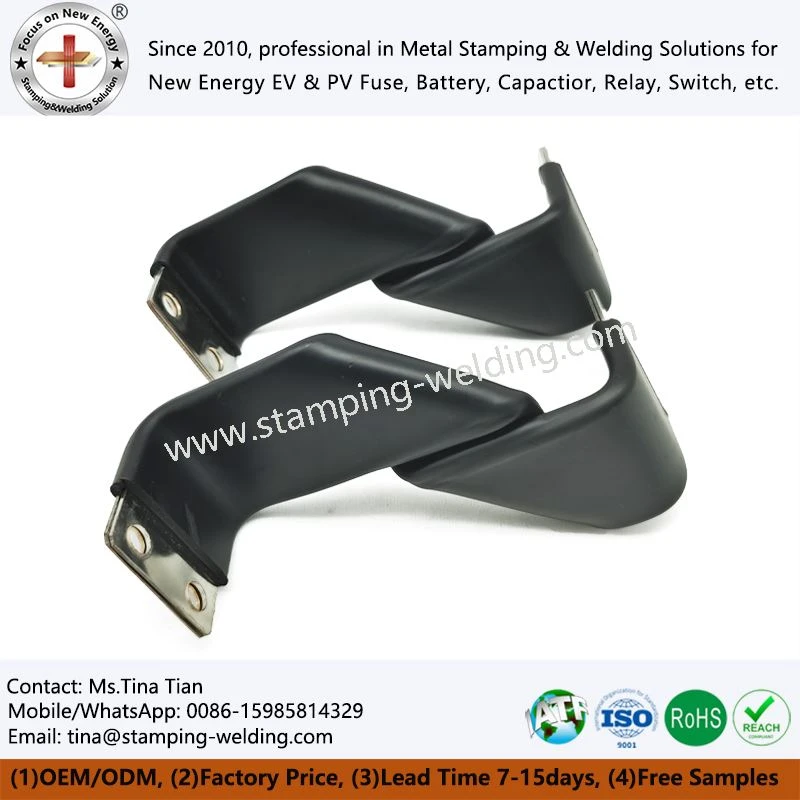
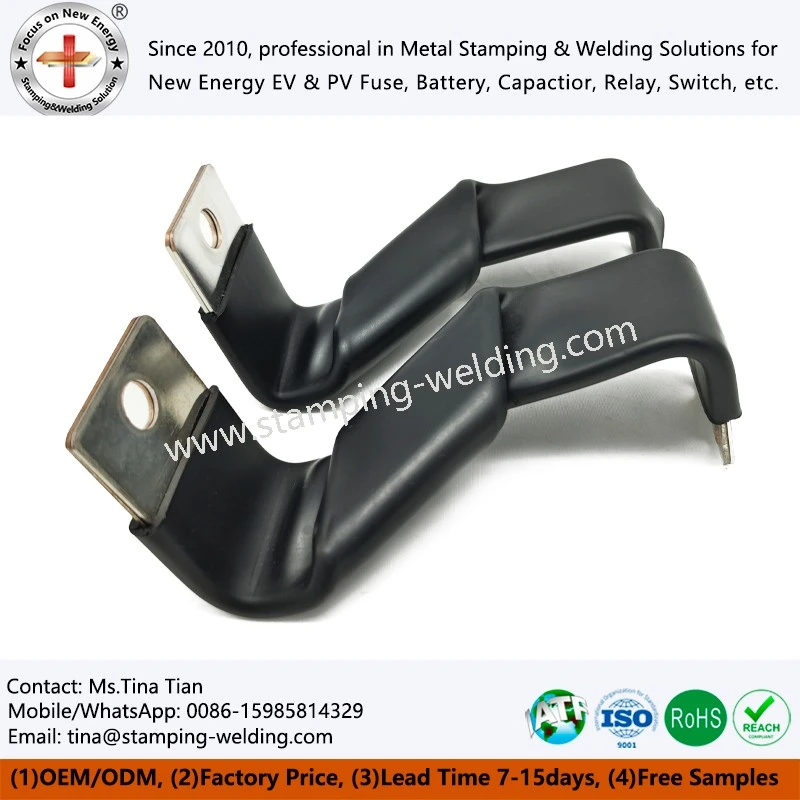
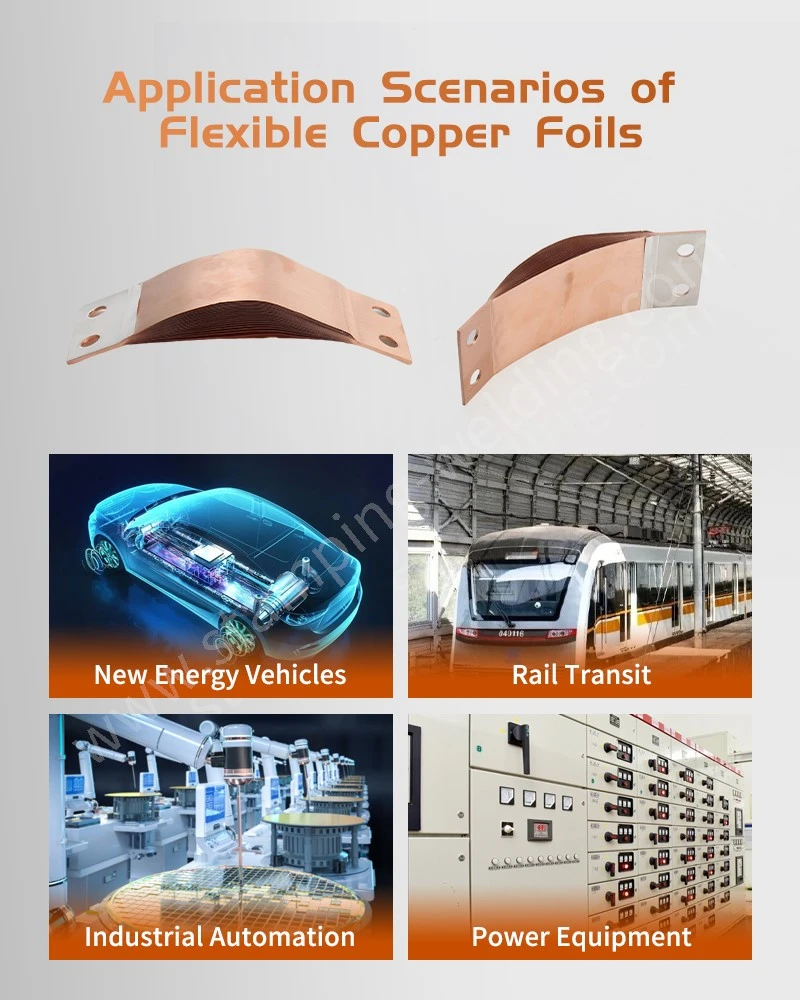
Copper Foil Laminated Flexible Bus Bars for New Energy Battery are a type of flexible conductive component developed to address the complex constraints—namely high current, limited space, continuous vibration, and thermal cycling—encountered in new energy battery systems and electrical equipment. Composed of multiple layers of ultra-thin copper foil, these busbars are engineered through precision lamination, localized welding, and insulation treatment to create a conductive path that is both bendable and capable of compensating for displacement. This design effectively resolves the stress concentration issues associated with traditional rigid busbars during assembly and operation, while simultaneously overcoming the limitations of conventional flexible connectors in terms of current-carrying capacity and structural stability.
- Fast Delievery
- Quality Assurance
- 24/7 Customer Service
Product Introduction
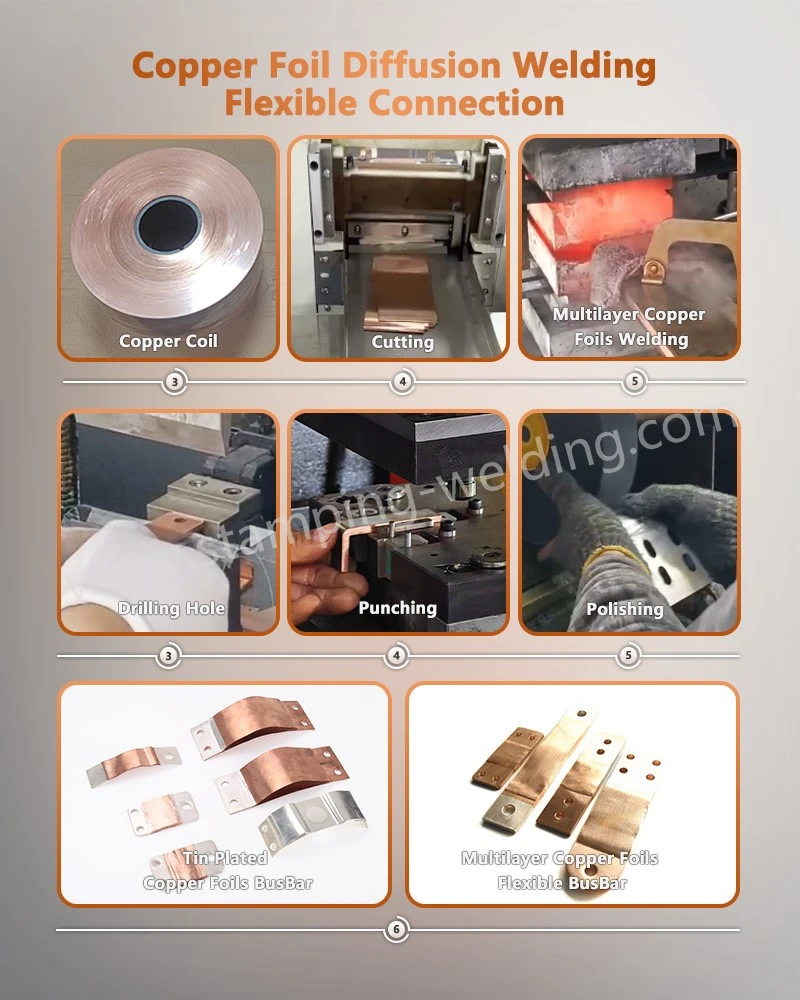
This is a type of laminated flexible conductive connector: multiple layers of rolled thin copper foil are stacked to achieve a target cross-sectional area, with the ends-or specific sections-processed accordingly. The entire assembly is encased and secured within an insulating laminated material, resulting in a busbar component that is both bendable and capable of absorbing displacement.
Its fundamental characteristics can be summarized as "achieving flexibility through lamination, and insulation through encapsulation":
Current-carrying capacity is derived from the total cross-sectional area of the stacked layers, rather than from a single thick piece of copper;
Flexibility is achieved through the relative sliding of the copper foil layers, allowing the component to absorb vibrations as well as expansion and contraction caused by temperature changes;
Insulation and protection are provided by the outer encapsulation, which prevents short circuits and oxidation that could otherwise occur with exposed copper surfaces.
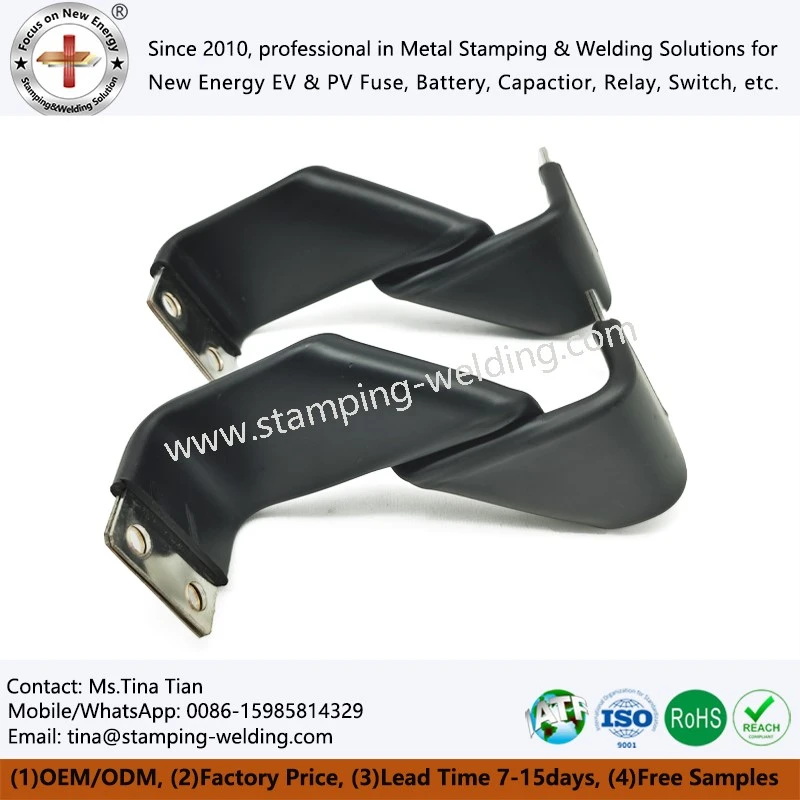
Materials & Surface Finishing for Press Welded Copper Foil Flexible Busbar Flexible
Conductor Material
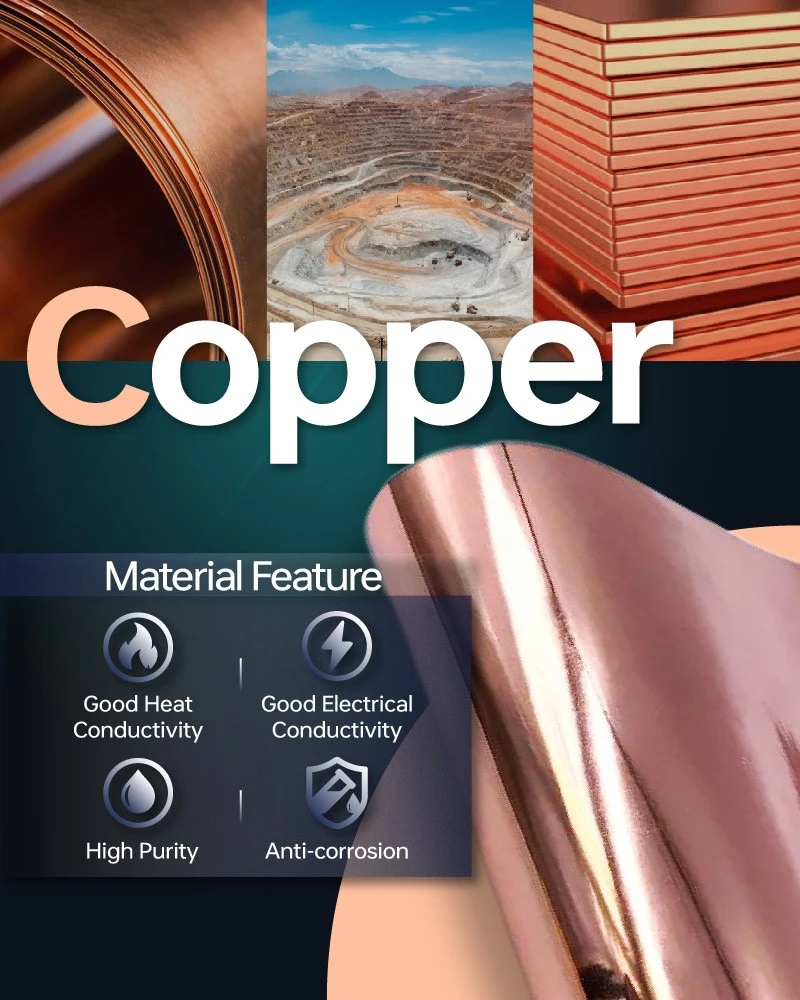
T2 copper (purity ≥99.9%) is the standard choice. For energy storage or marine applications requiring superior corrosion resistance, tinned copper foil is available; the tin layer enhances both oxidation resistance and solderability at contact interfaces.
Terminal Material
Copper busbar terminals matched to the conductor, available with tin, nickel, or silver plating. Silver plating is utilized for high-current electrical applications that demand minimal temperature rise.
Insulation Materials
Options include PVC heat-shrink tubing (economical), silicone heat-shrink tubing (high-temperature resistant), dip-coated polymer (for full encapsulation), or epoxy powder coating (chemically resistant), selected based on the specific operating environment.
Dissimilar Metal Contact Management
When connecting to aluminum alloy terminals, we offer copper-aluminum transition (bimetallic) connectors to prevent contact resistance drift caused by galvanic corrosion.
Technical Features for Flexible Copper Busbar For Resistance Welder
| Multi-layer Thin-foil Structure | Thinner foils and an optimized number of layers result in lower flexural rigidity, which reduces mechanical stress during assembly and operation, thereby extending fatigue life. |
| Welded Consolidation (vs. Mechanical Clamping) | Utilizing laser, ultrasonic, or resistance welding creates a metallurgical bond between foil layers. This ensures low and long-term stable contact resistance, preventing the resistance drift often caused by vibration in mechanically clamped connections. |
| Low Loop Inductance and Low AC Losses | The laminated structure helps suppress additional losses induced by the skin effect, making it well-suited for high-frequency switching and high-pulse operating conditions. |
| Formability | The structure can be bent to follow 3D routing paths, which shortens loop lengths, optimizes current distribution, and accommodates assembly tolerances. |
| Optional Insulation and Protection | Various protective solutions-such as heat-shrink tubing, PET wrapping, epoxy powder coating/dipping, UV-curable adhesive, or flame-retardant sheathing-are available to meet requirements for voltage withstand, creepage distance, and flame retardancy. |
| Controlled Consistency | Key parameters-including welding settings, foil layer positioning, coating thickness, DC resistance, and dielectric withstand voltage-are integrated into the process control system, ensuring minimal variation between components in mass production. |
Frequently Asked Questions for Laminated Flexible Copper Foil Tape
Q1: How are the number of layers and the thickness of flexible busbars determined?
-
These are determined by factors including continuous current-carrying capacity, peak current, allowable temperature rise, and available installation space. Simply provide your electrical parameters and 3D spatial constraints, and we will propose a cross-sectional design along with sample drawings. Typically, a single round of prototyping is sufficient to finalize the solution.
Q2: Can the terminals be designed as copper-aluminum transition joints?
-
Yes. For connections to aluminum alloy busbars or terminals, we offer copper-aluminum composite terminals-produced via friction welding or explosion welding-which effectively inhibit galvanic corrosion at the interface and prevent the degradation of contact resistance.
Q3: Can you meet the requirements for automotive-grade projects?
-
Our quality management system operates in accordance with IATF 16949. We support the submission of PPAP (Production Part Approval Process) documentation and can assist clients with DV (Design Validation) phase testing, including vibration, thermal cycling, and dielectric withstand voltage verification.
Q4: How is the transition from small-batch trial production to full-scale mass production managed?
-
Prototyping and small-batch production are handled on flexible production lines. Once the drawings are finalized, production shifts to dedicated lamination lines. Throughout this process, tooling and key process parameters are strictly controlled to ensure consistent performance between trial-produced parts and mass-produced units.
Q5: How should the insulation method be selected?
-
For dry, clean environments (such as inside electrical cabinets), PVC heat-shrink tubing is a suitable choice. In high-temperature zones-such as within battery packs-silicone heat-shrink tubing is recommended. In areas where there is a risk of exposure to electrolytes or coolants, dip-coating or epoxy coating is advised. Please provide details regarding your operating conditions, and we will offer a tailored recommendation.
contact us
If you are evaluating high-current connection solutions for batteries or power circuits, we offer comprehensive engineering support-from determining current-carrying cross-sections and insulation/voltage-withstand requirements to selecting Laminated Copper Foil Shunt interfaces-along with sample validation. Please reach out to our technical team via the inquiry page to discuss your specific operating conditions.
Hot Tags: Copper Foil Laminated Flexible Bus Bars, Copper Foil Flexible Busbar, EV Battery Flexible Busbar, Laminated Copper Busbar
No Information