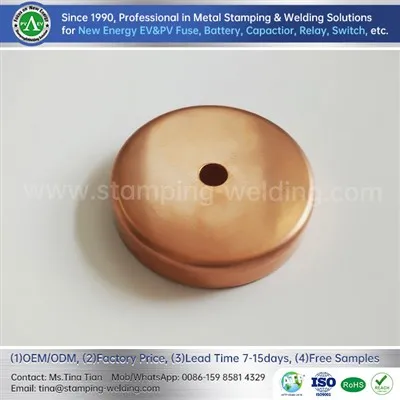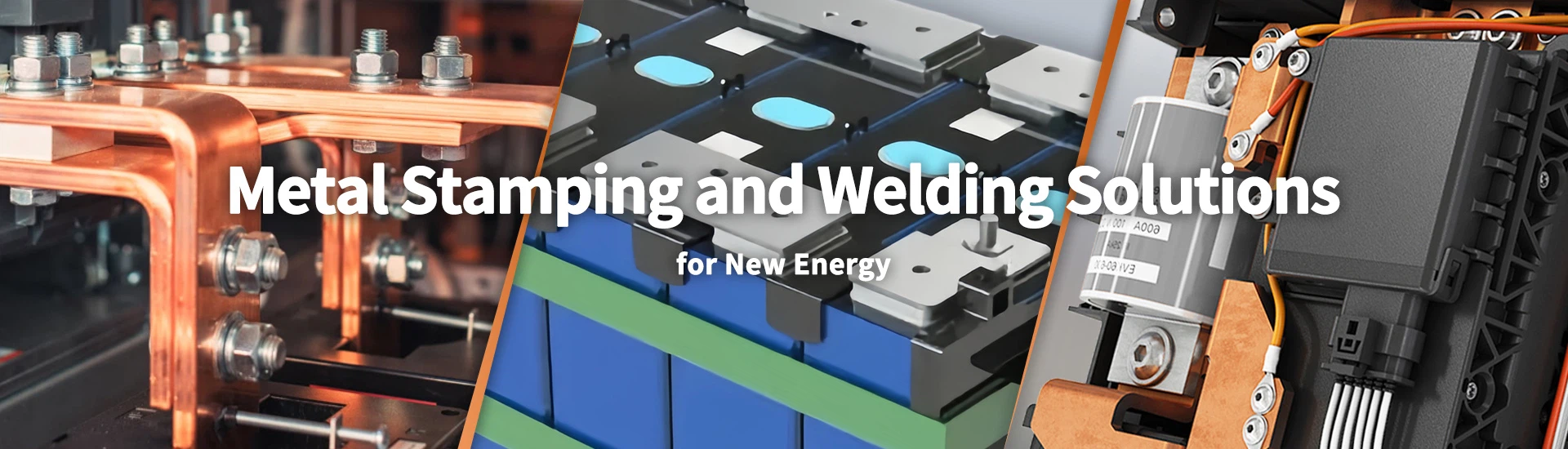


Copper End Cap Contact For Charging Fuse
The Copper End Cap Contact for Charging Fuse is a high-quality component that provides a secure and reliable electrical connection for charging fuses in automotive and other electrical systems.
- Fast Delievery
- Quality Assurance
- 24/7 Customer Service
Product Introduction
PRODUCT INTRODUCTION
The Copper End Cap Contact for Charging Fuse is a high-quality component that provides a secure and reliable electrical connection for charging fuses in automotive and other electrical systems.

PRODUCT FUNCTIONS
--
- Electrical Connectivity: The end cap contact provides a secure and reliable electrical connection for charging fuses, ensuring that electrical current can flow through the fuse and perform its intended function.
- Current Limiting: The end cap contact is designed to work with the charging fuse to limit the amount of electrical current that can flow through the circuit. This helps to prevent overloads and protect other components in the electrical system.
- Thermal Management: The end cap contact is typically made from high-conductivity copper, which helps to dissipate heat and prevent overheating in the electrical system. This is particularly important in automotive applications, where high currents and temperatures are common.
- Durability and Reliability: The end cap contact is designed to withstand harsh environments and conditions, ensuring that it remains functional and reliable over time. This is particularly important in automotive applications, where the electrical system may be subject to vibration, temperature extremes, and other stresses.
- Compatibility: The Copper End Cap Contact for Charging Fuse is typically compatible with a wide range of charging fuses and electrical systems, making it a versatile and widely applicable component.
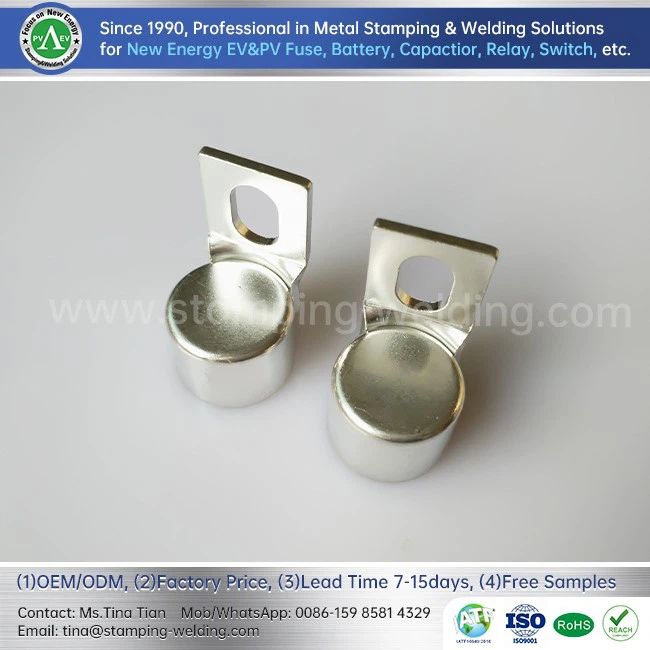
SURFACE TREATMENT
--
- Plating: Plating is a process in which a thin layer of metal is deposited onto the surface of the copper end cap contact. This can improve the contact's corrosion resistance, electrical conductivity, or other properties, depending on the type of plating used. Common plating materials include nickel, tin, and gold.
- Passivation: Passivation is a chemical process that creates a thin, protective film on the surface of the copper end cap contact. This film can improve the contact's corrosion resistance and protect it from oxidation or other chemical reactions. Passivation is typically done using a chemical bath or spray coating.
- Polishing: Polishing is a mechanical process that smoothes and brightens the surface of the copper end cap contact. This can improve the contact's appearance and help to reduce friction and wear. Polishing is typically done using abrasive papers, buffing wheels, or other polishing materials.
- Cleaning: Cleaning is a crucial step in the surface treatment process, as it removes dirt, grease, and other contaminants from the surface of the copper end cap contact. This ensures that the contact's surface is clean and ready for subsequent surface treatment processes. Cleaning is typically done using solvents, detergents, or other cleaning agents.
PROCESSING TECHNOLOGY
--
- Material Selection: The copper end cap contact is typically made from high-purity copper, which has excellent electrical conductivity and ductility. The material is chosen based on factors such as strength, durability, and electrical conductivity.
- Metal Forming: The copper end cap contact is typically formed using metal forming processes such as stamping, bending, or drawing. These processes are used to shape the contact to its desired form and size.
- Machining: Machining processes such as milling, turning, or drilling may be used to create specific features or dimensions on the copper end cap contact. This can include cutting threads or other features onto the contact's surface.
- Plating: As mentioned earlier, plating is a common surface treatment process used on the copper end cap contact. This involves depositing a thin layer of metal onto the contact's surface using an electrochemical process.
- Passivation: Passivation is another surface treatment process used on the copper end cap contact. This involves immersing the contact in a chemical bath or spray coating to create a thin, protective film on its surface.
- Polishing: Polishing is a mechanical process used to smooth and brighten the surface of the copper end cap contact. This can be done using abrasive papers, buffing wheels, or other polishing materials.
- Quality Control: Finally, the copper end cap contact undergoes rigorous quality control checks to ensure that it meets all specifications and performance requirements. This may involve measuring the dimensions of the contact, testing its electrical conductivity, and inspecting its surface finish.
PRODUCT INSPECTION
--
- Dimensional Inspection: The Copper End Cap Contact For Charging Fuse is inspected to ensure that it meets all dimensional specifications, including length, width, and height. This is typically done using precision measuring tools such as micrometers or calipers.
- Surface Finish Inspection: The surface finish of the copper end cap contact is inspected to ensure that it is smooth, even, and free from any defects such as scratches, dents, or burrs. This may be done using visual inspection or by feel.
- Material Inspection: The material used to manufacture the copper end cap contact is inspected to ensure that it meets all specifications, including strength, durability, and electrical conductivity. This may involve testing the material's properties using specialized equipment.
- Electrical Conductivity Test: The copper end cap contact is tested to ensure that it has good electrical conductivity. This may involve using a conductivity tester or other specialized equipment to measure the contact's electrical properties.
- Corrosion Resistance Test: The copper end cap contact may also undergo a corrosion resistance test to ensure that it can withstand exposure to corrosive environments. This may involve exposing the contact to a corrosive substance and monitoring for any signs of corrosion.
- Functional Test: Finally, the copper end cap contact may undergo a functional test to ensure that it can perform its intended function in the application. This may involve installing the contact in a test rig and subjecting it to simulated operating conditions.
OUR ADVANTAGES
--
We have more than 18 years of metal stamping experience and 7 years of various welding technology experience. We have established business relationships with China's top 10 Fuse manufacturers, such as CHINA Bussmann, Sinofuse, Chnbel, etc. And completely imported top MIYACHI welding equipment, such as laser welding, resistance welding, brazing, micro-arc welding,sub-arc welding, TIG welding, and other welding processes; provide customers with different welding services and process validation.
In addition to our core expertise in metal stamping and welding services, we have expanded our capabilities to include research and development in metal stamping dies and plastic injection molding. Our specialization lies in the production of innovative electrical products for various industries, such as new energy vehicles, photovoltaics, energy storage, and rail transit. From the design phase to material selection, process optimization, and trend marketing, we provide comprehensive solutions to our customers, ensuring high-quality products and staying at the forefront of technological advancements.
OUR CUSTOMERS
--

CONTACT US

Hot Tags: copper end cap contact for charging fuse, China, manufacturers, suppliers, factory, Fuse Contact Knife Cap For Electric Vehicle, Fuse Contact Welded Components, Fuse End Blade For Electrical Vehicle, Fuse Holder Cap, Fuse Link Welded Components, Fusible Link Outer End Cap And Terminal