Aluminum Busbar Electrical Power Connector industry technical analysis and application guide
Apr 15, 2026
With the further advancement of the "dual carbon" policy, high copper prices and industrial lightweight upgrades, Aluminum Busbar Electrical Power Connector are accelerating to replace traditional copper-based busbars and become the mainstream choice in the industrial power distribution field with their core advantages of 30%-40% lower cost, 60% lighter weight, corrosion resistance, and low carbon footprint throughout the life cycle. According to data from the China Electrical Equipment Industry Association, China's aluminum-based power busbar market size will exceed 4.26 billion yuan in 2026, a year-on-year increase of 12.7%, and the growth rate is 2.3 times that of copper-based busbars. Among them, the four major fields of new energy factories, photovoltaic power stations, logistics and warehousing, and rail transit contribute 75% of the market increase.
Core material technology analysis
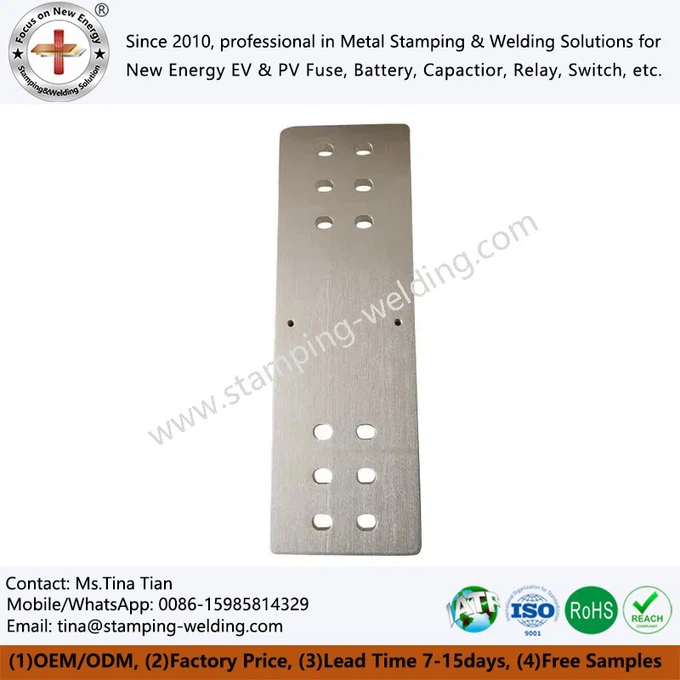
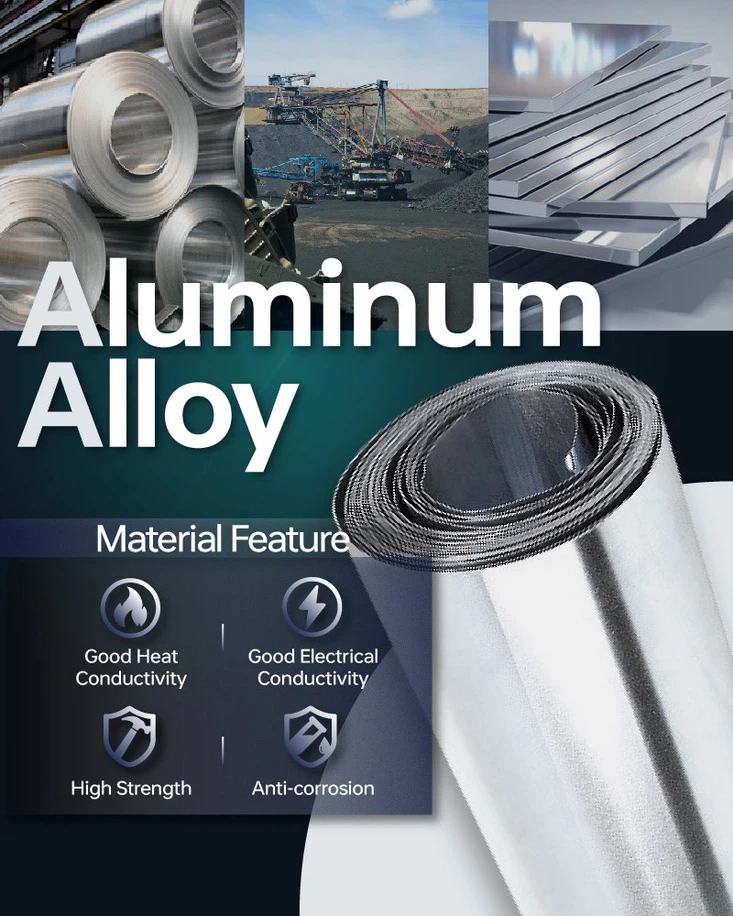
The conductor material of the high-quality aluminum-based power busbar is 6101B, a highly conductive aluminum alloy. After the T6 heat treatment process, the conductivity can reach ≥56%IACS, the tensile strength ≥205MPa, and the elongation ≥10%, taking into account both conductive performance and mechanical strength. This 6101 aluminum bus bar material is anti-oxidation treated with tin plating on the surface, and the contact resistance can be controlled within the range of ≤25μΩ, ensuring long-term low-loss operation. When selecting materials, the tin-plated aluminum bus bar process can effectively improve the corrosion resistance and conductive stability of the connection parts.
For applications requiring higher mechanical strength, the 6061 aluminum bus bar material provides excellent tensile properties and processing characteristics and is suitable for long-span installation environments. As a heat-treated reinforced material, 6101 t61 aluminum bus bar significantly improves structural rigidity while maintaining high conductivity.
Manufacturing process and product performance
Modern Flexible Aluminium Connections adopt an overall cold extrusion molding process without splicing welds, and the overall strength is increased by 30%. The insulation system uses high thermal conductivity polyester film and mica tape composite insulation. The air gap-free design increases the current-carrying capacity by 25% compared with the traditional air type. The shell is usually made of 6063-T5 aluminum alloy, which is lightweight, corrosion-resistant, beautiful and environmentally friendly. In terms of 6101 aluminum bus bar performance parameters, the rated current of the high-quality aluminum-based power bus covers the range of 400A-5000A, the voltage level is 0.4kV-1kV, and the protection level can reach IP54-IP66. The short circuit withstand strength reaches 80kA peak/3s, the earthquake resistance is 8 degrees, and the wind resistance is 12 degrees. The large-span design capability is outstanding, and the maximum span can reach 9 meters without the need for intermediate supports, which significantly saves space and construction costs.

Applicable scenarios
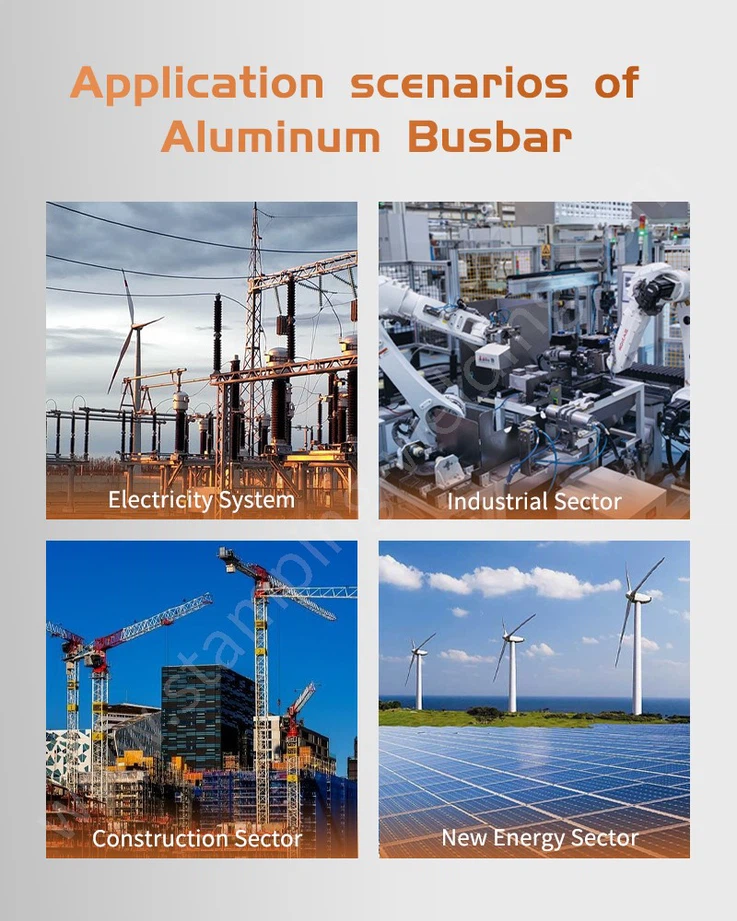
Dense aluminum-based busbars have the characteristics of large carrying capacity, small size, and good heat dissipation. They are suitable for places with limited space, such as industrial plants, data centers, and high-rise buildings. Air-type aluminum-based busbars have relatively low cost, good heat dissipation performance, and easy maintenance. They are suitable for dry indoor environments such as ordinary workshops and power distribution rooms.
For special environmental requirements, the fire-resistant aluminum-based busbar can continuously supply power for 90 minutes at a high temperature of 950°C, meeting the safety requirements of key places such as fire escapes, hospitals, and data centers. Anti-corrosion aluminum-based busbars use special coatings or aluminum alloy casings, which are acid and alkali-resistant and suitable for corrosive environments such as chemical plants, coastal areas, and sewage treatment plants. The long-span aluminum-based busbar has a span of up to 3-9 meters and does not require intermediate support. It is especially suitable for logistics warehousing and long-span factory spaces.
contact us
In terms of battery connection technology, we provide professional Aluminum Busbar Electrical Power Connector products. We use advanced material technology and precision manufacturing technology to provide safe, efficient, and economical power distribution connection solutions for various industrial projects.