Proper application and specification selection of high-voltage Busbar heat shrink insulated tube
Apr 14, 2026
High voltage Busbar heat shrink insulated tube belongs to high-voltage insulation protection components, with conventional voltage levels divided into three categories: 10KV, 20KV, and 35KV. There are significant differences in electrical performance and structural characteristics compared to ordinary heat shrink tubing. In order to meet the requirements of breakdown resistance, corona resistance, and long-term insulation stability under high voltage conditions, thick base materials are commonly used for high voltage busbar heat shrink tubing. The material hardness is higher, and the shrinkage rate and construction process are more specific. In practical engineering applications, it is necessary to follow the standardized selection logic and construction process to ensure reliable insulation effect and safe and stable operation.
In high-voltage distribution systems, new energy storage, photovoltaic inverters, rail transit, and industrial electrical equipment, busbars undertake high current and high voltage transmission tasks, and the reliability of their outer insulation directly affects the safe operation of the overall system. Mastering the correct selection method and standardized construction steps for high-voltage PE heat shrink tube insulated busbars is the key to improving the insulation quality of busbars, avoiding phase to phase short circuits, partial discharges, and early failure of insulation layers.

Model and specification selection of high-pressure Busbar heat shrink insulated tube
The core selection basis for high-voltage PVC Insulation Busbar is the rated operating voltage of the system. It should be matched with the corresponding withstand voltage level of Heat Shrink Tube Polyolefin Busbar according to the actual operating voltage level of the busbar. The commonly used specifications are 10KV, 20KV, and 35KV. It is strictly prohibited to replace high-grade products with low-grade products to avoid safety hazards such as insulation breakdown and corona discharge.
The commonly used copper and aluminum busbars in engineering are rectangular structures with thicknesses of 8mm and 10mm. Busbar Sleeves Insulation uses the inner diameter as the specification mark for busbars, and many engineers are prone to size mismatch when selecting. To achieve precise fitting, the fitting diameter can be determined through theoretical conversion: the circumference of the busbar section can be converted to the equivalent circle diameter, that is, the equivalent diameter of the busbar=(busbar width+busbar thickness) × 2 ÷ 3.14. The actual selected inner diameter of the heat shrink tube should be slightly larger than this calculated value to ensure that the sleeve can be smoothly inserted and uniformly and tightly wrapped after heating.
Application scenarios and production technology
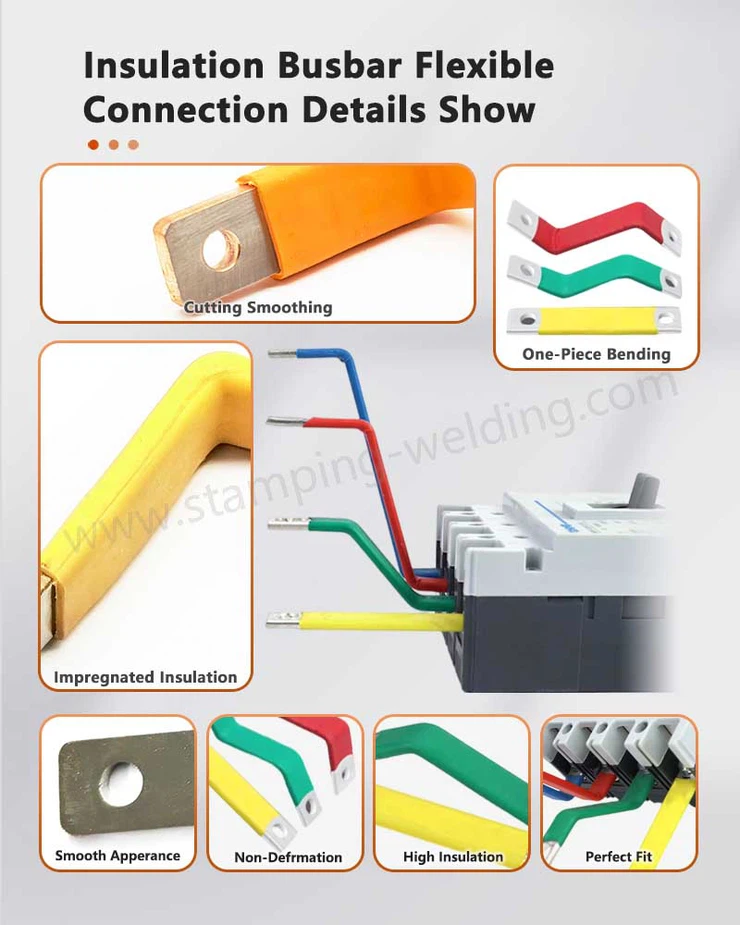
Heat shrink busbar is a core power transmission component in the fields of power distribution and new energy. Its core application scenarios revolve around high voltage, high current, and high protection requirements, and it is widely compatible with various power systems and industrial equipment. In the field of power distribution, it is a standard configuration for high and low voltage switchgear, substations, and distribution cabinets, which can effectively solve industry pain points such as excessive distance between bare busbars, condensation flashover, and short circuits caused by small animal contact. The 360 ° dense insulation layer formed by heat shrink tubing isolates external corrosive media and charged bodies, ensuring stable operation of the power system; In the field of new energy, it is a key connecting component for new energy vehicle battery packs, photovoltaic energy storage inverters, and energy storage cabinets. With its flexible structure and high and low temperature resistance, it is suitable for complex working conditions such as vehicle vibration and outdoor salt spray.
The production of EV battery connectors is a standardized precision manufacturing process that revolves around two main steps: substrate processing and insulation coating. The basic process is clear and traceable. Production is based on high-purity copper as the substrate, which is pre treated with ultrasonic cleaning, surface silver/tin/nickel plating, etc., and then sequentially completes three major mechanical forming processes: high-precision cutting, precision punching, and three-dimensional bending, ensuring accurate size and stable structure of the busbar, and can adapt to various irregular installation needs; Then enter the core heat shrink process, and insert the PE/PVC heat shrink tubing into the forming busbar.
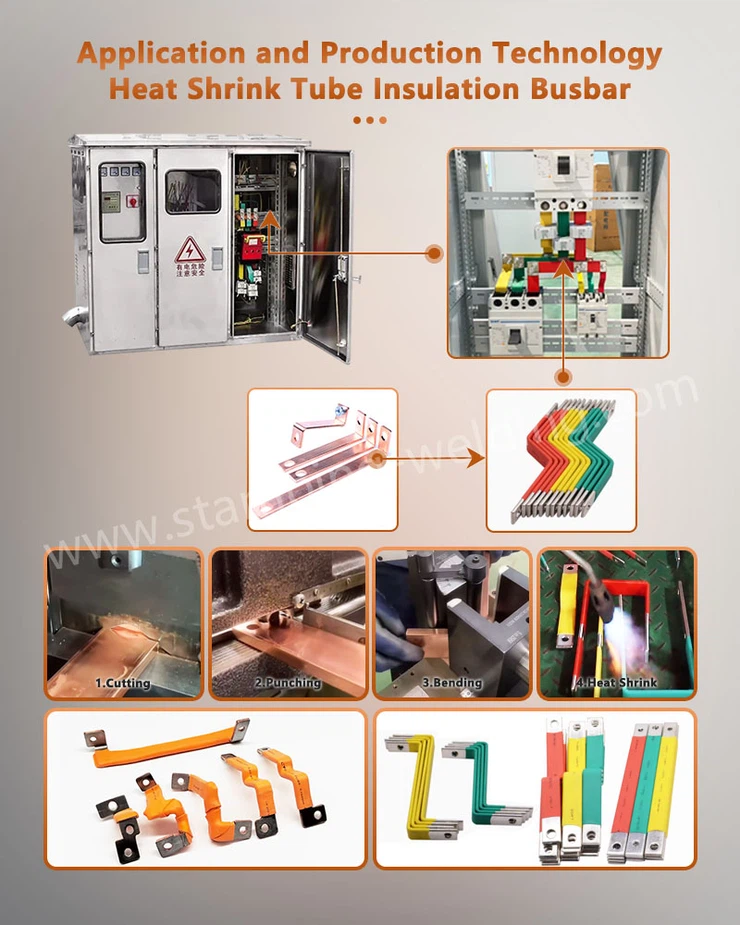
Cutting and fitting construction of high-pressure customized Busbar insulting tube
After determining the model, specifications, and color, the corresponding length of Solid insulation tubing busbar can be cut according to the effective length of insulation coating required for the busbar. The cutting length should be slightly longer than the actual wrapping area, leaving a margin for end shrinkage to avoid insufficient insulation coverage due to thermal shrinkage. When cutting, the incision should be flat, without burrs or slanted edges, to prevent stress concentration, cracking, or curling during heating shrinkage.
Smoothly insert the cut heat shrink tubing into the designated position of the busbar, adjust it in place, and keep the tubing straight to avoid twisting, offsetting, or wrinkling. For complex structures such as right angle bending and irregular corners of busbars, when the threading resistance is high, a small amount of silicone oil can be applied to the surface of Copper busbar PVC insulated as a lubricant to reduce friction resistance, ensure smooth insertion of the sleeve, and reduce the probability of wrinkles and bubbles on the surface after shrinkage, thereby improving the overall insulation appearance and compactness.
Contact us
Different engineering environments, voltage levels and installation scenarios require customized solutions for Busbar heat shrink insulated tube. If you are selecting or evaluating busbars, please send us your project details and key parameters for professional confirmation.