Analysis of the core knowledge of battery energy storage cabinet industry
Apr 30, 2026
The energy storage cabinet is a core device that integrates the storage and release functions of electric energy. It is mainly composed of battery packs, converters, control chips and other components. Its core function is to store electric energy and release power in demand scenarios. It can provide backup power and stabilize the grid voltage. It can also smooth the fluctuations caused by the access of non-continuous new energy sources to the grid, suppress load jumps, and play the role of frequency and voltage regulation and improvement of power factor. Among them, energy storage system cabinets are widely used in various energy storage scenarios due to their systematic design.
structure
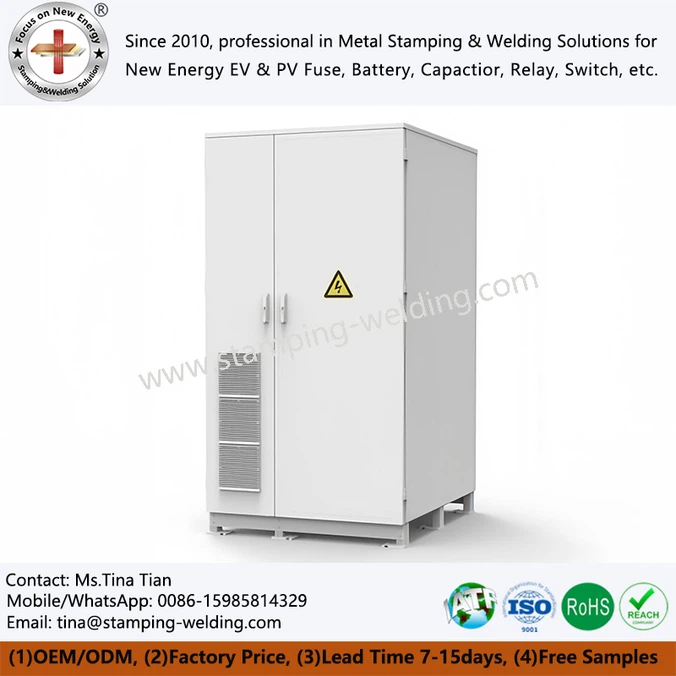
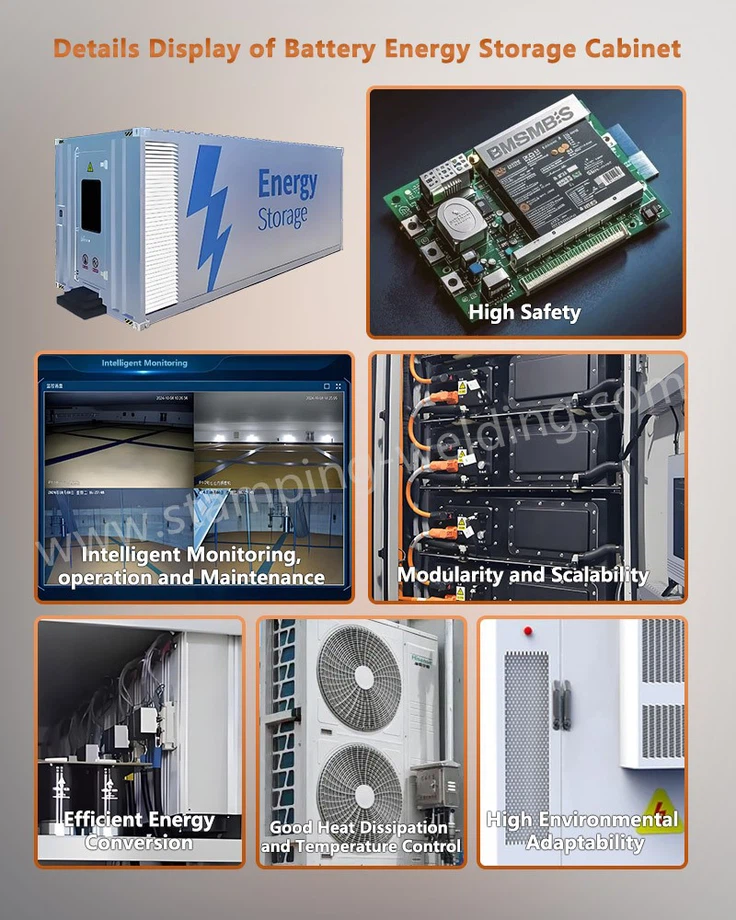
The core components of the energy storage cabinet include: battery modules (such as lithium-ion batteries, lead-acid batteries, etc.), which are used to store electrical energy; battery management systems (BMS), which are responsible for monitoring battery status, controlling the charge and discharge process, and preventing overcharge, over-discharge, and over-current; inverters, which convert DC power into It is converted into alternating current for use in the power supply network or load; the control system implements energy scheduling, operation monitoring and communication management; the cooling system ensures that the equipment works within a safe temperature range; and the shell and connector provide structural protection and electrical interfaces. For outdoor energy storage cabinets deployed in complex environments, the protection and thermal management design of each component is particularly critical.
Common classification methods
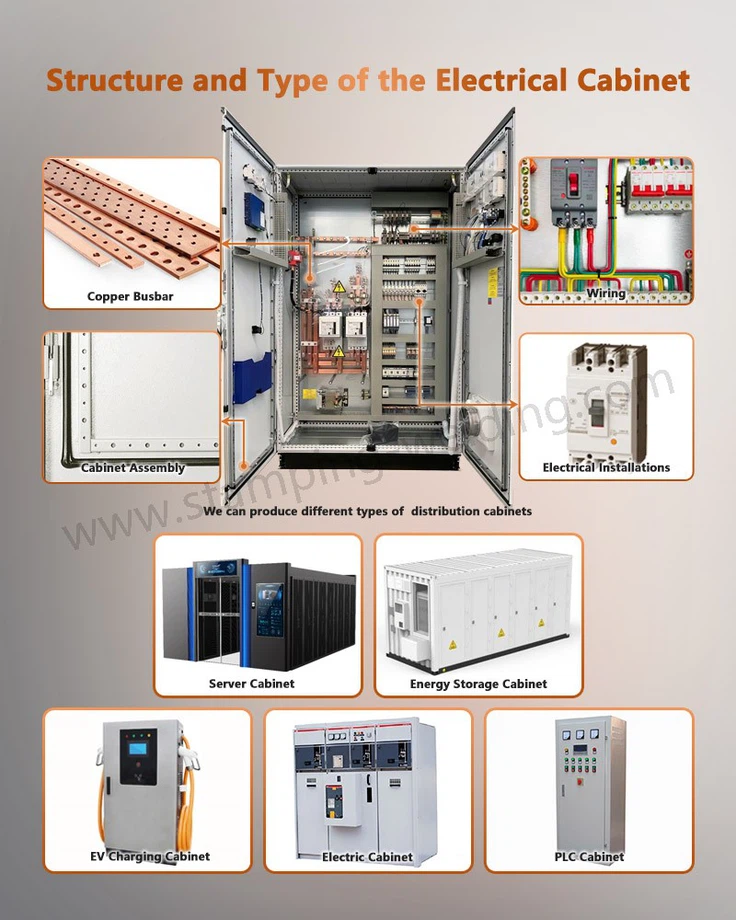
According to the structure and application scenarios, energy storage cabinets can be divided into various types: Discrete energy storage cabinet: Each component is placed independently and connected through cables. The advantages are independent components, low failure rate, and easy maintenance and expansion; the disadvantages are large area and high cost. Combined energy storage cabinet: Each functional unit is arranged in separate cabinets and can be freely combined to adapt to different capacity and voltage requirements. The advantage is that it is flexible and customizable; the disadvantage is that the connections between cabinets are complicated and the installation is difficult. Base-type energy storage cabinet: a sealed cabinet in which batteries and power electronic equipment are integrated on the base, suitable for direct placement outdoors. The advantages are a small footprint and convenient installation; the disadvantage is relatively limited capacity. Integrated energy storage cabinet: integrates all core components into a single cabinet. The advantages are compact structure, portability, and quick installation; the disadvantages are poor scalability and difficulty in troubleshooting.
Lithium-ion battery cabinet: Using lithium-ion batteries, it has the characteristics of high energy density, long life, low self-discharge rate and high efficiency, and the capacity can be flexibly customized. Lead-acid battery cabinet: The technology is mature and the cost is low, but the energy storage efficiency and self-discharge performance are poor and require regular maintenance. Supercapacitor cabinet: supports fast charge and discharge, long life, no pollution, adapts to a wide temperature range, but has low energy density, requires multiple units to be used in series and parallel, and the cost is high. Photovoltaic energy storage cabinets: divided into centralized (used for large photovoltaic power stations) and distributed (used for household or industrial and commercial photovoltaic systems).
Common fault types
The following types of faults may occur in energy storage cabinets, which need to be prevented in design and operation and maintenance: battery faults, such as aging, overcharge and over-discharge, internal short circuits or inconsistent performance of single cells; electrical faults, including overcurrent, overvoltage, undervoltage and insulation abnormalities; mechanical faults, structural loosening or component damage caused by vibration, external impact, etc.; environmental factors, such as extreme temperatures, high humidity, corrosive gases, etc. that affect equipment performance; and design and manufacturing defects. In the above scenario, the use of a liquid-cooled energy storage cabinet can more effectively control the battery operating temperature and reduce the risk of heat-induced failure.
contact us
We provide high-performance battery energy storage cabinet solutions. With reliable integrated design and stable operation capabilities, our energy storage systems provide safe, efficient and flexible support for various power storage needs. If you would like to know more about the energy storage products suitable for your project, please feel free to inquire further.