Understanding Server rack cabinet: A comprehensive guide to rack servers and cabinets
Apr 30, 2026
Basic definition and core usage of Server rack cabinet
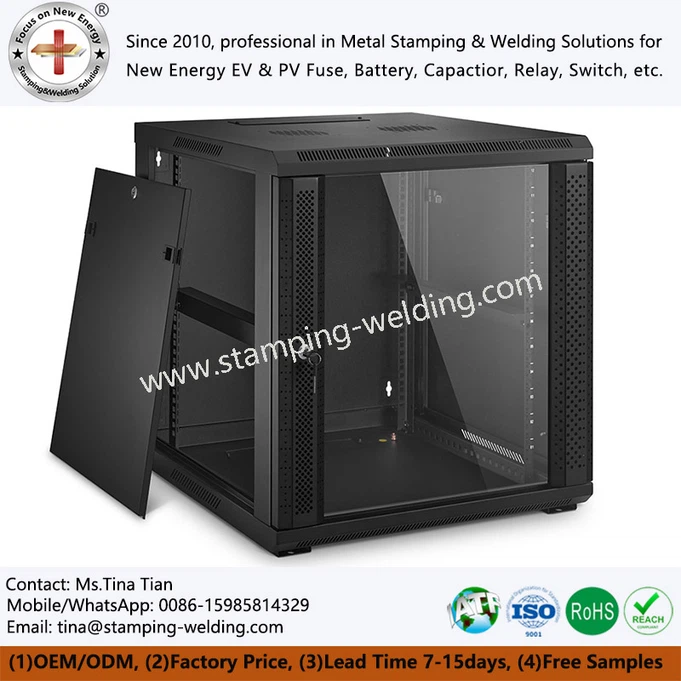
A Computer rack cabinet is a standardized framework cabinet used in data centers and industrial IT environments to carry, arrange, secure, and protect servers, network equipment, and various computing hardware. The industry generally adopts a standard installation width of 19 inches, which can stack multiple electronic devices in a standardized manner, greatly saving room space. At the same time, it is convenient for equipment installation, operation and maintenance, and overall wiring planning. With reasonable heat dissipation and wiring design, it can effectively ensure the safety and efficiency of equipment operation. Mastering the basic structure, size standards, and configuration logic of server racks is an essential knowledge for IT practitioners to plan, build, maintain, and expand server infrastructure.
The application scenarios of Server racks cover ICT infrastructure construction in various industries, widely deployed in data centers, telecommunications rooms, enterprise intranets and other environments, used to host standard equipment such as servers, switches, routers, etc. By standardizing rack deployment, enterprises can flexibly expand hardware resources according to business growth, while ensuring smooth airflow and good heat dissipation conditions inside the data center. A well-organized rack layout can reduce line interference, simplify equipment upgrade and maintenance processes, ensure uninterrupted operation of key industries such as banking, healthcare, and cloud services, and reduce system downtime risks.
Type and Rack Size Standards
Server rack cabinets are classified according to height specifications, commonly including 1U, 2U, 4U, etc. U is the standard height unit, and 1U is equal to 1.75 inches. The higher the height of the model, the more expansion components such as processors and storage hard drives can be installed, and the stronger the computing power and storage configuration. In addition, blade servers can be centrally deployed in a unified chassis slot, sharing power and cooling systems, with the advantages of high deployment density and simple wiring. The overall optimization direction of rack servers is scalability and operational performance, taking into account thermal management and cooling requirements, and can adapt to various IT business loads in different industries.
Network racks must strictly follow industry standardization specifications. Mainstream racks adopt a 19 inch installation width and a height measured in units of U. When selecting, it is recommended to reserve sufficient rack space to meet future business expansion needs. The depth of the rack should match the actual equipment size, with reserved space for maintenance operations and ventilation and heat dissipation; Adjustable installation rails can adapt to multiple specifications of equipment, improve rack versatility, and avoid infrastructure obsolescence caused by hardware iteration. Reasonably controlling the three major dimensional parameters of width, height, and depth is the foundation for achieving equipment compatibility, efficient space utilization, and smooth expansion in the later stage.
Key elements for selecting Wall mount network racks
When choosing a Data cabinet, it is important to consider three core factors: size specifications, load-bearing capacity, and heat dissipation and ventilation. The load-bearing capacity is divided into static load and dynamic load. Static load refers to the upper limit of the load-bearing capacity of the frame in a fixed and static state, while dynamic load is the safe load-bearing capacity during transportation and movement. Steel frames have better load-bearing performance than aluminum alloy materials, and sufficient load margin should be reserved when selecting to ensure the long-term operation and structural stability of the equipment. At the same time, the center of gravity of the rack should be reasonably controlled, and reinforced frames and supporting feet should be used to further enhance the overall stability.
The design of heat dissipation and ventilation directly determines the stability of equipment operation. Vertical server racks with mesh holes, front and rear doors, and side panels should be preferred, combined with professional wiring systems to avoid cable obstruction of air ducts and ensure normal circulation of hot and cold air. Reasonable cabinet layout and ventilation structure can control the operating temperature of equipment within a safe range, reducing high temperature failures and hardware losses. The three key points of comprehensive size compatibility, load-bearing redundancy, and heat dissipation conditions can ensure that the rack and cabinet can stably support existing equipment and reserve space for upgrades and expansions.

The difference and application between open and closed racks
The Data rack has no side panels or cabinet doors, with a transparent structure, good ventilation and heat dissipation effect, convenient equipment access, and economical cost. It is easy to quickly maintain and upgrade hardware, suitable for computer room scenarios with high equipment density, high heat generation, and clean external environment. The open rack structure has simplified materials, lower manufacturing costs, and stable material structure, reliable load-bearing performance, and can meet the long-term stable load-bearing needs of conventional IT equipment.
Comms cabinet is equipped with complete cabinet doors and side panels, with stronger dust, theft, and electromagnetic interference resistance, suitable for professional data centers with strict requirements for physical security and environmental isolation. Although the enclosed structure has limited natural ventilation, it can be combined with a built-in heat dissipation module to achieve temperature control compensation. In terms of operational efficiency, the 42u server rack can directly operate equipment, resulting in shorter maintenance time; A closed rack requires dismantling the door panel before operation, and the process is relatively cumbersome. Enterprises can flexibly choose between open or closed rack solutions based on the on-site environment, safety level, and budget cost.

Contact us
If you have any questions or needs regarding Server rack cabinet selection, installation specifications, and compatibility between open and closed racks, please feel free to contact us for consultation at any time. We can provide professional selection suggestions and technical support based on your business needs, helping you efficiently complete rack deployment and operation management.