Analysis of the difference between PE Heat Shrink Tube Insulated Busbar and busbar tube
Apr 24, 2026
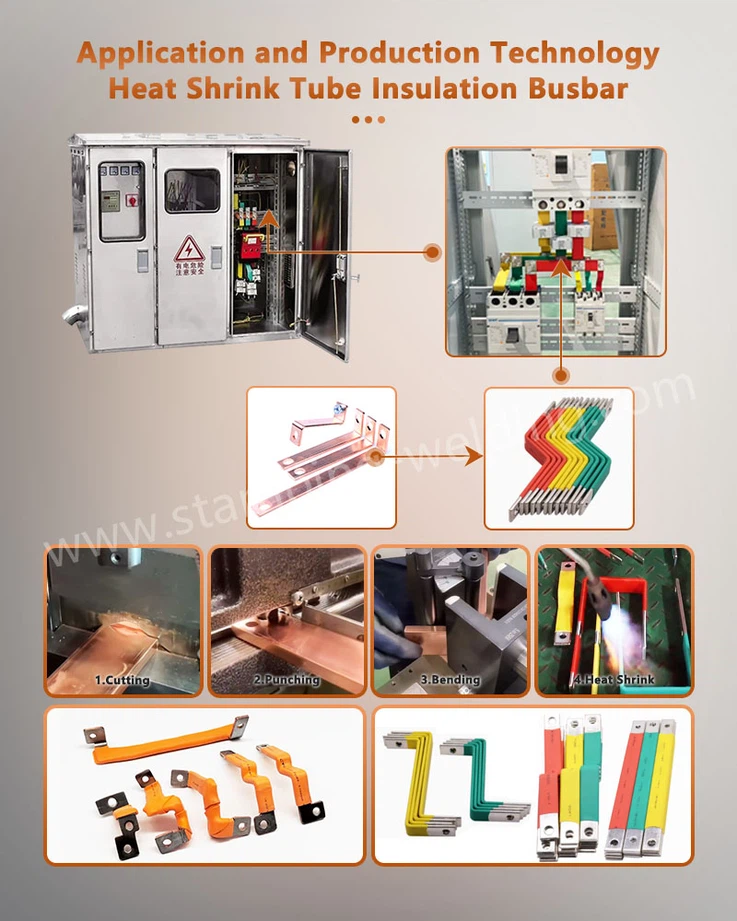
Although heat shrink tubes and busbar tubes are common protective materials in the electrical field, they are fundamentally different in terms of functional positioning, material composition, and application scenarios. Simply put, heat-shrinkable tubes focus on the insulation and sealing of cables, while busbar tubes are an insulation protection solution specially designed for busbar systems. Heat-shrinkable tubes and busbar tubes both play important roles in power and electrical applications, but there are clear distinctions between the two in terms of functions, materials, and usage scenarios. Heat shrink tube (Heat Shrink Tube) is usually made of polyolefin (Polyolefin) as the base material. It has the characteristics of shrinking when exposed to heat. It can be tightly wrapped around the outside of conductors such as cables and wires to achieve insulation, sealing and moisture-proof protection. Busbar Sleeves Insulation focuses more on the support and isolation of power equipment such as bus ducts and cable trays, and is often made of metal to improve mechanical strength.
Function positioning and working principle
Heat-shrinkable tube is a polymer material with "memory effect". It undergoes radiation cross-linking and expansion during the production process, and returns to its contracted state after being heated to a certain temperature. This characteristic allows it to be tightly wrapped in wires, cables or connections, playing the role of insulation, moisture-proof, sealing, anti-corrosion and stress relief. It is widely used in electronic wiring harnesses, cable joints and other scenarios.
In contrast, busbar tubes are insulation protection products specially designed for substation busbars and high/low voltage switch cabinet busbars. It is not only a simple insulation, but also focuses on solving the phase-to-phase insulation problem of the bus duct to prevent short circuit faults caused by the intrusion of small animals (such as mice and snakes) or the accidental contact of maintenance personnel with live objects. The application of busbar tubes helps shorten the distance between phases and adapts to the development trend of miniaturization of switch cabinets.
application scenarios
In practical applications, PVC Insulation Busbars are more common in low-voltage and refined scenarios such as consumer electronics, automotive wiring harnesses, and internal wiring of home appliances, where they are used to protect solder joints and wire insulation layers.
Busbar pipes are mainly active in high-voltage and high-current fields such as power transmission, rail transit, and substations. It is mainly used for the insulation protection of rectangular or tubular busbars and can withstand high voltage impacts to ensure the safe operation of power equipment. Although both are insulating protective materials, busbar tubes are usually larger in size to accommodate wide copper or aluminum busbars and are indispensable insulating components in power systems.
Material composition and physical properties
Ordinary heat shrink tubing is usually made of polyolefin or PVC, which has good flexibility, flame retardancy and insulation. Its material mainly focuses on shrinkage ratio (such as 2:1) and temperature resistance level (such as -55℃ to 105℃) to adapt to various irregular-shaped cable packages. Although the busbar tube is also a type of heat-shrinkable material, its material formula is more specialized and is usually made of special polyolefin resin to meet higher electrical performance requirements. The voltage resistance level of busbar tubes usually covers 1kV, 10kV or even 35kV, and the colors are mostly red, yellow, and green to distinguish the phases. It needs to have higher mechanical strength and chemical corrosion resistance to cope with the complex electromagnetic environment and physical environment in power transmission.
contact us
Our company focuses on providing high-quality PE Heat Shrink Tube Insulated Busbar solutions. Our products include busbar insulation sleeves and supporting heat-shrinkable materials suitable for different voltage levels and structural requirements. We support customized specifications to help customers improve the safety and reliability of electrical systems. Welcome to consult for more product details.