Analysis of the surface treatment process of Tinned Copper Flat bar in new energy high current applications
Apr 17, 2026
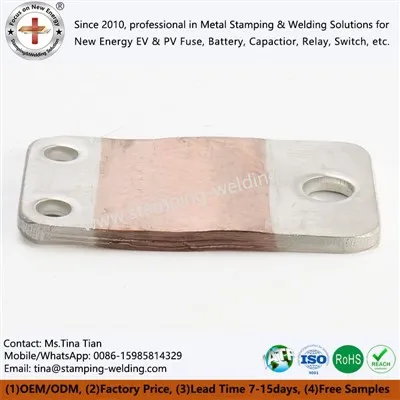
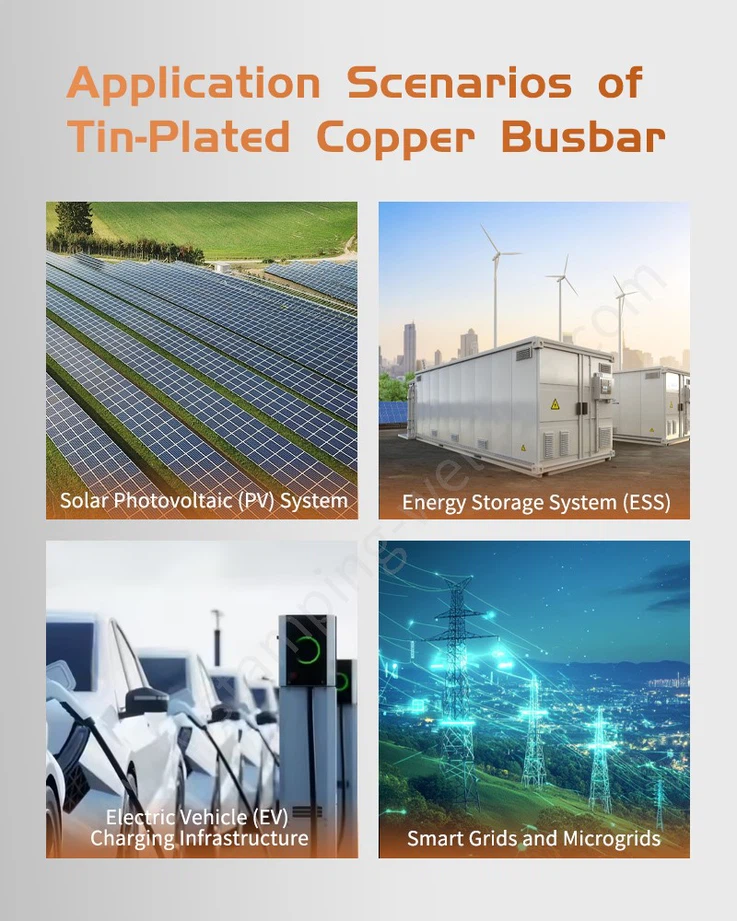
With the rapid iteration of new energy vehicles, smart grids and Internet of Things technologies, power transmission systems have increasingly stringent performance requirements for conductive components. In complex working conditions, traditional bare copper bars are no longer able to meet the requirements for long life and high stability. Therefore, surface coating technology has become the focus of the industry. As a mature protection method, Tin Plated Copper Busbar has become a core component in high-current connection solutions due to its excellent electrical performance and environmental adaptability.
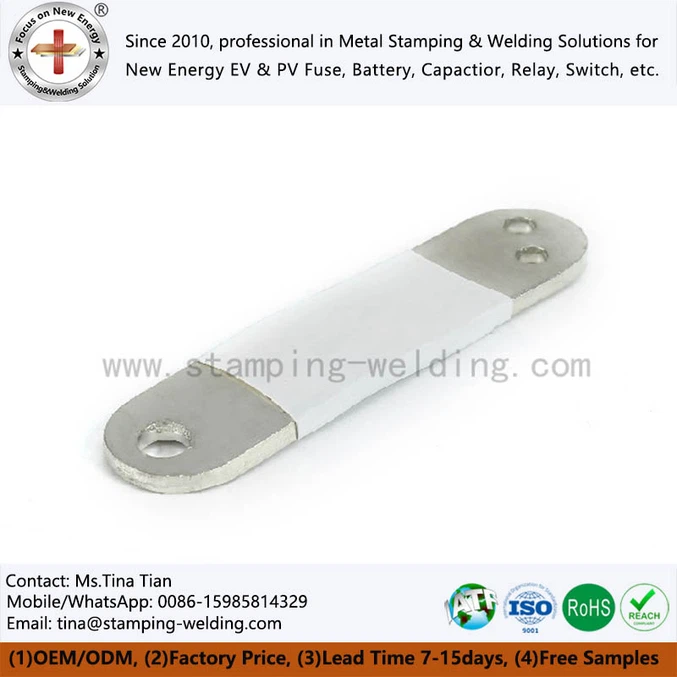
Core advantages: Why choose the tin plating process?
In large current transmission scenarios, copper bars not only carry out conductive tasks, but also need to deal with the challenges of oxidation and corrosion. Although the copper base material has high conductivity, it is easy to generate copper oxide when exposed to air, causing the contact resistance to increase. The use of Tin Coated Copper BusBar technology is equivalent to putting on a layer of "protective clothing" for the copper bus. The tin layer not only has excellent electrical conductivity, but the electrical conductivity of its oxide (SnO₂) is also much better than that of copper oxide, thus ensuring long-term low resistance of the contact surface.
In addition, heat dissipation and welding performance are also key considerations. The tin plating layer has an ideal thermal conductivity, which can effectively assist the contact surface in dissipating heat and prevent local overheating. Especially for connectors that need to be assembled, Tinned Copper BusBar suppliers usually recommend the matte tin process because its surface roughness is moderate, which can significantly improve wettability, achieve high-reliability welding joints, and avoid the risk of false soldering.
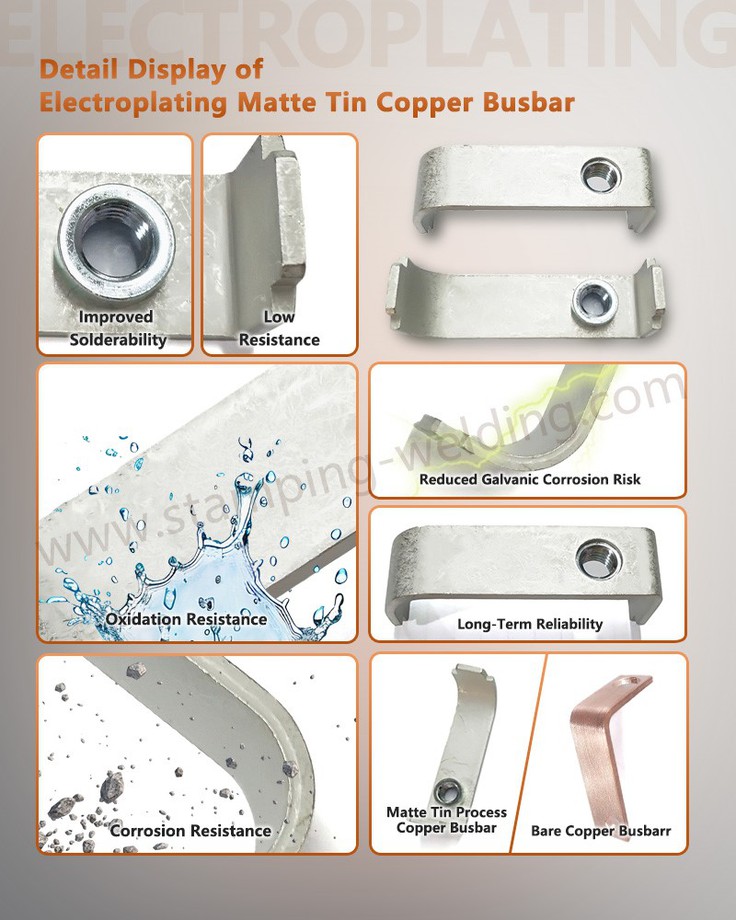
Process classification and application scenarios
According to the glossiness and crystal structure of the surface treatment, the coating is mainly divided into bright tin and matte tin (matte tin). Bright tin has a mirror-like appearance and strong anti-corrosion properties. It is often used for internal components of power distribution cabinets that have requirements on appearance. However, in high-end fields such as new energy vehicle power batteries, engineers prefer matte tin. This is because bright tin has the risk of growing "tin whiskers" under certain conditions, which may lead to micro short circuits; while matte tin has a thicker grain structure and low internal stress, which can effectively inhibit the growth of tin whiskers and is the first choice for Flat Copper BusBar in vibration and high temperature environments.
Another common process is hot-dip tin plating, which is characterized by a thicker coating, usually greater than 25 microns. This process is particularly suitable for special-shaped parts with complex shapes and can provide an extremely thick protective barrier. Although its dimensional accuracy is more difficult to control than electroplating, the hot-dip plating solution of Tin Plated Copper Bar can often provide longer-term protection when facing strong corrosive environments.
Quality control and substrate selection
High-quality coatings are inseparable from high-quality substrates. The industry generally recommends using C110 or T2 grade pure copper as the base material, with a copper content of over 99.9% and excellent electrical conductivity and formability. During the production process, in order to prevent the diffusion of copper atoms into the tin layer, resulting in a decrease in welding performance, some high-standard Tinned Copper BusBars will add an extremely thin layer of nickel as a bottom layer between copper and tin to form a "copper-nickel-tin" sandwich structure.
The quality control aspect cannot be ignored either. In addition to conventional thickness testing (such as X-ray fluorescence spectrometry), bonding force testing is also a must. Through the 180-degree bend test or thermal shock test, it is ensured that the coating will not peel off when the copper bar is deformed or the temperature changes drastically. This strict quality control process is the guarantee that the HDHC tinned copper busbar (high hardness and high conductivity tinned copper busbar) can adapt to harsh working conditions.
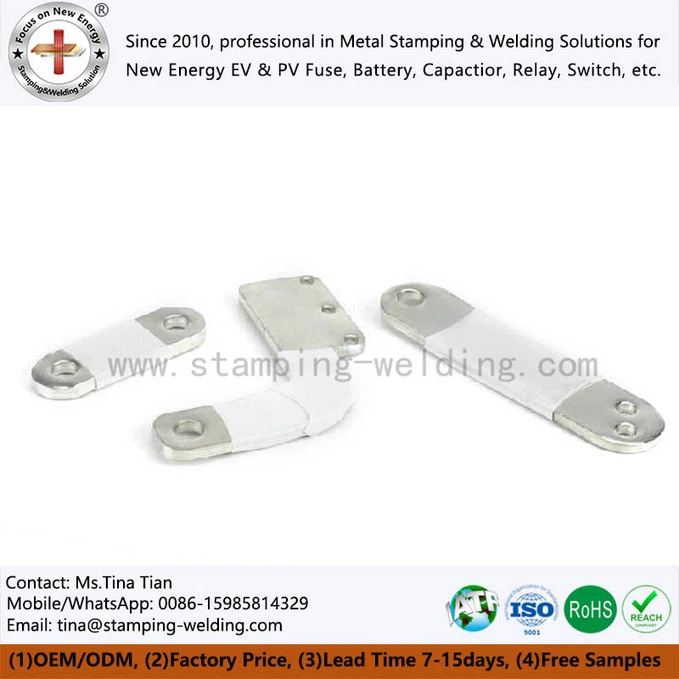
contact us
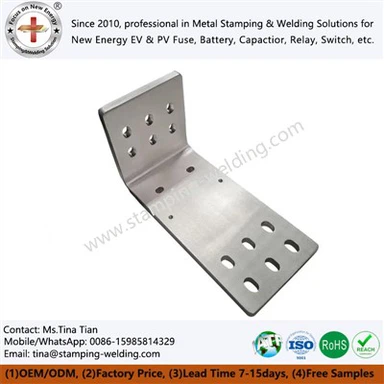
We specialize in providing high-performance electrical connection solutions. In response to the demand for high-reliability, high-current connections in the fields of new energy, data centers, and industrial power, we can supply a variety of specifications of Tinned Copper Flat bar. Welcome to contact us to obtain professional product selection and technical support.