Detailed explanation of Sheet metal brass stamping performance
Mar 25, 2026
Material characteristics and application scenarios of brass
Brass is an alloy mainly composed of copper and zinc, with copper content usually between 60% and 95%. Some grades contain small amounts of trace elements to optimize performance. Sheet metal brass stamping has excellent formability, conductivity, thermal conductivity, and corrosion resistance, as well as moderate hardness and toughness, making it suitable for industrial use in various fields. Therefore, it is widely used in electronic and electrical components, building decoration hardware, sanitary ware, and various automotive parts.

Advantages and limitations of Brass precision stamping parts
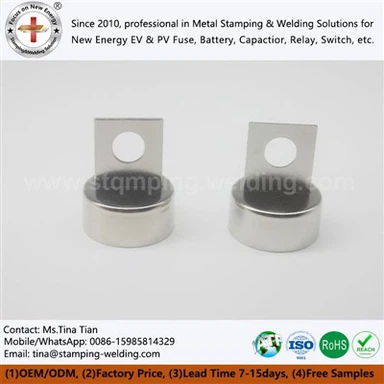
Brass has good plasticity and excellent formability. It is easy to bend, stretch, and punch in the stamping process of Sheet metal brass stamping, and can stably manufacture high-precision structural parts. It is an ideal material for producing precision spring plates and bearing parts. However, due to the characteristics of the material itself, brass stamping also has obvious shortcomings: the overall hardness of the material is low, and the surface of the Electrical brass press parts for switch socket is prone to indentation and burn marks during the stamping process. It may also deform and crack under high temperature conditions, which puts high demands on process control.

Factors affecting the price of Electrical copper busbars
The quality of Electrical brass metal stamping for socket switch is constrained by multiple conditions, among which material composition and hardness are the basis. Different copper zinc ratios will directly determine the plasticity, rebound characteristics, and stamping adaptability of the material. The structure and material of the mold are equally crucial, and a reasonable mold design can effectively reduce burrs, strains, and dimensional deviations. In addition, process parameters such as stamping speed, cutting pressure, and punch specifications can significantly affect the forming accuracy and surface appearance of Brass metal stamping parts electrical accessories components.
Process optimization and quality control
To improve the quality of Electrical brass switch socket parts, process optimization needs to be carried out from multiple aspects.
Firstly, the mold structure design should be combined with the characteristics of brass to improve dimensional accuracy and surface quality from the source.
Secondly, it is necessary to control the stamping speed and forming pressure reasonably to avoid material overheating, burns, and excessive deformation.
In the production of Electrical contact stamping brass parts custom, suitable cooling methods and specialized lubricants can be used to further improve the molding effect. At the same time, regular maintenance of equipment and molds is required to promptly address wear and deformation issues. By fine-tuning material composition and matching process parameters, the stamping stability of brass can be continuously improved.

contact us
If you have any technical questions or practical needs regarding Sheet metal brass stamping process optimization or component development, please feel free to communicate with us at any time. We can provide professional process solutions and customized processing support to solve practical problems in production for you.