Analysis of core knowledge and selection guide for Precision copper stamped parts
Mar 24, 2026
Core advantages of industrial grade pure copper
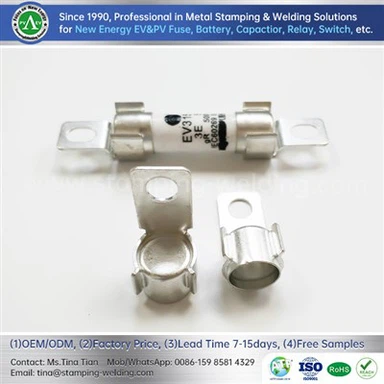
T2 copper is the core category of industrial grade pure copper, which is fundamentally different from ordinary brass and miscellaneous copper. The core advantage of Precision copper stamped parts lies in its extremely high purity and excellent conductivity. According to the national standard GB/T 5231, the copper purity of T2 purple copper is not less than 99.90%, and the content of impurity elements such as iron, lead, and arsenic is extremely low, which makes its conductivity close to 60MS/m (international standard), and it is at a leading level among various copper materials.
Compared to ordinary copper materials, T2 purple copper has lower impurity content and more stable conductivity, which can effectively reduce heat loss during current transmission. At the same time, Copper sheet stamping has good oxidation resistance, avoiding the impact of oxidation and rust on equipment operation stability during long-term use; However, ordinary copper materials may experience a 10% -20% decrease in conductivity due to doping with other metals, and long-term use can lead to serious heating, oxidation aging, and other problems.

Tin plating process and stamping process: key combination for improving performance
The performance optimization of the Precision copper stamped parts cannot be achieved without the synergistic effect of tin plating process and precision stamping process. The tin plating process is not simply about improving the appearance gloss. The core value of Copper spring contact is reflected in three aspects:
One is to prevent oxidation. The tin layer can effectively isolate air from contact with the copper substrate, avoiding the formation of basic copper carbonate (copper green) on the copper surface and significantly extending the product's service life.
The second is to enhance weldability, with a low melting point and smooth surface of the tin layer, suitable for high-precision connection processes such as laser welding and resistance welding, which can effectively avoid hidden dangers such as virtual soldering and poor contact.
The third is stable conductivity. Even if the tin layer is locally oxidized, the conductivity of Copper stamping processing connecting is still much better than that of copper oxide, ensuring continuous and stable current transmission. The precision stamping process is the core of realizing the irregular structure of T2 copper parts. Through specialized precision molds formed under high pressure, complex structures such as U-shaped, L-shaped, and perforated arrays can be processed. Compared with cutting and casting processes, stamping parts have precise dimensions, smooth surfaces, and no burrs, which is not only convenient for assembly, but also improves material utilization and reduces production costs.
Core indicators for selection: Avoiding selection traps
As the core conductive connector for energy storage systems, charging stations, and other equipment, the selection of Cross copper metal stamping should focus on three key indicators to ensure it meets the operational needs of the equipment.
One is the cross-sectional area, which directly determines the current carrying capacity of the copper busbar. When selecting, a margin of 1.2-1.5 times the maximum operating current of the equipment should be reserved. For example, when the peak current of the system is 500A, it is recommended to use T2 copper busbar with a cross-sectional area of not less than 80mm ². In practical applications, the starting specification is often 100mm ².
The second is the thickness of tin plating. The mainstream thickness of tin plating in the industry is 10-30 μ m. If the thickness is too thin, it is easy to peel off, and if it is too thick, it increases the cost. High quality Copper pressed components usually provide X-ray inspection reports to ensure that the tin layer is uniform and free of missing plating.
The third is the precision and positional tolerance of drilling. For bolt connections, the error of the hole position should be controlled within ± 0.1mm. If the precision is not up to standard, it may lead to loose fastening, increased contact resistance, and serious safety hazards such as local overheating and fire.
Application scenarios and adaptation scope
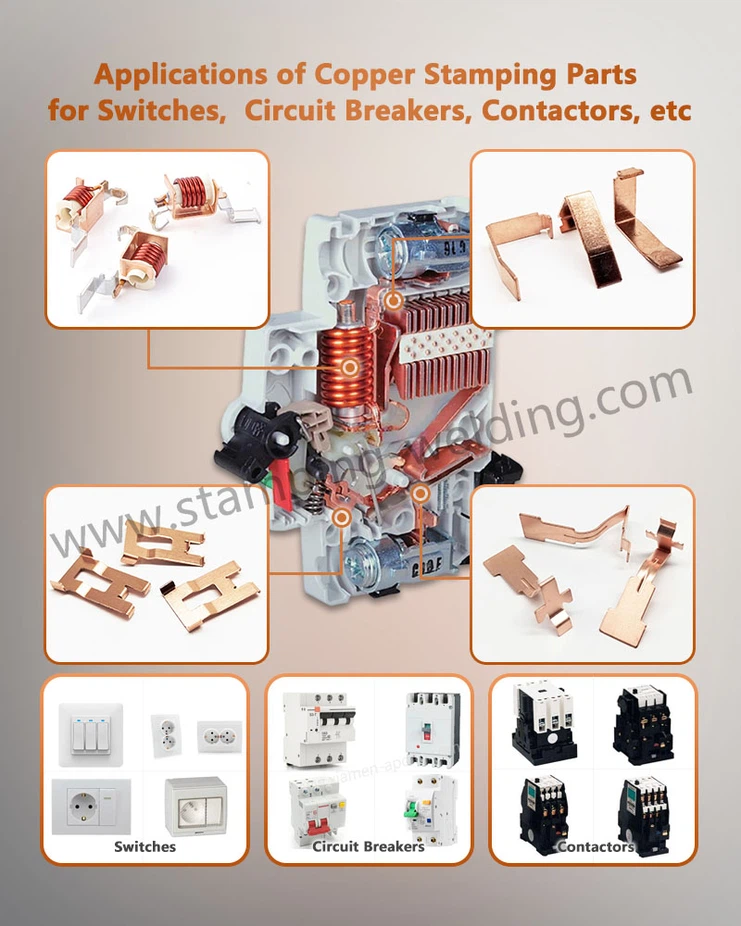
Copper pressed stamped parts contacts are widely used in high reliability and high current demand scenarios due to their excellent conductivity, stability, and processing adaptability. They mainly include busbar connections for energy storage power stations, household light storage integrated machines, industrial and commercial energy storage cabinets, high current conductive components for charging piles (DC fast charging piles), UPS power supplies in data centers, internal busbars in high-voltage distribution cabinets, and connection bridges between new energy vehicle battery pack modules.
Custom metal brackets spring is not suitable for low-power devices with extremely low budgets, only used for temporary power on, and non critical circuits with low environmental requirements and no need for long-term stable operation. It should be noted that in high-density and high reliability power systems, selecting high-quality T2 copper stamping parts is the key to ensuring the safe and long-term operation of equipment. Blindly selecting ordinary copper bars to save costs may lead to shortened equipment life and even cause safety accidents.
contact us
If you have any questions about Precision copper stamped parts selection, process adaptation, or have bulk procurement or customization needs, please feel free to communicate with us at any time. We will provide professional product recommendations and precise solutions based on your application scenario, helping you efficiently select and avoid risks.