Precision Sheet metal brass stamping: characteristics, processes, applications, and surface treatment
Mar 25, 2026
Core characteristics of brass material
Brass is a commonly used alloy mainly composed of copper and zinc. With excellent strength, corrosion resistance, and outstanding machinability, it has become the preferred material for many industries. The unique golden luster of Sheet metal brass stamping combines practicality and decoration, while also possessing the advantages of high temperature resistance and oxidation resistance, making it suitable for stamping processing scenarios with strict requirements for precision and durability.
Specifically, the core characteristics of brass cover multiple aspects: outstanding corrosion resistance, especially suitable for outdoor or high humidity environments such as marine and industrial environments; Excellent tensile strength, able to withstand external forces without deformation; Brass custom stamping parts with strong extensibility and plasticity, easy to process into complex structures, are ideal substrates for stamping processes; Simultaneously possessing good electrical and thermal conductivity, suitable for manufacturing electrical and electronic components; The low friction characteristics make it suitable for components such as gears and bearings, with strong machinability and the ability to be drawn into wires or thin sheets, further enhancing its diversity of applications.
Sheet metal brass stamping process definition and core operations
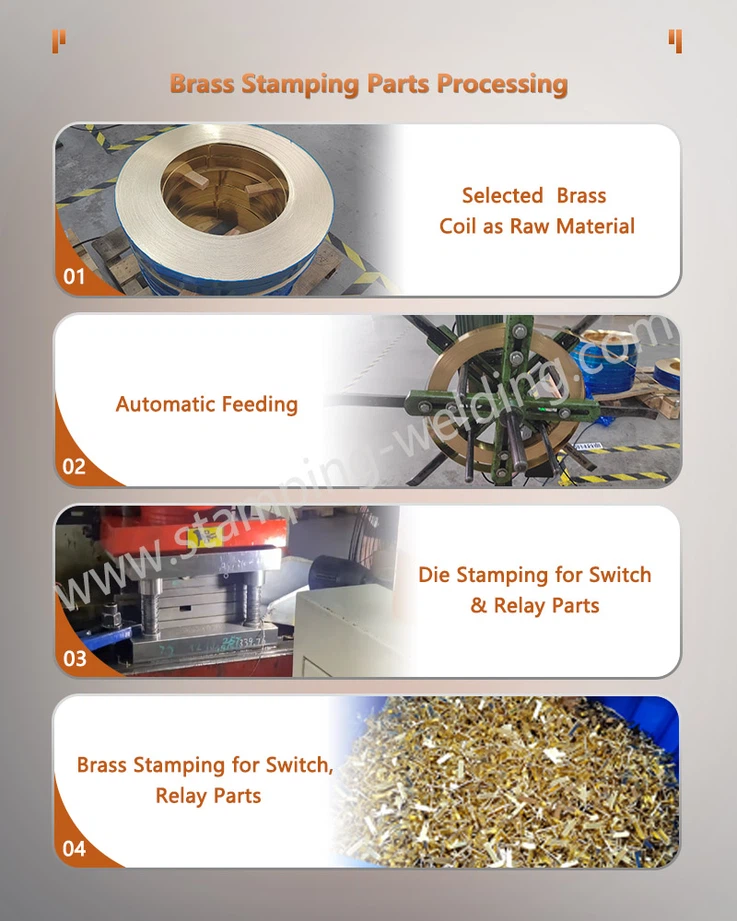
Stamping of Electrical brass press parts is an efficient metal forming manufacturing process that utilizes high voltage and specialized molds to shape or cut brass sheets, ultimately obtaining predetermined shapes and sizes of components. This process is particularly suitable for mass production of complex and fine brass components, effectively ensuring dimensional consistency and accuracy of products in the same batch.
The common stamping operations for Electrical brass metal stamping for socket switches mainly include five types: blanking is cutting a flat blank from the entire brass plate as the basis for subsequent stamping processes, and the shape of the blank is determined by the mold design; Bending is the process of applying external force to a brass plate through a bending machine, causing it to deform along a straight line and form an angle or curve.
It is commonly used in the manufacturing of complex shapes such as brackets and panels; Forming is a general term for processing brass sheets into three-dimensional complex structures, including stretching, compression, and other operations, which can be used to make structural components such as deep drawn cups and trays; Punching is the use of a punching machine and punch to create clean holes or grooves on a brass plate, which can be synchronized with the material cutting process; Embossing is the process of pressing fine patterns, logos, text, or textures onto the surface of brass under high pressure to enhance product recognition and functionality.
The main application areas of precision brass stamping
Based on the comprehensive performance of brass and the advantages of stamping technology, Brass metal stamping parts electrical accessories components have a wide range of application scenarios, covering multiple industries.
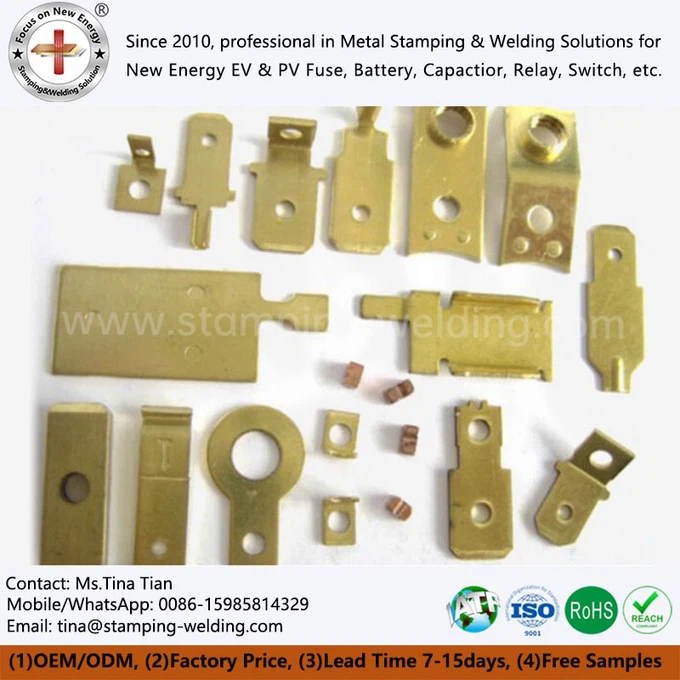
In the electrical field, due to their good conductivity and corrosion resistance, they are commonly used in the manufacturing of electrical components such as connectors, terminals, switches, etc; In the automotive industry, various types of automotive components such as connectors and fasteners can be produced to meet the assembly needs of automobiles; In the field of bathroom, the water resistance and corrosion resistance of brass make it a popular choice for faucets, valves, and pipe fittings; In the field of musical instrument manufacturing, brass's ductility and excellent acoustic properties can be utilized to produce brass instrument components such as trumpet, saxophone, trombone, etc.
In addition, the Electrical brass switch socket part is widely used in the decoration field, with its golden luster suitable for jewelry, hardware, home decoration and other products; In currency and medal casting, it combines aesthetics and durability; In the industrial field, it is used to manufacture parts such as bushings, bearings, and washers with low friction characteristics; In the field of shipbuilding, due to its excellent resistance to seawater corrosion, it can produce marine hardware such as ship accessories, propellers, fasteners, etc; In the field of security, its durability and wear resistance are suitable for stamping lock components and keys.

Surface treatment of stamped parts
The surface treatment of Electrical contact stamping brass parts custom not only enhances the appearance and texture of the product, but also enhances its durability and adaptability, extending its service life.
Common surface treatment methods have their own focuses: polishing treatment can make the brass surface appear shiny and reflective, enhancing its aesthetic appeal; Brushing treatment can give the surface a delicate texture while effectively reducing fingerprint residue; Antique veneers can create a vintage style that is suitable for specific decorative needs; Nickel plating treatment not only enhances the corrosion resistance of Brass precision stamping parts, but also presents a smooth silver appearance, expanding application scenarios.
Transparent coating is mainly used to prevent brass components from oxidizing and losing their luster, maintaining their original color, especially suitable for decorative and electrical parts with high appearance requirements. Reasonable selection of surface treatment methods can further optimize the performance of brass stamping parts and adapt to the usage needs of different industries.
Contact us
Whether you need Sheet metal brass stamping with standard specifications or customized processing solutions for specific scenarios, we can provide professional support. Welcome to communicate your needs at any time, and we will match you with precise processes and products to assist in efficient production.