Detailed explanation of the basic knowledge of Industrial PLC cabinet
Apr 21, 2026
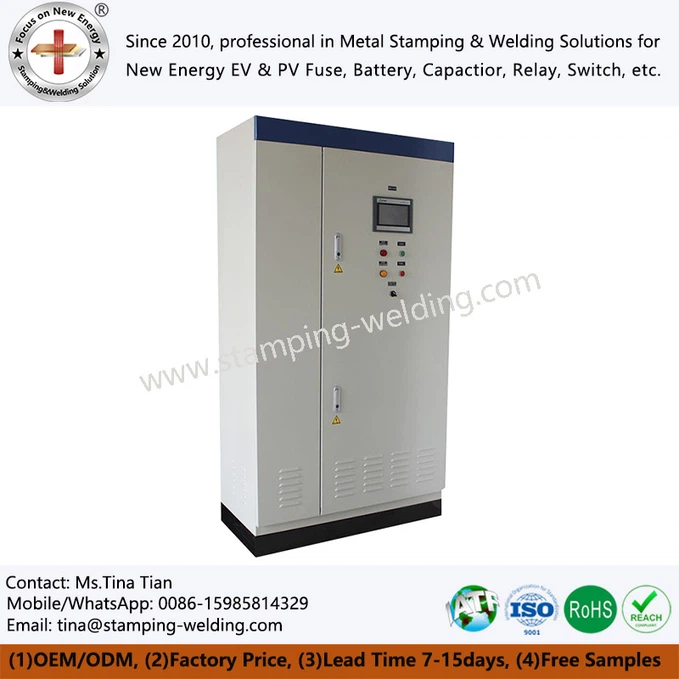
Programmable logic controller cabinet refers to a complete control cabinet that can realize electrical control of motors, switches and other equipment. The equipment has overload, short circuit, phase loss protection and other functions, and has the characteristics of compact structure, stable operation and complete functions. In practical applications, it can be combined according to the size of the control. It can not only realize single cabinet automatic control, but also form a distributed control system (DSC) through industrial Ethernet or industrial field bus network to adapt to industrial automation control situations of different scales. It is widely used in electric power, metallurgy, chemical industry, papermaking, environmental protection, sewage treatment and other industries.
core structure
A standard control cabinet usually contains the following key parts: Air switch (air switch): As the total power control of the entire cabinet, it is an essential component of each cabinet. Programmable logic controller: Select according to engineering needs. Small projects can use integrated PLCs, while large projects may require modular or PLC panels, or even redundant systems (two sets used alternately) to improve reliability. 24VDC power supply: Most PLCs come with a 24VDC power supply, but depending on the actual load, an additional switching power supply may be required. Relay: used for signal relay. For example, when the PLC output port is 24VDC and the control loop requires a 220VAC node, it needs to be converted through a relay. Terminal blocks: used to connect signal lines inside and outside the cabinet. The number is configured according to the number of signal points. If the Custom PLC cabinet also needs to supply power to other instruments or host computers, it may be necessary to add circuit breakers or switches and other equipment.
Working principle
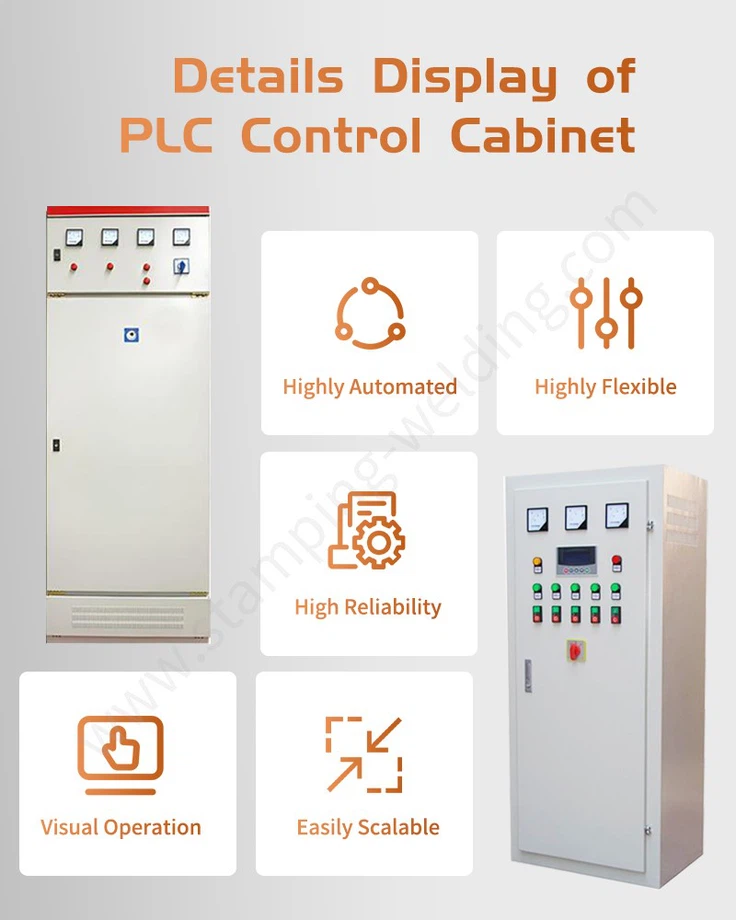
After the PLC is put into operation, the Dustproof PLC cabinet working process is divided into three stages, which are: Input sampling stage: PLC sequentially reads all input status and data in scanning mode and stores them in the I/O image area. During this period, even if the input status changes, the data in the image area will not change until the next cycle. User program execution stage: PLC scans the ladder diagram in the order of "top to bottom, from left to right". According to the logical operation result, the status of the corresponding bit in the system RAM is refreshed. Output refresh stage: After the program execution is completed, the CPU refreshes all output latch circuits according to the status in the I/O image area and drives the peripherals. This is the real output moment of the PLC.
Main features and typical applications
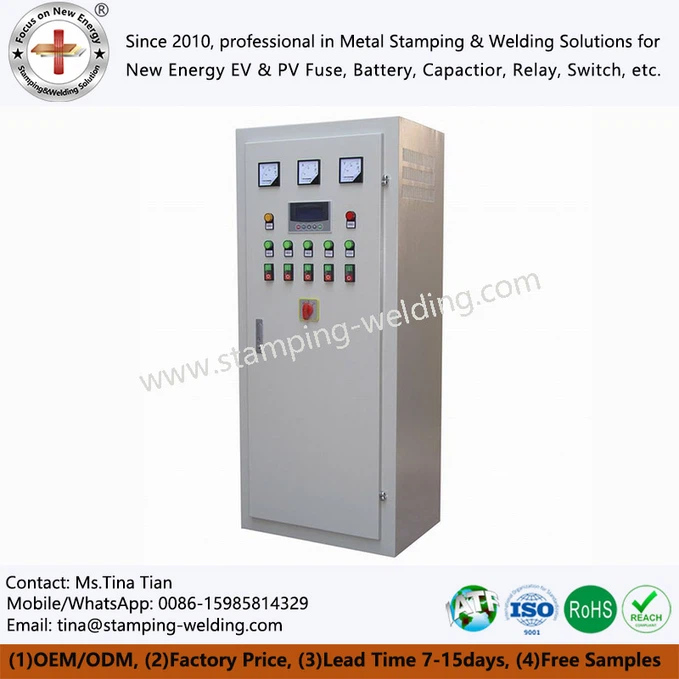
The stainless steel PLC cabinet has the characteristics of flexible system structure, easy expansion, strong anti-interference ability and high reliability. It uses simple programming languages such as ladder diagrams, can be developed without deep computer knowledge, and supports online modification of programs.
Typical application industries include electric power, metallurgy, chemical industry, papermaking, environmental protection, sewage treatment, etc. Specific equipment applications include constant pressure water supply, air compressors, fans and pumps, central air conditioners, port machinery, machine tools, boilers and food machinery, etc.

contact us
We provide a full range of Industrial PLC cabinet and support modular customization. The cabinet can be made of stainless steel or spray-coated to adapt to different environmental needs. From control panels to complete system integration, we can all be professionally designed and manufactured according to your process flow and site conditions to help achieve stable and reliable automation control. Welcome to consult and provide you with more detailed solutions and services.