Development and industry trends of sheet metal and Electrical brass switch socket part processes in the context of high-end manufacturing
Apr 30, 2026
Background and Application Value of Technological Development
Driven by the trend of miniaturization of electronic devices and electrification of new energy vehicles, sheet metal and Electrical brass switch socket parts have become indispensable core forming technologies in high-end manufacturing due to their high production efficiency and stable product performance, providing solid process support for core components in various fields.
Brass sheet metal stamping commonly uses brass sheets or strips with specifications ranging from 0.1mm to 3.0mm as raw materials. With the help of precision stamping molds, cold working forming processes such as cutting, bending, and stretching are completed, allowing for mass production of precision parts with specific geometric structures and functional properties. Relying on the excellent conductivity, thermal conductivity, corrosion resistance, and cold forming performance of brass itself, this process is widely used in various high-end industrial scenarios that require strict product accuracy, stability, and service life.

Brass stamping material selection system and material advantages
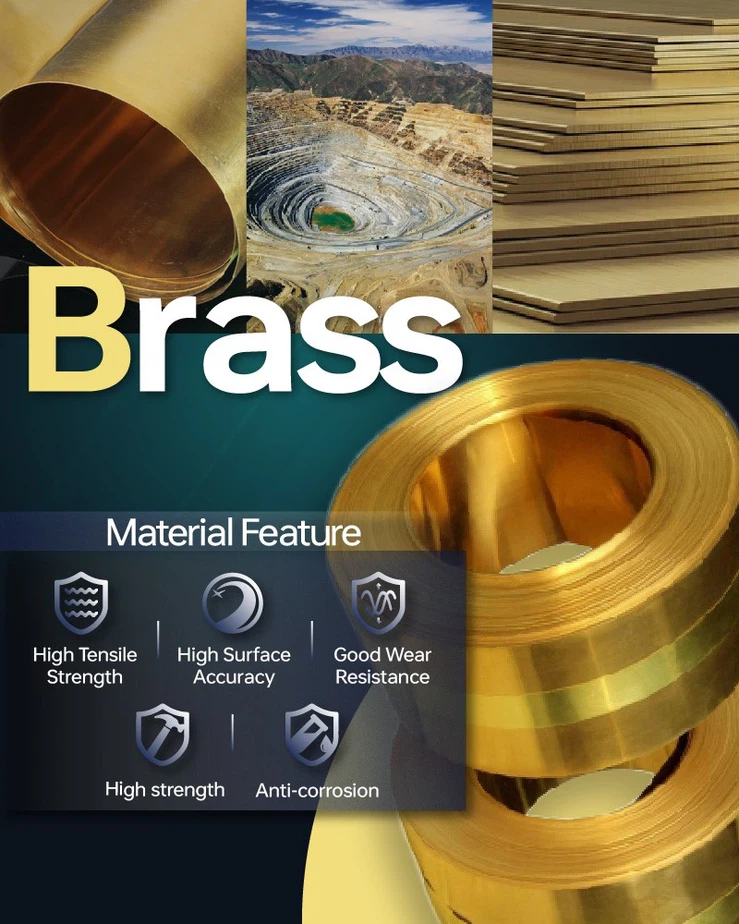
The Electrical brass switch socket part has a mature and diverse material selection system, based on mainstream brass grades such as H62, H65, C26000, etc., which can adapt to different working conditions and precision stamping processing needs.
Different materials have differentiated performance characteristics and can be accurately matched with processing technology: C26000 brass has outstanding ductility and is suitable for Customized brass stamping contact parts for wall socket plugs with complex structures and multiple bending and stretching processes; C28000 has excellent resistance to seawater corrosion and can meet the requirements of special working conditions and marine environments. High quality raw materials can maintain continuous distribution of metal fibers during the stamping process, effectively avoiding stress concentration problems, reducing material loss, and ensuring uniform mechanical properties and intact surface quality of bulk products.
Process characteristics and key technology control
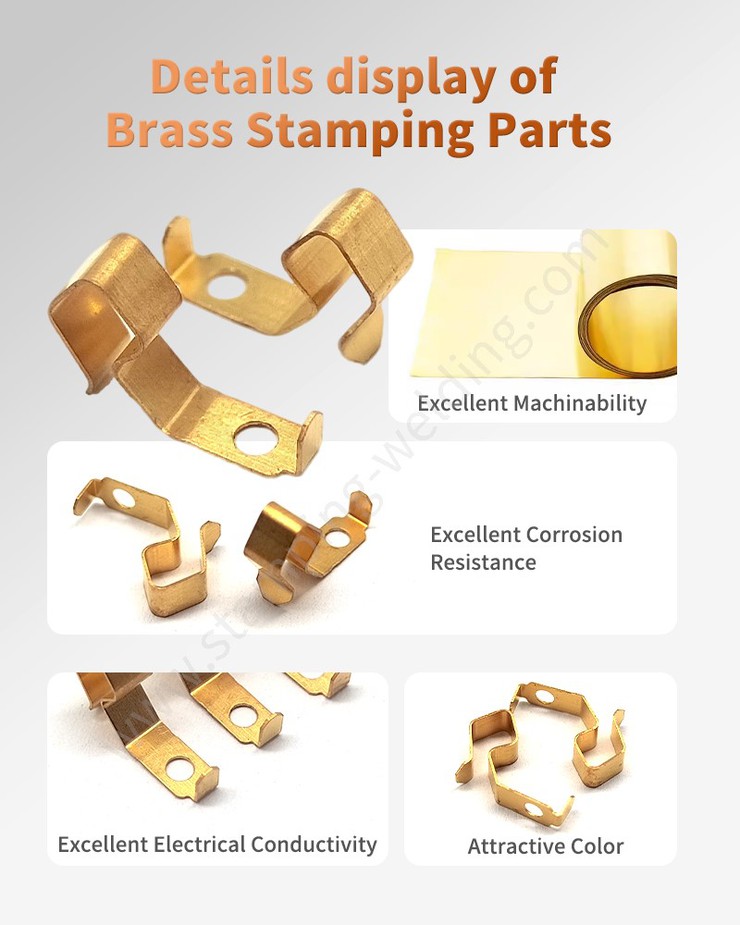
Compared to traditional machining methods, the material utilization rate of Electrical brass press parts for switch sockets can reach over 85%, providing comprehensive advantages in cost, efficiency, and size consistency in large-scale production. Compared to casting processes, stamping can prevent internal material defects such as porosity and shrinkage from the root, making it particularly suitable for manufacturing various thin-walled precision structural components.
However, brass stamping requires strict requirements for mold structure design and production process control, requiring precise solutions to common molding problems such as springback, burrs, cracking, and surface oxidation. In actual production, the gap between the Electrical brass metal stamping for socket switch molds is usually set to 5% -8% of the plate thickness, the bending radius is controlled at 0.5 times or more the material thickness, and the feeding direction is planned to match the brass strip rolling texture to stabilize the forming quality. At the same time, the innovative application of various composite stamping processes has further expanded the applicable scenarios of brass sheet metal stamping.
The mainstream trend of industry development
There are three obvious trends in the current industry development: continuous upgrading of environmental policies, promoting rapid growth in demand for lead-free brass, gradually becoming the mainstream material selection direction that meets environmental standards; The integrated upgrade of Cold stamping brass for switch function drives the development and implementation of special brass alloys and composite metal materials, further expanding their application boundaries in high-end intelligent equipment;
The Brass sheet metal parts terminal industry is synchronously promoting green recycling and refined production management models, relying on full process digital control to improve the recycling and utilization rate of waste brass, ensuring stable performance of recycled materials, and achieving energy-saving and sustainable development in the manufacturing process.

contact us
If you have material selection, process optimization, and precision component customization needs for Electrical brass switch socket parts, please feel free to consult and communicate at any time. We can provide you with professional technical selection suggestions and mature process support to help ensure the stable implementation of high-end manufacturing projects.