From basic principles to industrial applications: analysis of battery bus bar technology
May 06, 2026
Basic concepts
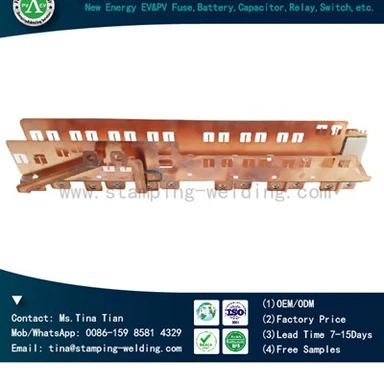
Copper BusBar for Siemens is a conductive component composed of metal rods, strips, or tubes, used to conduct current safely and efficiently between different devices or systems while minimizing energy loss. It has obvious advantages in scenarios with high current, high voltage or limited space. Normally, electrical busbars are non-insulated to improve convection heat dissipation performance and facilitate later expansion connections. For different application environments, engineers need to strike a balance between conductive performance, thermal management, structural stiffness, installation method and cost, which makes multiphysics simulation particularly important in busbar design.

Classification and technical characteristics
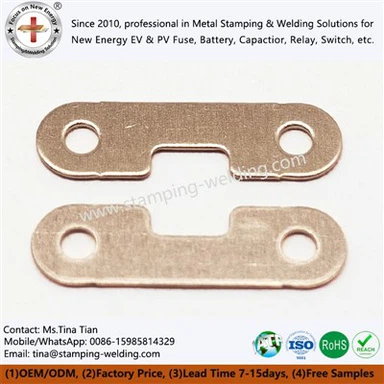
Classification by material. Copper busbar: second only to silver in electrical conductivity, suitable for high-demand scenarios. Often plated with tin, nickel or silver to improve corrosion resistance. Aluminum busbar: lightweight, low cost, mostly used in weight-sensitive systems, such as aerospace and new energy vehicles.
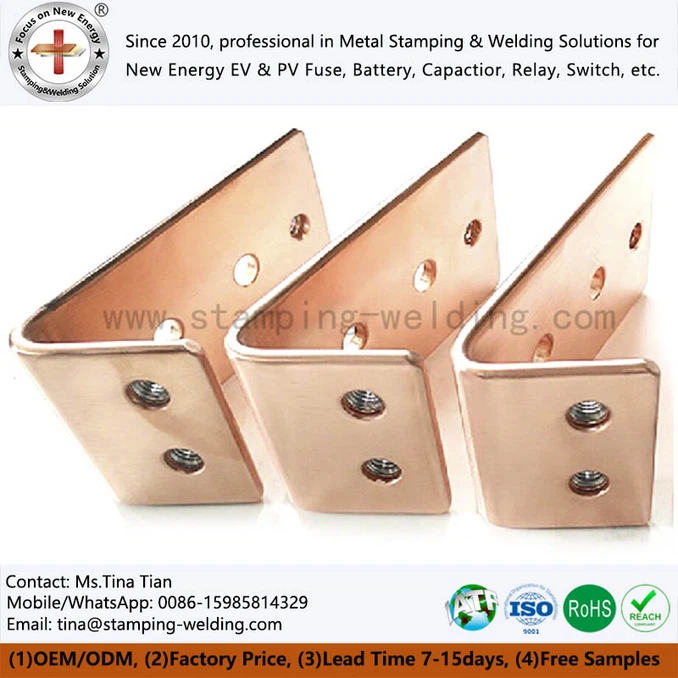
Classify by shape. Rigid busbar (flat): the most common, can be customized in curved shapes as required. Special cross-section bus bars: such as "U", "T" and "L" shapes, provide higher stiffness and more connection methods. Laminated or flexible busbar: composed of multiple layers of metal foil to increase surface area and flexibility. Circular busbar: solid or hollow cylindrical, suitable for occasions with high current and high stiffness requirements.
Classification by current-carrying type. Single-phase bus: including live and neutral circuits. Three-phase busbar: Contains three phase conductors and a neutral conductor, widely used in industrial and commercial power systems. DC bus: specially designed for DC system transmission.

Advantages
Simplified power distribution structure: centralized layout reduces wiring complexity and facilitates maintenance. Strong geometric adaptability: the shape can be customized according to the installation environment. Convenient connection: just touch the surface of the busbar to draw out the power. High space utilization: A thin structure is suitable for narrow environments. High stiffness: Reduces the need for support structures and is suitable for long-distance deployment. Good economy: Material and installation costs are lower than cable solutions with the same performance. Strong sustainability: Copper and aluminum materials are easy to recycle and reuse.
Typical application scenarios
In industrial and energy systems, the application of electrical busbars covers all aspects from power transmission and distribution to terminal equipment. Power switchgear: In substations or power plants, electrical busbars are used to connect transformers, circuit breakers, fuses and industrial machinery to undertake the functions of power distribution and isolation. Bus duct system: The electrical bus bars are arranged in long-distance power transmission channels through metal shells or resin encapsulation, and are widely used in building power supply and large infrastructure.
Distribution board: Divides the main power supply into multiple independent branches to achieve power distribution within the building. Battery power distribution: In electric vehicles and energy storage systems, electrical busbars have become a key component for connecting battery modules due to their structural rigidity and thinness. In some scenarios, aluminum busbars are used to reduce weight. Renewable energy systems: In photovoltaic, wind power, and hydropower equipment, electrical busbars provide high-efficiency, high-reliability power transmission paths.
From the main power supply to internal subsystems, the electrical busbar is responsible for a stable power supply and reducing line losses. Electronic equipment: In power electronic devices, the compact structure and high thermal conductivity of electrical busbars make them a preferred solution for space constraints and thermal management.

contact us
Our company provides professional engineering support from busbar material selection to system integration. We are familiar with copper and aluminum properties, shape optimization and insulation methods, and can assist with structural stiffness assessment, thermal management verification and battery bus bar planning. If you need to configure a reliable busbar solution for specific equipment, please contact our technical team for customized suggestions.