Full analysis of Power battery cell, cover and innovative design
Apr 21, 2026
Market background and core position of Power battery cells
Lithium-ion batteries play key roles in battery systems, including energy transfer, electrolyte carrying, safety protection, battery fixation and support, and external packaging. The rationality of their design directly determines the safety, airtightness, and energy efficiency of lithium batteries. From the perspective of market development trends, the market size of China's lithium battery structural components will reach 52.6 billion yuan in 2024, a year-on-year increase of 86.2%.
Among them, Lifepo4 power cell structural components have long dominated the market, accounting for 90.7%, while cylindrical battery structural components only account for 9.3%. The formation of this market pattern is mainly due to the rapid development of the new energy vehicle market, which has driven the expansion of production capacity and the increase in single order volume of power battery enterprises.
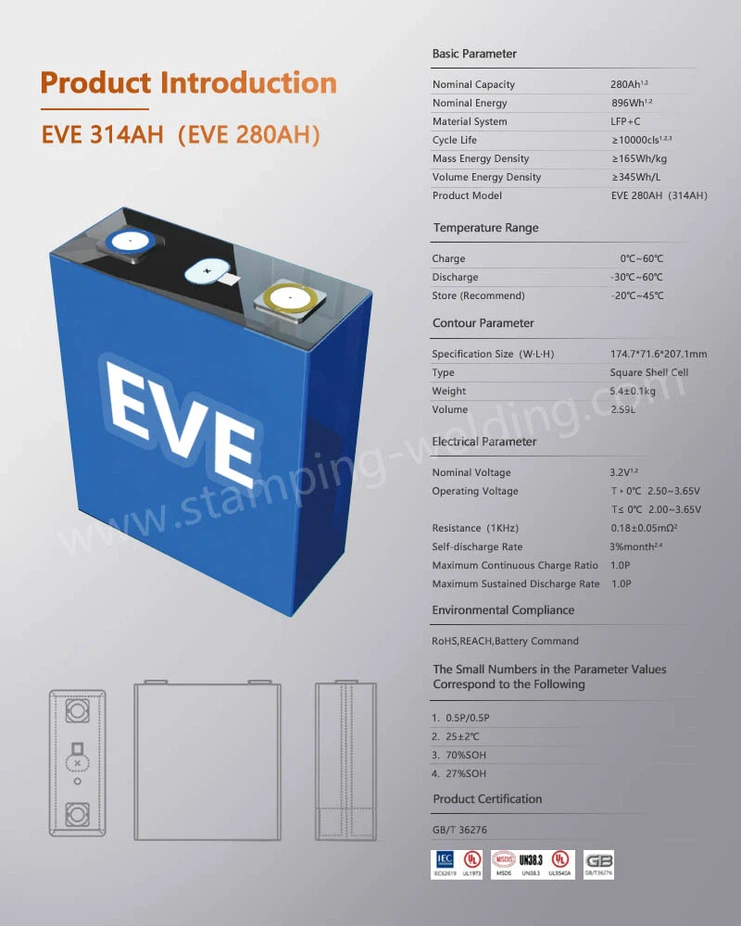
The lithium batteries structure is more suitable for large-scale production needs and has significant industrialization advantages. Lithium-ion battery cells are composed of two core parts: the outer shell and the cover plate, which have significant differences in manufacturing process complexity, but together form the structural foundation of the battery unit.
Basic protection and load-bearing core
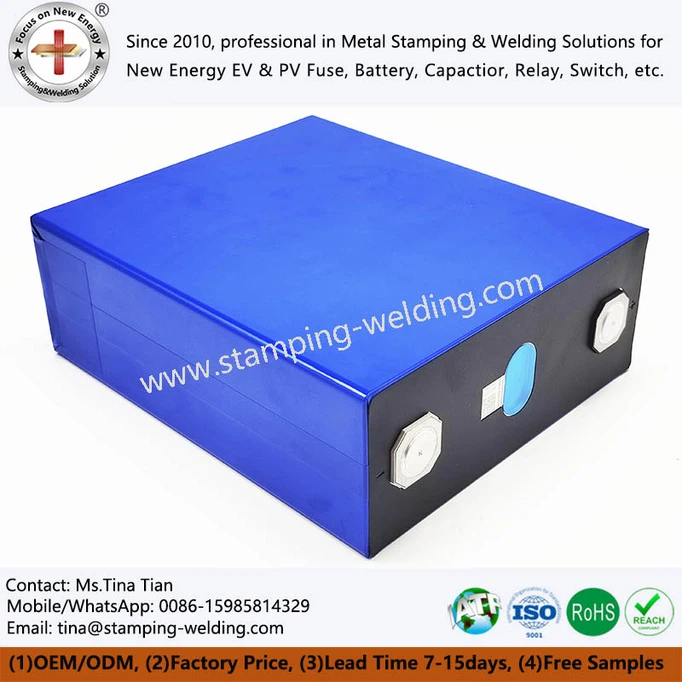
As a fundamental component of the Power battery cell structure, the casing plays a core role in battery fixation, safety protection, sealing assurance, and heat dissipation regulation. The outer shell is a full lifecycle isolation barrier between the active materials inside the battery and the external environment, providing a stable fixed structure for the internal electrochemical system and ensuring the structural stability of Lithium superpack batteries in various application environments.
On the protection level, the shell can withstand a certain strength of mechanical impact, avoiding external damage to the internal structure of the battery unit; Its sealing performance directly ensures that the electrolyte does not leak and maintains the normal working state of the battery.
At the same time, the casing also has a heat dissipation function, which can timely dissipate the heat generated during the operation of the battery, thereby improving the safety and service life of the Solar energy storage systems lithium batteries pack. The production of the shell requires multiple processes including raw material cutting, precision continuous stretching, incision processing, cleaning, drying, and testing.
Among them, precision continuous stretching is the core difficulty, and it is necessary to strictly ensure the uniformity of the shell wall thickness to avoid fracture problems during the processing. Compared with traditional one-time stamping processes, precision continuous stretching has higher requirements for the mold accuracy and stretching equipment performance of Lithium battery packs. High quality molds and advanced equipment are the core elements to ensure the dimensional accuracy and performance stability of the shell.
Key to Function Integration and Security Assurance
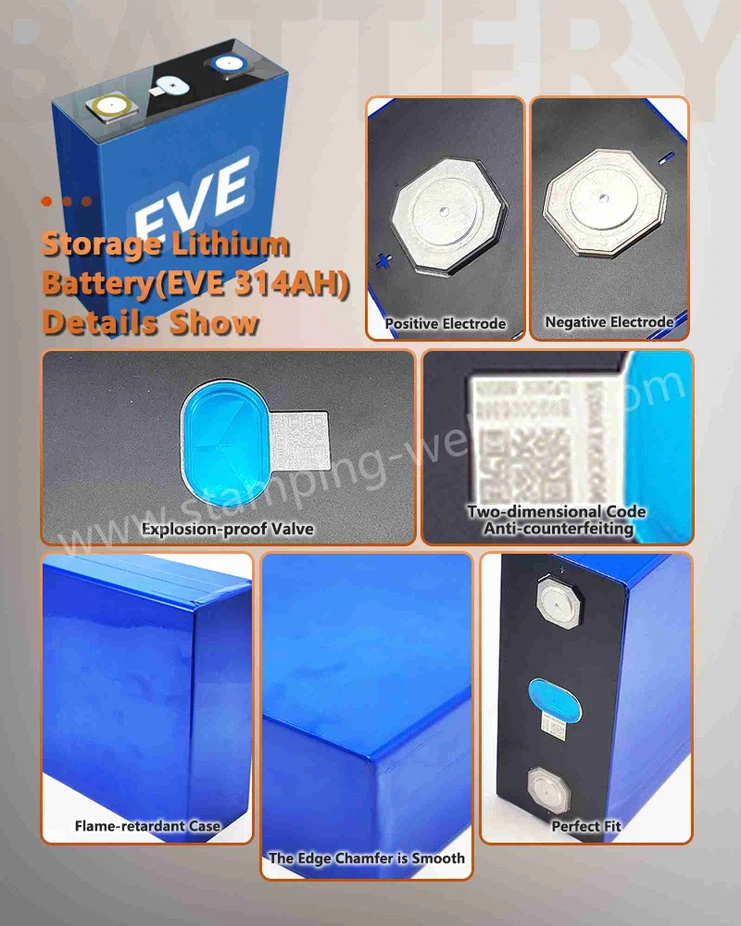
The cover plate is the most functionally integrated component in the Lithium-ion battery pack, responsible for multiple key functions such as connection, isolation, sealing, and explosion protection. The steel cap structure at the top of the cover plate has high strength and can effectively resist external deformation, protect the explosion-proof aluminum plate, and also serve as a connecting carrier during battery assembly.
The sealing ring at the outermost edge of the cover plate can achieve isolation and insulation between the metal parts inside the cover and the steel shell of the Battery pack kit, prevent internal short circuit faults in the battery, and ensure the sealing performance of the battery after sealing. The explosion-proof component is the core safety structure of the cover plate, mainly used for power-off and pressure relief when the battery is overloaded, to avoid the risk of explosion caused by excessive internal pressure. The component consists of an isolation ring, explosion-proof aluminum plate, and connecting aluminum plate.
In terms of manufacturing process, the complexity of the cover plate is much higher than that of the shell, integrating multiple key functions such as fixed sealing, current conduction, pressure relief protection, fuse protection, and electrical corrosion suppression.
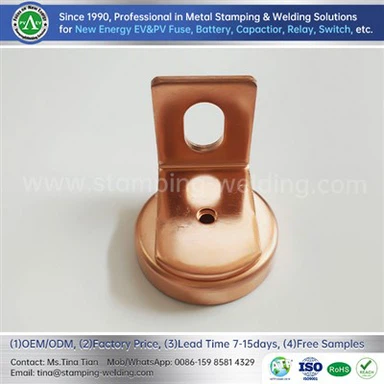
The top cover and aluminum shell are tightly connected by laser welding, which can fix the bare cell and ensure sealing performance; The welding conductivity between the top cover pole, adapter components, and battery lugs is the key to ensuring the smooth transmission of charging and discharging currents in the Lithium-ion battery for solar energy system; When there is an abnormality inside the battery causing an increase in air pressure, the explosion-proof valve on the top cover will open in time to release pressure, effectively reducing the risk of explosion.
Innovative Design Cases and Technological Development Trends
In the innovative design practice of Lithium-ion battery cell structural components, various new structural schemes have effectively improved the performance and safety of batteries. In terms of the design of the new explosion-proof valve, the explosion-proof valve is arranged on the opposite side of the positive and negative electrodes and facing the ground. This layout optimization eliminates the need to reserve explosion-proof space on the upper part of the battery unit, greatly improving the utilization of the internal space of the battery shell and increasing the volumetric energy density by about 5% to 10%.
Meanwhile, in practical application scenarios, if the Solar home system lithium ion batteries explode due to thermal runaway, the pressure relief direction of the explosion-proof valve will not cause harm to the driver, passengers, or equipment operators, effectively eliminating personal safety hazards. In terms of integrated design, some solutions adopt an integrated layout of liquid cooled plates, busbars, and sampling harnesses, which has multiple significant advantages.
Liquid cooled plates can quickly reduce the operating temperature of battery cells, ensuring that they operate within a suitable temperature range, thereby improving performance and service life. Actual test data shows that Lithium solar batteries with integrated liquid cooling plates can reduce temperature by 8 to 12 degrees Celsius under continuous high load conditions.
In addition, integrated design significantly reduces the number of components, simplifies the assembly process, effectively improves production efficiency, reduces overall manufacturing costs, and enhances product market competitiveness.

contact us
If you need further technical exchange or structural solution support during the development or production process of Power battery cells, please feel free to contact us through the platform. We will provide you with professional consulting and customized services.