Knowledge analysis of nickel plated busbar industry
May 31, 2026
product definition
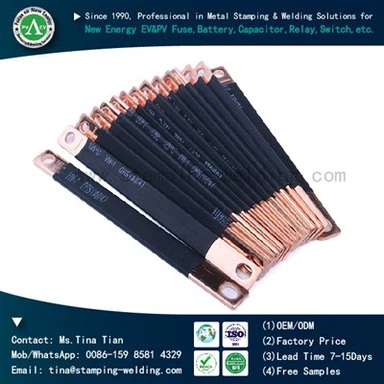
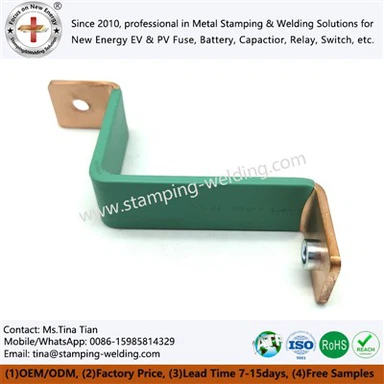
Nickel-plated copper busbar is a composite conductive component that uses high-purity electrolytic copper as the base material and is evenly covered with a metallic nickel layer on the copper surface through an electrochemical deposition process. This product is a key structural component in the power connection system. It combines the excellent electrical conductivity of copper with the high hardness, corrosion resistance and anti-oxidation surface properties of nickel plating. From the perspective of product form, Nickel Plated Copper Flat Bus Bar and Flat Bar Red Pure Copper Nickel Plating represent the most common rectangular cross-section nickel-plated copper busbar - the flat shape facilitates stacked layout and multi-layer parallel connection in switch cabinets, distribution boxes and battery packs. The red pure copper base has a silvery white or slightly yellow appearance after being plated with nickel. Standard Nickel Plating Flat Busbar covers a series of products produced according to common industry size standards, while Nickel Plated Copper Busbars and Nickel Plated Bus Bars generally refer to nickel-plated copper busbars of various cross-sectional shapes (rectangular, L-shaped, Z-shaped) and customized sizes. Nickel plated Copper Bus Bar is a common name for this type of product. Its core engineering value lies in: on the premise of maintaining high conductivity of copper (≥98% IACS), nickel plating solves the problems of easy oxidation of bare copper bus bars in the use environment, unstable contact resistance and insufficient surface hardness. It is widely used in the fields of power distribution, new energy and industrial automation that have high requirements for conductive reliability and environmental adaptability.

Material advantages
The performance foundation of nickel-plated copper busbars lies in the scientific selection and matching of copper base materials and nickel plating materials. The copper matrix material is usually high-purity electrolytic copper, with the brand name C11000 or TU1. The copper content of C11000 electrolytic copper is not less than 99.90%, and the oxygen content is controlled between 0.02% and 0.05%. It has good electrical conductivity (≥101% IACS, annealed state) and excellent ductility, making it easy to perform mechanical processing such as bending, punching and bending. For applications requiring higher strength, C1100-H semi-hard or C10200 oxygen-free copper (oxygen content ≤0.002%, suitable for welding processes sensitive to hydrogen embrittlement) can be selected. The purity of the base material directly affects the quality of the plating - copper materials with high impurity content may produce surface segregation during pickling before plating, resulting in spots or poor bonding of the nickel plating.
The nickel plating material uses electrolytic nickel or sulfur-containing nickel cake as the anode material, and the plating solution system is mainly Watt type (nickel sulfate 300-350g/L, nickel chloride 40-50g/L, boric acid 35-45g/L). The purity of nickel plating is usually not less than 99.5%, and coating types with different characteristics can be selected according to application requirements: semi-bright nickel plating (sulfur-free, good ductility, strong corrosion resistance) is suitable for busbars that need to be bent and formed; bright nickel plating (containing a small amount of sulfur, mirror-bright appearance, high hardness) is suitable for visible parts that require decorative properties; multi-layer nickel system (semi-bright nickel + bright nickel + microporous nickel) is suitable for extreme corrosive environments.

Manufacturing process
The manufacturing of nickel-plated copper busbars covers two major stages: copper substrate processing and electroplating treatment. Copper substrate processing stage: First, use a band saw or shearing machine to cut materials according to the drawing size, and the length tolerance is controlled within ±0.5mm. It is then processed by a leveling machine to ensure that the flatness of the busbar does not exceed 1mm per meter. Punching (position tolerance ±0.2mm) and CNC bending (bending radius not less than 2 times the thickness of the copper bar, angle tolerance ±1°) are performed according to installation requirements. All cutting edges and punched edges must be deburred and edges chamfered C0.5-C1.0 to eliminate the risk of sharp corner discharge. Before entering electroplating, the copper substrate needs to undergo chemical degreasing, hot water washing, pickling activation and pure water washing to ensure that the surface is free of oil stains and oxide films.
Nickel electroplating stage: adopt a Watt-type nickel plating system (nickel sulfate 300-350g/L, nickel chloride 40-50g/L, boric acid 35-45g/L). The temperature of the plating solution is maintained at 50-60°C, and the pH value is controlled between 3.8-4.2. The cathode current density is 2-5A/dm², and the deposition rate is approximately 0.2-0.3μm/minute. Air agitation is continued during the electroplating process to ensure uniformity of the coating. The coating thickness can be selected in the range of 3-25μm according to application requirements, 5-8μm for conventional indoor environments, and 12-15μm for outdoor or corrosive environments. After plating, the workpiece undergoes three-stage countercurrent water washing, hot water washing and hot air drying, and is passivated to further improve corrosion resistance. Quality inspection: Each batch of products undergoes appearance inspection (100% visual inspection, no peeling, no bubbles, no scorching), thickness inspection (X-ray fluorescence thickness gauge, no less than 5 samples per batch), bonding strength inspection (observe whether the coating is peeling after bending 90° or 180°) and salt spray test (sampling according to customer requirements).

.
Why nickel plating
Copper busbars have excellent electrical conductivity in power distribution and electrical connection systems (conductivity can reach more than 98% IACS) and are ideal conductor materials for carrying large currents. However, bare copper busbars face three engineering pain points in actual use environments. First, copper is easily oxidized in the atmospheric environment. Under normal temperature and humidity conditions, cuprous oxide (Cu₂O) and copper oxide (CuO) will be generated on the copper surface. These two oxides have extremely poor electrical conductivity, and their resistivity is several orders of magnitude higher than that of metallic copper. As the operation time goes by, the oxide layer gradually thickens, causing the contact resistance of the busbar overlap surface to continue to rise, causing local overheating. In severe cases, it may cause the connection point to be burned or an electrical fire. Second, the hardness of copper is low (the annealed hardness of pure copper is about 40-60 HV). When bolted connections are made, the contact surface is prone to creep or indentation deformation under pressure. This deformation will reduce the actual effective pressure of the contact area and further deteriorate the contact resistance. Especially under high current cycle conditions, the thermal expansion and contraction effects will accelerate this degradation process. Third, in some special environments (such as coastal salt spray, industrial pollution areas, possible electrolyte leakage inside the battery pack), copper will also be corroded by chloride ions or sulfides, producing patina or copper sulfide corrosion products.
Nickel plating is a mature engineering solution to solve the above problems. Nickel plating forms a dense physical barrier on the copper surface - nickel itself has a high standard electrode potential and has a strong tendency to passivate in the atmospheric environment. An extremely thin (about 1-2nm) and dense nickel oxide passivation film will quickly form on the surface. This passivation film can be crushed under contact pressure to form metal conduction and will not continue to thicken over time like the copper oxide film. As a result, the Nickel-Plated Copper Flat Bus Bar maintains stable low contact resistance over long periods of operation. At the same time, the hardness of the nickel coating (150-300 HV) is significantly higher than that of the copper matrix. The surface of the coating is not prone to indentation deformation during bolt connection. Even under multiple disassembly and assembly or vibration conditions, the pressure distribution on the contact surface can remain relatively stable. In addition, nickel plating has good tolerance to chloride ions, sulfides and weak acid environments, making nickel-plated copper busbars safe to use in corrosive environments such as ships, offshore platforms, energy storage battery packs and industrial electroplating workshops. In summary, nickel plating is one of the best engineering practices to improve the oxidation resistance, contact stability and environmental adaptability of busbars without sacrificing the conductive properties of copper.

contact us
If you need to customize a highly corrosion-resistant Nickel-Plated Bus Bar for your high-voltage switchgear or energy storage system, our technical team can provide detailed plating thickness inspection reports and salt spray test data to ensure that the product fully meets your engineering design specifications and long-term operation requirements.