Laminated Insulated Flexible Busbar: technological breakthrough and application of high-frequency power transmission
Jan 26, 2026
The core bottleneck of high-frequency power transmission: the constraint of skin effect
In the field of power transmission, the "skin effect" under a high-frequency current environment has always been a core technical challenge that restricts the improvement of transmission efficiency. With the continuous upgrading of the demand for miniaturization, efficiency, and lightweight of power equipment in industries such as new energy, rail transit, and industrial automation, the Laminated Insulated Flexible Busbar, with its innovative structural design, effectively solves the bottleneck of traditional conductor transmission and becomes a key technical solution in high-frequency power transmission scenarios, promoting the iteration of power transmission systems towards higher performance.
To understand the technical value of Laminated BusBar, it is necessary to first clarify the core physical phenomenon of "skin effect". The Skin Effect refers to the characteristic that, during the transmission of high-frequency alternating current, the current naturally tends to concentrate on the surface of the conductor, and the central part of the conductor hardly participates in conduction. This phenomenon will directly lead to a decrease in transmission efficiency and an increase in energy consumption of traditional conductors, posing hidden dangers to the operation of power equipment.
Taking the current transmission at a frequency of 1kHz as an example, the skin depth of traditional hard copper bars is only about 2.3mm. This means that when the thickness of the hard copper bar exceeds this value, the conductor material in the central area cannot effectively participate in conduction, which is equivalent to the ineffective loss of the material. Specifically, the skin effect can cause a reduction of over 30% in the effective conductive cross-sectional area of traditional hard copper bars, a decrease of 20% -40% in current carrying capacity, and a significant increase in local overheating risk due to current concentration, resulting in an increase of over 15% in operating temperature compared to the ideal state. For a long time, this problem has severely limited the performance improvement and structural optimization of high-frequency power transmission equipment, and innovative technical solutions are urgently needed to crack it. Laminated Copper BusBar is the key to solving this problem.

Core breakthrough: Innovative design and technological advantages of the laminated structure
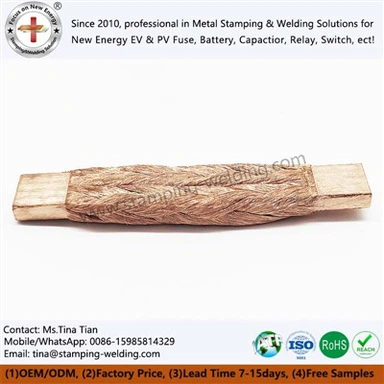
The emergence of Laminated Insulated Flexible Busbar provides an effective path to solve a series of problems caused by skin effects, and its core advantage lies in its unique multi-layer laminated structure design. This type of busbar is made up of multiple layers of ultra-thin copper strips ranging from 0.8mm to 1mm, and is wrapped with insulation materials such as polyvinyl chloride (PVC) or thermoplastic elastomer (TPE). The core logic of this design is to precisely control the thickness of the single-layer conductor, so that the thickness of each layer of copper strip is less than the skin depth under high-frequency current, ensuring that each copper strip can fully participate in conduction and fundamentally avoiding ineffective losses in the central area of the conductor.
At the same time, the multi-layered structure greatly expands the effective conductive surface area of the conductor, making the current distribution on the surface of the conductor more uniform and further enhancing the current-carrying capacity. Experimental data show that under the same cross-sectional area, the current-carrying capacity of Laminated Flexible BusBar can be increased by up to 20% compared to traditional hard copper bars. In addition, its excellent insulation performance also provides support for the optimization of equipment structure. Usually, its ground withstand voltage level can exceed 15kV, and the withstand voltage level between busbars can reach 30kV, which can meet the design requirements of equipment miniaturization and integration, breaking through the limitations of traditional hard copper bars in installation layout and space utilization.

Multidimensional value: Low temperature rise guarantee and economic and environmental benefits
The low-temperature rise characteristic is another core advantage of Varnished Insulated Busbar (VIB) in ensuring the safe and stable operation of power systems. Due to the uniform distribution of current between each layer of copper sheets, the laminated insulation soft busbar effectively avoids the local "hot spot" problem caused by current concentration in traditional hard copper bars. Actual operating data shows that compared to traditional hard copper Laminated Bus Bar for Industrial, the working temperature rise can be reduced by 10 ℃ -20 ℃. This feature not only improves the stability of the system operation by more than 30%, but also effectively extends the service life of power equipment. According to statistics, it can extend the service life of equipment by more than 20%, especially suitable for high power density, long-term continuous operation, and power transmission scenarios.
From the perspective of full lifecycle cost and green manufacturing, Laminated Bus Bars for Computers also have significant advantages. Its innovative structural design can save 10% -15% of copper material usage, effectively controlling production costs while reducing raw material consumption. At the same time, the reduction in copper material usage also means a decrease in carbon footprint during the production process, which is in line with the current trend of green and low-carbon development in the manufacturing industry, balancing economic and environmental benefits.

Application Implementation and Industry Outlook
At present, the Laminated Bus Bar for High Frequency Inverter has been validated in multiple high-end manufacturing fields and its application scenarios continue to expand. In the field of new energy vehicles, it can be applied to core components such as electric drive systems and charging modules, helping to improve vehicle range and charging efficiency; In the field of rail transit, adapting to the high-power and high reliability requirements of traction power supply systems ensures the safe and stable operation of trains; In the field of industrial automation, it can be used in frequency converters and servo systems to improve equipment operation accuracy and response speed; In the construction of new infrastructure, data center power supplies, photovoltaic/energy storage converters, and other scenarios also have a wide range of application requirements, providing support for the efficient operation of new power systems.
Overall, the Laminated Bus Bars for PV Inverter fundamentally solves a series of problems caused by skin effects in traditional hard copper bars in high-frequency transmission scenarios, such as insufficient current carrying capacity, high temperature rise, and material waste, through the innovative structure of multi-layer ultra-thin copper sheets stacked together. It achieves a triple breakthrough of improved transmission performance, reduced operating temperature rise, and cost savings throughout the entire lifecycle, providing an efficient and reliable technical solution for high-frequency power transmission.
Industry forecasts show that the penetration rate of Industrial Frequency Converter BusBar in the domestic market will increase by 50% in the next three years, and it is expected to gradually become a standard configuration for the next generation of efficient power systems, providing important support for the technological upgrading and high-quality development of multiple industries such as new energy, rail transit, and industrial automation. In the process of power system design, Laminated Bus Bars for High Capability Applications have become an important optimization direction for the efficiency and safety requirements of high-frequency transmission scenarios. Their technical characteristics and application value are worthy of in-depth research and exploration by industry practitioners.
contact us
Our company can provide professional Laminated Insulated Flexible Busbars solutions and support direct technical communication with engineering teams to ensure the reliability of products in practical applications. Welcome to contact us.