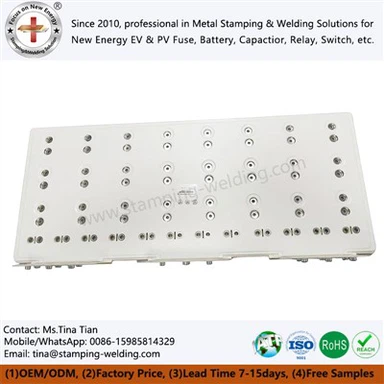


Industrial Frequency Converter BusBar
In power electronic systems with high power density and high reliability requirements, busbars are no longer just "conductive connectors," but core structural components that directly affect system efficiency, thermal management, electromagnetic compatibility, and long-term stability. This series of Industrial Frequency Converter BusBars is specifically designed for industrial frequency converters, rail transit traction systems, UPS uninterruptible power supplies, and server power systems. Through a layered structure and engineered manufacturing processes, it provides a stable, efficient, and sustainable current transmission solution for complex power systems.
- Fast Delievery
- Quality Assurance
- 24/7 Customer Service
Product Introduction

This Industrial Frequency Converter BusBar is positioned for medium-to-high power industrial and transportation power systems, primarily used in:
Industrial VFD (Voltage Frequency Converter) main circuits and DC buses
Traffic traction and auxiliary power systems for trams and rail transit
UPS (Uninterruptible Power Supply) and data center server power systems
High-reliability power cabinets and integrated rectifier-inverter equipment
Through a laminated busbar structure design, it achieves lower parasitic inductance, a better heat dissipation path, and more stable electrical performance within a limited space, providing a fundamental guarantee for the reliable operation of the entire system.
Key Technical Features: Precisely Matched to High-Demand Application Scenarios
Precision Interlayer Insulation Technology
Utilizing a powder coating insulation process, a uniform and dense insulating coating is formed on the surface of each Laminated Bus Bar for High-Temperature Applications. The coating adheres tightly to the busbar substrate, effectively avoiding the risk of interlayer short circuits. This technology allows for precise control of the insulating coating thickness according to the voltage level requirements of different applications, balancing insulation reliability with lightweight design, making it particularly suitable for the high-voltage operation of industrial frequency converters and the lightweight requirements of transportation trams.
Low Impedance Transmission Optimization Technology
Through integrated molding of the conductive layer and optimized current path design, impedance loss during current transmission is reduced, improving power transmission efficiency. Simultaneously, a reasonable laminated layout effectively reduces parasitic inductance, suppresses voltage fluctuations under high-frequency conditions, ensures the output stability of the UPS uninterruptible power supply server, and prevents damage to core server components due to voltage fluctuations.
Enhanced Environmental Adaptability Technology
A flexible connection structure design enhances the Laminated Inverter Busbar's vibration resistance, addressing the vibration and shock environments of trolleybuses. A high-efficiency heat dissipation structure is integrated to enhance heat transfer efficiency, accommodating the high-temperature conditions of industrial frequency converters. Optimized material aging resistance extends product lifespan, meeting the long-term operational needs of data center UPS power supplies.
Intelligent Monitoring Integration Technology
Precise detection interfaces are provided, allowing for the integration of temperature and voltage monitoring modules according to customer needs. This enables real-time monitoring of the Laminated Busbar Connector's operating status, facilitating timely detection of potential faults by engineers, reducing maintenance costs, and improving the overall operational efficiency of the power system.

Design Advantages: Simulation-Driven Smart Manufacturing
| Electromagnetic Field Simulation | We use software such as Ansys Maxwell to create 3D models of the Laminated Busbar Power Solutions, simulating current distribution and magnetic field strength. By optimizing conductor width and stacking sequence, we minimize eddy current losses and proximity effect losses. |
| Thermal Simulation | Based on Icepak, we perform thermodynamic analysis to predict the temperature rise curve of the Laminated BusBar for Mersen under full load operation. We optimize the copper busbar cross-sectional area based on simulation results, ensuring that the temperature rise is controlled within design specifications (typically within 45K-50K), preventing insulation aging. |
| Stress-Strain Analysis | For rail transit applications, we conduct vibration and shock resistance simulations of the Laminated Bus Bars to ensure that the installation structure can withstand long-term high-frequency vibrations during train operation, preventing fatigue-induced fractures. |
| DFM (Design for Manufacturing) | Our design and process teams collaborate deeply, considering fabrication feasibility at the drawing stage, such as minimizing bending radii and the impact of punching positions on insulation strength, ensuring the perfect implementation of the design. |

Application Advantages: Universal Value from Rail Transit to Data Centers
Transportation/Tram Sector: The Laminated Copper BusBars have operated continuously for over 100,000 kilometers in subway trains without failure, solving the contact problems caused by vibration in traditional single-layer busbars. For example, after adopting this system in a certain city's subway system, the train delay rate decreased by 0.3% (saving an average of 2 million yuan in operating costs annually).
UPS/Server Sector: Providing "silent power" for data centers, reducing server fan load (due to voltage stability), and lowering the average PUE (Power Usage Effectiveness) by 0.15 annually. A case study of a financial data center shows that server downtime events decreased by 90% after deployment.

contact us

Hot Tags: industrial frequency converter busbar, China, manufacturers, suppliers, factory